Promotion is a challenging thing for a writer to get right. You want to get word that your book is out there (or in my case, that it's available for pre-order), but you don't want to be that person who's just "BUY MY BOOK!" Because that person is obnoxious.
Seriously, that person isn't just hypothetical. There are people out there like that, and they are obnoxious. I once knew someone whose twitter feed would auto-tweet one of ten different "BUY MY BOOK HERE'S THE LINK" messages every few hours, like clockwork.
I never bought that book.
But you have to do something, of course, else no one knows the book is out there. The trick is getting the word out there without annoying the people you want to be enticing. Of course, the best way to do that is for someone else to be the one talking about your book. That way it's not you doing obnoxious self-promotion. It's someone who's genuinely excited about your work and wants to talk about it!
And sometimes you get blessed with a bit of serendipity. In my case, it tied to Book Country. See, I was one of the initial beta-testers of the writing-critiquing community, which was designed and owned by Penguin. Thorn of Dentonhill was one of the first books available on the site for critique-- at least, its first few chapters. So when Thorn was bought by DAW-- part of the Penguin group-- the folks at Book Country were eager to talk it up.
Of course, I'll still be talking it up plenty in the months to come. Have no doubt about that.
All right, off to the word mines. See you all down there.
Thursday, September 18, 2014


Monday, September 15, 2014
Perils of the Writer: Establishing the Stakes
This past weekend I watched the five pilots that Amazon put up to gauge customer interest. It's an interestingly democratic way to do the pilot process: bring the pilots to the people, and let them decide which should get a series order.
Pilots are, of course, like opening chapters of a novel: they have to hook, they have to engage, and most importantly, they have to establish stakes. You have to gauge your pacing and your revelations, and make sure characters are responding in proportion to the events unfolding. You can't just have people screaming about how serious things are and expect the audience to buy in to that.
In other words, stakes have to be real, and they have to be shown.
On of the five pilots in particular, Hysteria, fails greatly in this regard. We start with a doctor visiting her brother on death row, where he wants her to tell him about what she's investigating in Austin. This is just a framing device for the real story, in which (and I'm quoting from the copy) "A young doctor is summoned back to her hometown to investigate an epidemic that may be linked to social media."
Now, we'll ignore that her hometown is Austin, and despite the fact that it was filmed here in Austin, the show frames the city like it's a place with one school, one hospital, abandoned factories and alleys that cops get beat up in if they walk down alone. We'll ignore that stuff.
Instead we'll talk about the stakes.
See, it starts with a bunch of girls sneaking out at night to go dance with some wrong-side-of-the-highway boys in the abandoned snowglobe factory. One of the girls is livecasting it on her phone while she gets sexually aggressive with on of the boys. The other boy starts to get aggressive with her sister, but then her sister starts having seizures.
At the hospital, the doctor is already treating it like it's Super Serious Business-- beyond the scope of just her having seizures and being in a coma. Before even the light of day hits, he's already talking about calling in our main character from Houston, as she's a neurologist and psychiatrist.* Because in Austin, there's none of those on hand, or something.
Now, by the time the doctor arrives, the video has been seen by a handful of people, one of whom (another girl who was there) starts having seizures. We literally only see her hand shaking, and then we never hear directly about her again. The other girls who were there, we are explicitly shown that they are fine.**
So, to reiterate: two cases. Despite that, we're shown the doctors talking to the parents of ALL THE GIRLS as if they all have a stake. Like, "hey, parents of girls who are not patients, let's have a conference involving you as well."
Meanwhile, we see a mysterious person putting together a video of the girl having a seizure mixed with other footage of her dancing. For mysterious, possibly nefarious reasons. After that video comes out and goes viral, then there's another person with seizures.
And the city of Austin freaks completely out.
So, let's go back: two girls with seizures-- so it may be a disease or or exposure to something, or it may be one girl with a neurological problem and a friend with some sort of sympathetic psychosomatic reaction. Then a third-- and to everyone's knowledge, completely unrelated or connected person-- also has seizures (and that could just be epilepsy or something else entirely) in a city with a greater metro population of a million. And people reaction like the Serious Epidemic Business is here.
Like, screaming in the hospital parking lot freak out. Like, press conference in the high school gymnasium with the chief of police and screaming angry parents.
Had the show even remotely earned these stakes? No, not at all. Not with only three cases, one of which shows no real connection to the the other two. In fact, the third case is shown to be different because he gets violent with the people trying to help him. There's literally no reason for them to even think the third case is connected to the other two, beyond seizures.
Of course, our heroine figures out a connection, in that the third victim is the mysterious guy who made the video, and thus she thinks that the SEIZURES ARE BEING TRANSMITTED THROUGH YOUTUBE. Or something. This is despite the fact that we're shown plenty of people seeing the video (and it's hardly a clickbaity-you-have-to-see-this-video), and no one else is showing symptoms. But before this absurd epiphany (which seems to be the underlying premise of the show), they have no reason to believe any connection. They say that his symptoms aren't the same, except for seizures, and that they don't believe he's had any contact with the girls... so why do they think it's a connected case? They just do.
So what did they do wrong? They didn't establish believable stakes. If anything, they explicitly undercut their stakes, but then had characters react as if the stakes were extremely serious.
If you want your audience to believe what you're telling them, believe that situations are serious, then stakes have to be established fairly and legitimately. This isn't just a matter of show vs. tell-- we're shown who's sick, we're shown the town's reaction. But what we're shown of events doesn't match what we're shown of reaction.
Without well-established stakes with logical points connecting them, there's no way your audience is going to accept what you're giving them.
---
*- The mother latches onto "psychiatrist" part and freaks out.
**- One is set up with tension, like her father is going to find her seizing in the shower, but no, she's fine and showering, and yells at her dad for coming in there.
Pilots are, of course, like opening chapters of a novel: they have to hook, they have to engage, and most importantly, they have to establish stakes. You have to gauge your pacing and your revelations, and make sure characters are responding in proportion to the events unfolding. You can't just have people screaming about how serious things are and expect the audience to buy in to that.
In other words, stakes have to be real, and they have to be shown.
On of the five pilots in particular, Hysteria, fails greatly in this regard. We start with a doctor visiting her brother on death row, where he wants her to tell him about what she's investigating in Austin. This is just a framing device for the real story, in which (and I'm quoting from the copy) "A young doctor is summoned back to her hometown to investigate an epidemic that may be linked to social media."
Now, we'll ignore that her hometown is Austin, and despite the fact that it was filmed here in Austin, the show frames the city like it's a place with one school, one hospital, abandoned factories and alleys that cops get beat up in if they walk down alone. We'll ignore that stuff.
Instead we'll talk about the stakes.
See, it starts with a bunch of girls sneaking out at night to go dance with some wrong-side-of-the-highway boys in the abandoned snowglobe factory. One of the girls is livecasting it on her phone while she gets sexually aggressive with on of the boys. The other boy starts to get aggressive with her sister, but then her sister starts having seizures.
At the hospital, the doctor is already treating it like it's Super Serious Business-- beyond the scope of just her having seizures and being in a coma. Before even the light of day hits, he's already talking about calling in our main character from Houston, as she's a neurologist and psychiatrist.* Because in Austin, there's none of those on hand, or something.
Now, by the time the doctor arrives, the video has been seen by a handful of people, one of whom (another girl who was there) starts having seizures. We literally only see her hand shaking, and then we never hear directly about her again. The other girls who were there, we are explicitly shown that they are fine.**
So, to reiterate: two cases. Despite that, we're shown the doctors talking to the parents of ALL THE GIRLS as if they all have a stake. Like, "hey, parents of girls who are not patients, let's have a conference involving you as well."
Meanwhile, we see a mysterious person putting together a video of the girl having a seizure mixed with other footage of her dancing. For mysterious, possibly nefarious reasons. After that video comes out and goes viral, then there's another person with seizures.
And the city of Austin freaks completely out.
So, let's go back: two girls with seizures-- so it may be a disease or or exposure to something, or it may be one girl with a neurological problem and a friend with some sort of sympathetic psychosomatic reaction. Then a third-- and to everyone's knowledge, completely unrelated or connected person-- also has seizures (and that could just be epilepsy or something else entirely) in a city with a greater metro population of a million. And people reaction like the Serious Epidemic Business is here.
Like, screaming in the hospital parking lot freak out. Like, press conference in the high school gymnasium with the chief of police and screaming angry parents.
Had the show even remotely earned these stakes? No, not at all. Not with only three cases, one of which shows no real connection to the the other two. In fact, the third case is shown to be different because he gets violent with the people trying to help him. There's literally no reason for them to even think the third case is connected to the other two, beyond seizures.
Of course, our heroine figures out a connection, in that the third victim is the mysterious guy who made the video, and thus she thinks that the SEIZURES ARE BEING TRANSMITTED THROUGH YOUTUBE. Or something. This is despite the fact that we're shown plenty of people seeing the video (and it's hardly a clickbaity-you-have-to-see-this-video), and no one else is showing symptoms. But before this absurd epiphany (which seems to be the underlying premise of the show), they have no reason to believe any connection. They say that his symptoms aren't the same, except for seizures, and that they don't believe he's had any contact with the girls... so why do they think it's a connected case? They just do.
So what did they do wrong? They didn't establish believable stakes. If anything, they explicitly undercut their stakes, but then had characters react as if the stakes were extremely serious.
If you want your audience to believe what you're telling them, believe that situations are serious, then stakes have to be established fairly and legitimately. This isn't just a matter of show vs. tell-- we're shown who's sick, we're shown the town's reaction. But what we're shown of events doesn't match what we're shown of reaction.
Without well-established stakes with logical points connecting them, there's no way your audience is going to accept what you're giving them.
---
*- The mother latches onto "psychiatrist" part and freaks out.
**- One is set up with tension, like her father is going to find her seizing in the shower, but no, she's fine and showering, and yells at her dad for coming in there.
Thursday, September 11, 2014
Chasing the Numbers
So, I'm not at the point, obviously, where I'm tracking book sales. Occasionally I'll go and look at my Amazon rank for Thorn presales and wonder what that might actually mean. I honestly don't know.
But here's what I do know: once I can track sales numbers, I will probably be a bit obsessive about it.
Because lord knows, I already google "Marshall Ryan Maresca" and "Thorn of Dentonhill" to a surprising degree. Especially now, since new things are popping up on a regular basis. That's how I discovered an article pointing to me as an example of marketing one's work using Google Plus. (What? Really?) That's how I found out that Thorn has a Goodreads page now. Which gives me another thing to check obsessively, as I can keep track of the complete strangers who have added it to their "to-read" list. For some reason that's incredibly exciting to me.
What I'm saying is, if I have something I can track, I'm probably going to keep my eye on it. If it's something I can quantify, perhaps even put in a spreadsheet.... oh, I'm going to be all over that.
Maybe at some point, I'll be more zen about all the how'm-I-doing data out there. But right now, I'm making the most of it.
Speaking of things you can learn by Googling me, I'll be at FenCon in Dallas September 25-27! Come say hello!
But here's what I do know: once I can track sales numbers, I will probably be a bit obsessive about it.
Because lord knows, I already google "Marshall Ryan Maresca" and "Thorn of Dentonhill" to a surprising degree. Especially now, since new things are popping up on a regular basis. That's how I discovered an article pointing to me as an example of marketing one's work using Google Plus. (What? Really?) That's how I found out that Thorn has a Goodreads page now. Which gives me another thing to check obsessively, as I can keep track of the complete strangers who have added it to their "to-read" list. For some reason that's incredibly exciting to me.
What I'm saying is, if I have something I can track, I'm probably going to keep my eye on it. If it's something I can quantify, perhaps even put in a spreadsheet.... oh, I'm going to be all over that.
Maybe at some point, I'll be more zen about all the how'm-I-doing data out there. But right now, I'm making the most of it.
Speaking of things you can learn by Googling me, I'll be at FenCon in Dallas September 25-27! Come say hello!
| Saturday
12:00:00 PM
- 1:00 PM
Getting the Geos Right Description: Geology and geography and how they should shape your fictional society. Panelists: R. Acks , L. Carl , Mi. Finn , M. Maresca , M. White , K. Murphy * |
|
Saturday
6:00:00 PM
- 7:00 PM
Handwavium And Technobabble Description: Where do writers come up with all those terms, anyway? Do they have roots in the real world, or does someone just throw a D20 and see what they come up with? Panelists: P. Black , S. Cupp , J. Mandala , M. Maresca , L. Antonelli * |
| Sunday
10:30:00 AM
- 11:00 AM
Reading |
| Sunday
1:00:00 PM
- 2:00 PM
When Will it Ever End? Description: How long is too long? When should a series hang it up, or is there no limit to the number of books an author can or should write in a specific setting? Which well-known series have done an excellent job of holding our attention across multiple books, and which have jumped the proverbial shark? E. Flint , M. Maresca , R. Rogers , S. Swendson , B. Wright , L. Donahue * |
Monday, September 8, 2014
Ten Books That Stuck With Me
Earlier this week, I got tagged over on Facebook with that "list ten books that stuck with you" meme, and I listed ten books with little additional commentary, save to note that "stuck with you" does not mean the same thing as "loved".
Here's the list:
1. Watership Down - Richard Adams
2. The Belgariad - David Eddings
3. Jitterbug Perfume - Tom Robbins
4. Hitchhikers' Guide to the Galaxy - Douglas Adams
5. World According to Garp - John Irving
6. Caves of Steel - Isaac Asimov
7. The Green-Sky Trilogy - Zilpha Keatley Snyder
8. Guns, Germs and Steel - Jared Diamond
9. Time Enough For Love - Robert Heinlein
10. ...And Eternity - Piers Anthony
I should note that the first seven are all books I first read between the ages of thirteen and eighteen. I would have a hard time isolating exactly when I read which for most-- I know Green-Sky Trilogy was around seventh grade, Belgariad was the summer I was sixteen-- but they all were formative-reading-years books. And those two-- both series, but the sort of series that are essentially One Big Story-- are the most Traditional Fantasy on this list. Well, Belgariad is traditional fantasy. Green-Sky is more Traditional Fantasy with New Age Sci-Fi hidden inside it like a Russian Nesting Doll.
I've talked before about how Watership Down is one of my favorite books of all time. And this book is really the Fantasy Epic that resonates the most with me. It's sweeping in scope while being deeply personal, and it's filled with worldbuilding top to bottom. The fact that it's a cast of rabbits is almsot incidental. And despite being often labeled as a "children's book"-- mostly because back then a fantasy novel or a novel with a cast of rabbits would never be designated anything else-- it's filled with maturity and complexity. I re-read it every few years and still find new discoveries.
Jitterbug Perfume is also fantasy, but you won't find it on those shelves, mostly because Tom Robbins is Tom Robbins and he's pretty much his own genre. But a story about a man who lives a thousand years, and occasionally hangs out with the god Pan? Yeah, that's a fantasy book. World According to Garp isn't genre at all, save for crafting an alternate history where Jenny Fields is a major political figure, and there's an extreme feminist movement that involves cutting one's own tongue out. But it is a book that's almost entirely character study, really forsaking anything resembling a traditional plot. It takes a special talent to make that engaging, and it was one I attempted to emulate in early versions of trunked novels.
Caves of Steel is here as the standard-bearer for all the Asimov I read, which includes the rest of the Robot books and the Foundation books, and scores of short stories. Caves also stuck with me because it showed me that with sci-fi (and fantasy), a simple plot like a murder mystery can be the gateway into a strongly built world. You can take two cops solving a murder and put it anywhere and have the promise of a good story.
Hitchhikers is just plain fun, and it was definitely an early influence. I think somewhere in a box I have a hand-written start-of-a-novel from my teenage years that was, without any doubt, Hitchhikers with the serial numbers filed off. My one vaguely clever idea in that was that no other civilization in the galaxy had mastered Visine, so having a small bottle in his pocket gave my protagonist a significant amount of wealth on other worlds.
Guns, Germs and Steel I've talked about several times here, and it's the only non-fiction book here. It formed the template for my worldbuilding ideas, beyond simplistic things like, "Here is the psuedo-Europe, here is the psuedo-Arabia, etc...".
And then there are the last two, which "stuck with me" entirely for bad reasons. Both represent authors and/or stories that just went off the rails in such a train-wreck fashion that they actually angered me. And strangely, both of them involve immoral sex and time travel.
...And Eternity is the seventh and sort-of-final* book in his Incarnations of Immortality series, a series that starts relatively strong with In A Pale Horse (or at least did to my teenage self), and wavers up and down before crashing into the ground with this book. There's a lot wrong with it, such as a climax where one character's prophesized "saving the world" from the first book turns out to be casting a deciding vote in the Senate on whether or not God is Dead (and said vote actually removes God, as the Incarnation of Good, from his place so a new person can fill it... it's very strange.) But the real Oh My God What element for me involves one of the main characters: a 15-year-old prostitute, who over the course of the book gets cleaned up and straightened out by two ghosts, and then takes up a romantic relationship with a judge. Yes, a fifteen-year-old-girl and a judge. But he justifies what he's doing to himself because the fifteen-year-old girl essentially time-travelled ahead four years. So even though he knows she's only fifteen, on paper she's nineteen, so he decides what he's doing is fine.
Time Enough For Love has a different kind of skeezy. There you have two-thousand-year-old Lazarus Long in the 41st century, more or less ready to finally give up and die, because he's done everything he can do, so what else is there? What else is there? Why, there's new theories that might make time travel practical, for one! Once Lazarus learns this, he's got a new spring in his step. He's back to being alive and vital, so he can finally cross the final frontier: going back in time to seduce his own mother. The last third of the book is entirely about that.
So those last two books had a valuable lesson: Writers can let you down, and hard.
--
*- In that Anthony wrote an eighth book many years later, which I never read, but I'm given to understand it doesn't so much continue the story as shade in more background detail.
Here's the list:
1. Watership Down - Richard Adams
2. The Belgariad - David Eddings
3. Jitterbug Perfume - Tom Robbins
4. Hitchhikers' Guide to the Galaxy - Douglas Adams
5. World According to Garp - John Irving
6. Caves of Steel - Isaac Asimov
7. The Green-Sky Trilogy - Zilpha Keatley Snyder
8. Guns, Germs and Steel - Jared Diamond
9. Time Enough For Love - Robert Heinlein
10. ...And Eternity - Piers Anthony
I should note that the first seven are all books I first read between the ages of thirteen and eighteen. I would have a hard time isolating exactly when I read which for most-- I know Green-Sky Trilogy was around seventh grade, Belgariad was the summer I was sixteen-- but they all were formative-reading-years books. And those two-- both series, but the sort of series that are essentially One Big Story-- are the most Traditional Fantasy on this list. Well, Belgariad is traditional fantasy. Green-Sky is more Traditional Fantasy with New Age Sci-Fi hidden inside it like a Russian Nesting Doll.
I've talked before about how Watership Down is one of my favorite books of all time. And this book is really the Fantasy Epic that resonates the most with me. It's sweeping in scope while being deeply personal, and it's filled with worldbuilding top to bottom. The fact that it's a cast of rabbits is almsot incidental. And despite being often labeled as a "children's book"-- mostly because back then a fantasy novel or a novel with a cast of rabbits would never be designated anything else-- it's filled with maturity and complexity. I re-read it every few years and still find new discoveries.
Jitterbug Perfume is also fantasy, but you won't find it on those shelves, mostly because Tom Robbins is Tom Robbins and he's pretty much his own genre. But a story about a man who lives a thousand years, and occasionally hangs out with the god Pan? Yeah, that's a fantasy book. World According to Garp isn't genre at all, save for crafting an alternate history where Jenny Fields is a major political figure, and there's an extreme feminist movement that involves cutting one's own tongue out. But it is a book that's almost entirely character study, really forsaking anything resembling a traditional plot. It takes a special talent to make that engaging, and it was one I attempted to emulate in early versions of trunked novels.
Caves of Steel is here as the standard-bearer for all the Asimov I read, which includes the rest of the Robot books and the Foundation books, and scores of short stories. Caves also stuck with me because it showed me that with sci-fi (and fantasy), a simple plot like a murder mystery can be the gateway into a strongly built world. You can take two cops solving a murder and put it anywhere and have the promise of a good story.
Hitchhikers is just plain fun, and it was definitely an early influence. I think somewhere in a box I have a hand-written start-of-a-novel from my teenage years that was, without any doubt, Hitchhikers with the serial numbers filed off. My one vaguely clever idea in that was that no other civilization in the galaxy had mastered Visine, so having a small bottle in his pocket gave my protagonist a significant amount of wealth on other worlds.
Guns, Germs and Steel I've talked about several times here, and it's the only non-fiction book here. It formed the template for my worldbuilding ideas, beyond simplistic things like, "Here is the psuedo-Europe, here is the psuedo-Arabia, etc...".
And then there are the last two, which "stuck with me" entirely for bad reasons. Both represent authors and/or stories that just went off the rails in such a train-wreck fashion that they actually angered me. And strangely, both of them involve immoral sex and time travel.
...And Eternity is the seventh and sort-of-final* book in his Incarnations of Immortality series, a series that starts relatively strong with In A Pale Horse (or at least did to my teenage self), and wavers up and down before crashing into the ground with this book. There's a lot wrong with it, such as a climax where one character's prophesized "saving the world" from the first book turns out to be casting a deciding vote in the Senate on whether or not God is Dead (and said vote actually removes God, as the Incarnation of Good, from his place so a new person can fill it... it's very strange.) But the real Oh My God What element for me involves one of the main characters: a 15-year-old prostitute, who over the course of the book gets cleaned up and straightened out by two ghosts, and then takes up a romantic relationship with a judge. Yes, a fifteen-year-old-girl and a judge. But he justifies what he's doing to himself because the fifteen-year-old girl essentially time-travelled ahead four years. So even though he knows she's only fifteen, on paper she's nineteen, so he decides what he's doing is fine.
Time Enough For Love has a different kind of skeezy. There you have two-thousand-year-old Lazarus Long in the 41st century, more or less ready to finally give up and die, because he's done everything he can do, so what else is there? What else is there? Why, there's new theories that might make time travel practical, for one! Once Lazarus learns this, he's got a new spring in his step. He's back to being alive and vital, so he can finally cross the final frontier: going back in time to seduce his own mother. The last third of the book is entirely about that.
So those last two books had a valuable lesson: Writers can let you down, and hard.
--
*- In that Anthony wrote an eighth book many years later, which I never read, but I'm given to understand it doesn't so much continue the story as shade in more background detail.
Thursday, September 4, 2014
Metrics of Success
I'm in the early stages of my writing career where the measure of "success" can be marked with easily notable milestones. The big ones along the path still stand out. Actually finished a novel! Full request on my query letter! Offer of representation! Really nice rejection letter!
And, of course, those stood out because those were the things I could grasp on to in the moment. They were little things that represent huge victories.
But they were also victories that were challenging to really talk about or celebrate, as they lacked tangible benefits. When I talked about this to an actor friend, he likened it to getting a third callback on a major movie role. Yeah, it shows you're getting there, that people notice your work... but it's not really anything beyond the humblebrag.
I think those are vital toeholds as you work your way up the wall. You need those little things. You need those few encouraging words you might get along the way.
Even now, with the initial trappings of "making it"-- I've got the contract, the publishing deal, the gorgeous cover, the release date-- it's hard to call myself a "success". The book hasn't come out yet, no reviews, that lingering voice of doubt whispering in my ear that no one is really going to like it.
I don't let myself listen to that voice.
"Success" is always over the next horizon. I mean that in the best way-- I don't think it's some ephemeral thing that can never be reached. I mean that the act itself of progressing toward it is, in and of itself, the real success. It's reaching a new plateau, taking a brief moment to savor that, and then looking up at the next one and saying, "Yeah, that's where I'm going to go."
All right, off to the word mines. See you in there.
And, of course, those stood out because those were the things I could grasp on to in the moment. They were little things that represent huge victories.
But they were also victories that were challenging to really talk about or celebrate, as they lacked tangible benefits. When I talked about this to an actor friend, he likened it to getting a third callback on a major movie role. Yeah, it shows you're getting there, that people notice your work... but it's not really anything beyond the humblebrag.
I think those are vital toeholds as you work your way up the wall. You need those little things. You need those few encouraging words you might get along the way.
Even now, with the initial trappings of "making it"-- I've got the contract, the publishing deal, the gorgeous cover, the release date-- it's hard to call myself a "success". The book hasn't come out yet, no reviews, that lingering voice of doubt whispering in my ear that no one is really going to like it.
I don't let myself listen to that voice.
"Success" is always over the next horizon. I mean that in the best way-- I don't think it's some ephemeral thing that can never be reached. I mean that the act itself of progressing toward it is, in and of itself, the real success. It's reaching a new plateau, taking a brief moment to savor that, and then looking up at the next one and saying, "Yeah, that's where I'm going to go."
All right, off to the word mines. See you in there.
Monday, September 1, 2014
Worldbuilding: From the Neolithic to the Agricultural
Progressing from my initial ideas of bottom-up worldbuilding, once you've established your geography, your basic flora and fauna, and then had your people rise up and spread throughout the world, you've more or less finished your paleolithic phase. Can you go into more detail here? Absolutely. Especially if you're interested in doing stories that are paleolithic or paleo-to-neolithic-transition in nature.*
But odds are you'll be ready to move into defining those neolithic cultures, and their multi-millennia transition to agricultural cultures-- if that's something they are going to logically do. And there are plenty of reasons why they wouldn't.
Cultures don't transition from hunter-gatherer to agricultural without good reason, mostly in terms of geographical conditions. Climate, water source and base foods that are easily domesticated all need to be present. Egypt had perfect conditions, for example, since you had the gentle Nile with predictable flooding patterns, allowing for easily irrigated and constantly renewed soil, as well as early native wheats to domesticate. As a contrast, southwestern Australia had similar environmental conditions, but no native plants worth domesticating.
And without some form of agricultural revolution, your cultures won't progress toward civilization or past stone-age technology. I'm not assigning that any sort of value judgment-- simply that the two go hand-in-hand. You can't have a culture that remains hunter-gatherer but yet has cities with electricity and quantum computers.**
So, what foods can be the ones people eat and domesticate in this period? You can look to the "founder crops", which were crucial in our Fertile Crescent, but that wasn't the only place where agriculture appeared. There are other ways to go.
Fortunately, Lynne Olver has put tons of work into The Food Timeline, a website that is an absolute treasure trove of information. Pretty much every kind of food, she tells you when and where it came into use.
It's important to remember this transition is a slow one, taking several thousand years, and once it get going, it tends to spread, at least along east-west lines. But that means a lot of things can be happening in your world long before anyone figures out to write it down.
---
*- Is Stonepunk a thing? If not, shouldn't it be?
**- Not to poke at any specific Hugo-winning novel.
But odds are you'll be ready to move into defining those neolithic cultures, and their multi-millennia transition to agricultural cultures-- if that's something they are going to logically do. And there are plenty of reasons why they wouldn't.
Cultures don't transition from hunter-gatherer to agricultural without good reason, mostly in terms of geographical conditions. Climate, water source and base foods that are easily domesticated all need to be present. Egypt had perfect conditions, for example, since you had the gentle Nile with predictable flooding patterns, allowing for easily irrigated and constantly renewed soil, as well as early native wheats to domesticate. As a contrast, southwestern Australia had similar environmental conditions, but no native plants worth domesticating.
And without some form of agricultural revolution, your cultures won't progress toward civilization or past stone-age technology. I'm not assigning that any sort of value judgment-- simply that the two go hand-in-hand. You can't have a culture that remains hunter-gatherer but yet has cities with electricity and quantum computers.**
So, what foods can be the ones people eat and domesticate in this period? You can look to the "founder crops", which were crucial in our Fertile Crescent, but that wasn't the only place where agriculture appeared. There are other ways to go.
Fortunately, Lynne Olver has put tons of work into The Food Timeline, a website that is an absolute treasure trove of information. Pretty much every kind of food, she tells you when and where it came into use.
It's important to remember this transition is a slow one, taking several thousand years, and once it get going, it tends to spread, at least along east-west lines. But that means a lot of things can be happening in your world long before anyone figures out to write it down.
---
*- Is Stonepunk a thing? If not, shouldn't it be?
**- Not to poke at any specific Hugo-winning novel.
Thursday, August 28, 2014
In Which I Become A Word-Whore; Or, Who is Marshall Ryan Maresca Character Anyway?
So, as of today, I've been added to the Word Whores blog, joining Jeffe Kennedy, James Moore, K.A. Krantz, Linda Robertson, Marcella Burnard and Veronica Scott. I'll be appearing as their Thursday blogger, though what I write over there on Thursdays will be the same thing I write here on Thursdays. My Monday post here will be unaffected. So here's my first post for Word Whores, in which I introduce myself (which might be news for some of you anyway), and discuss this week's topic.
---
Hello! I'm Marshall Ryan Maresca, the latest addition to Word Whores, and I know exactly the question you're all asking.
Who?
I just told you.
No, really, who are you?
All right, fair question.
So: Marshall Ryan Maresca, Fantasy and Science-Fiction writer. I'm also a playwright, but in all honestly I don't focus on that as much, leaning more toward fantasy and sci-fi writing.
Yeah, but, have I read any of your stuff?
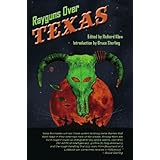
Well... maybe? My short story Jump the Black appeared in Rayguns Over Texas, an anthology of sci-fi short stories all from Texas authors. It's a very cool anthology, and I highly recommend it.
Texas, huh?
Yes. Born and raised in Syracuse, New York, a city known for its rainfall and winters where daily snow can occasionally be measure in feet. All right, admittedly, that's during freak blizzards, but it still happens. So after finishing a film degree at Penn State, I moved to Austin, Texas. A place where snow is so uncommon, a wisp of it shuts the whole city down. It is bliss.
 Film degree, playwright? Why are you writing novels?
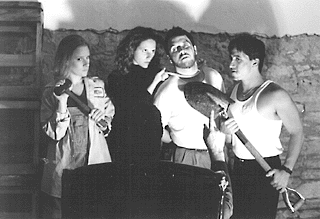
I actually spent quite a bit of time doing theatre in Austin, as a playwright, director, producer, and even a bit of time as an actor. As an actor, I mostly specialized in characters who got beat up, smacked around or killed. I even played a character who was killed twice: first time, getting my neck broken, and then having my brain stolen. Said brain was installed into a virtual reality system, and then my virtual self was killed.
It was a weird show.
But over time I began to realize that writing novels was what I really wanted to do, and I but all my focus into that. I still write short plays on occasion, mostly because it helps keep those dialogue writing muscles sharp. (More on that in a bit)
So, ahem... novels, you were saying?

Right. I've got two fantasy novels coming out in 2015 from DAW Books. First is The Thorn of Dentonhill, coming out on February 3rd. The next one, A Murder of Mages, will be coming out later in the year. Both books are in the same fantasy setting, in the same city, but they are each, individually, the first of a series.
So you're launching two different series essentially at the same time?
Yes. I'm crazy.
All right, man, it's your life.
Is that all?
Hey, I'm asking the questions!
Actually, you're not any more.
Oh, yeah. So, aren't your posts for WordWhores supposed to be on a topic-of-the-week?
Yes, they are! Which I'm quite grateful for, so now I won't spend Wednesday nights thinking, "What the heck am I supposed to be writing about for tomorrow?"
What's this week?
This week is about dialogue in non-action scenes, which is a right-in-my-wheelhouse place to start. Dialogue and I are good friends. This comes from cutting my writing teeth on plays. I can throw two characters in a room and have them banter and bounce until days end.
Which means sometimes, in writing prose, I fall into the trap of thinking like a playwright. I mean, I just give them the words to say. Action, emotion, intention? The actors will bring that in their performance. What's that? No actors? Just words on the page? Ah. Have to go back and revise.
So, yeah, for me, it's always an active process of remembering the action of the non-action scene, what the people are doing, how they physically react to the conversation, how the POV character feels and their observations of other people's emotions. But part of that being an active process means I have to be aware that it isn't becoming inorganic. It's one thing to make sure the characters are active while they're talking. It's another to make sure I'm not just marking minutia for no reason other than to give them bits of business to do while talking.
That's overdirecting your actors.
So, on some level, you do have to trust in the effectiveness of the words of dialogue themselves. Like you trust your actors to find the meaning and action that goes with it, you can trust your readers to do the same.
And with that, it's time to head back into the word mines. See you down there.
Subscribe to:
Posts (Atom)