Showing posts with label A Murder of Mages. Show all posts

Monday, November 3, 2014

Tightening the Screws and Off to OryCon

So, we're now at T-minus three months for the release of Thorn of Dentonhill.  Which is fantastic and exciting, but it also means things are heating up.  I'm finishing my final check on the galley proofs, and then I'll be turning my focus onto A Murder of Mages, which comes out later in the year.  I got to see some preliminary cover art for that, and I'm quite pleased.

Which is all to say, right now is a crunch time, with a lot of things to do this week.  Especially since this week I'm heading up to Portland for OryconI'm excited, this is my first time going to the Pacific Northwest.  So if you're going to that, I'll see you there.  My schedule for the con is below-- a good batch of panels, if you ask me.

And, in the meantime, I'll be off in the word mines.  See you down there.


Sat Nov 8 10:00:am
Sat Nov 8 11:00:am
Jefferson/Adams
What I Wish I Would Have Known: Pitfalls for New Writers

All the things writers should know going in, from craft to scams, and what our panelists wish they'd known.
Erica L. Satifka, Marshall Ryan Maresca, Dean Wells, (*)John Hedtke, Mike Moscoe


Sat Nov 8 12:00:pm
Sat Nov 8 1:00:pm
Roosevelt
Defining Magical Systems

Magical systems are not to be trifled with as far as a reader's concerned. Discuss how to give your characters powers--but not too much power--and how to keep internal consistency.
Devon Monk, Kier Salmon, Judith R. Conly, Alma Alexander, Marshall Ryan Maresca


Sat Nov 8 2:00:pm
Sat Nov 8 3:00:pm
Lincoln
F&SF From Book to Movie

Recent adaptations and what's on the horizon.
(*)Rob Wynne, Scott Alan Woodard, Anthony Pryor, Marshall Ryan Maresca


Sat Nov 8 3:00:pm
Sat Nov 8 4:00:pm
Hamilton
Decline and Fall

At what point does society stop being civilized?
Clayton Callahan, Judith R. Conly, (*)Manny Frishberg, Kristin Landon, Marshall Ryan Maresca


Sun Nov 9 11:00:am
Sun Nov 9 12:00:pm
Madison
Effective Readings

You may be a good writer, but reading aloud is a separate skill. Learn to make your words on the page sound great.
(*)Frog Jones, Keffy R. M. Kehrli, Todd McCaffrey, Marshall Ryan Maresca


Sun Nov 9 12:00:pm
Sun Nov 9 1:00:pm
Hamilton
Creating New Ecosystems

Ecosystems have rules, even in fantasy. Come discuss ways to create worlds that are coherent, deep and logical.
Marshall Ryan Maresca, (*)Petrea Mitchell, Jennifer Linnaea, Karen Azinger

Thursday, October 30, 2014

Perils of the Writer: The Horrors of the Trunked Novels

I like to remind people that getting to the point where I am, with two novels coming out next year with a major publisher, was a journey.  Before I even wrote the first draft of Thorn of Dentonhill, I wrote two other novels.  Two novels which should never see the light of day.

So let's talk about them.

The Fifty Year War was a very bad attempt to emulate something akin to Isaac Asimov's Foundation, where the key events of a multi-generational war is told through a series of novelette-length vignettes.  Because nine 10k-ish novelettes equals one novel, right? 

Except not so much.  Let alone that there isn't so much a "plot" as there is "stuff that happens".  There isn't anything for readers to hook into.  The closest to a "main" character is an officer named Benton who has a key role in three or four of the sections, and then a minor cameo later.  The only other bit of recurring involves the various generations of a soldier family who keep getting killed in key battles.  That was my way of highlighting the toll on the 'average' man in this war: killing off pikemen named Weaver. 

When it comes down to it, Fifty Year War is essentially a chunk of Druth history that I had already worked out, setting the stage for the "real" time I wanted to write in.  So in a lot of ways, it comes off as a prequel to something that didn't exist, filled with the obvious piece-setting that prequels have, but making zero sense to anyone but myself.

So I would fix those mistakes with Crown of Druthal.  There I had a set cast of characters, so the readers would have main people to grab onto.  And I would have them... do... plot-like things? 

Yeah, not quite.

First problem with Crown comes down to the same challenge a lot of fantasy-worldbuilders face: I've made this whole world, and now I'm going to show it ALL TO YOUALL OF IT.  It was literally a travelogue with absolutely no McGuffin to chase from country to country.  The characters were the crew of a diplomatic ship more or less assigned to go on a world tour.  They were to go to each country so I could show you each country.  I totally had a whole multi-book series planned, and by "planned" that meant I knew which countries they would go to.  Which was a huge part of the problem, especially with Crown, the book I actually wrote.  I had to jam a series of events from "stuff that happens in country A" and "stuff that happens in country B" into something that looked like a plot for a single book.  But since I was far more interested in just touring both countries, the plot takes a good long while to get going.

The other problem is the story is loaded with characters who are essentially there to be set decoration.  I had a ship full of people, with different specialties and jobs, and most of them served absolutely no purpose in the story.  I did some logistical contortions to give most of them a toehold in the climax-- so a combination of telepathy, magic and celestial navigation is used to determine where my main character was being held captive, so then the guys with swords could mount a rescue. 

There are bits in Crown that I'm fond of, but it's mired in long sections where characters are more or less hanging out, taking at least half the book before the plot proper actually gets going.  And the plot itself?  Kind of a long way to drive to get a gallon of milk.

But in the process of writing these two trunked novels, I learned plenty about how to write a novel, how to structure character arcs and plots.  So: they're bad, they'll stay in the archives for all time, but they were vital to the process of eventually writing Thorn of Dentonhill and A Murder of Mages

Monday, September 29, 2014

And that was FenCon

So, I've returned from FenCon, up in the Dallas/Fort Worth area, and it was quite an excellent time.  This is my first non-homebase con that I've attended since selling The Thorn of Dentonhill and A Murder of Mages.  However, many of the people at FenCon are also ArmadilloCon regulars, so I wasn't in unfamiliar territory.  It made it a very good environment to get my travelling-to-a-con sea legs, just the right mix of comfortable and new, and plenty of people to talk up Thorn and Murder to.  Though I've learned I do need to polish my pitch to "what's the book about" a bit.  Someone suggested I start saying "Magical fantasy adventure meets 'The Wire'.", and that's not half-bad.

I drove up first thing Saturday morning, giving me just enough time to get checked in and get the lay of the land before my first panel on "Getting the Geos Right", using geology and geography in one's sci-fi and fantasy writing and worldbuilding.  The panel was interesting, but since my main focus was how geography affects your worldbuilding, and other people on the panel were actual geologists, I mostly yielded to their expertise.

After a bit more settling in and hanging out, my next panel was on "Technobabble and Handwavium", where things like Star Trek and unobtanium and reversing the polarity of the neutron flow were all discussed.  The main point I came away with was that you can get away with those things to some degree, but only if the characters and the stakes hold true. 

The evening then moved to the Room Parties and BarCon portion of the evening, which is always fun.   Down in the bar, a large group ended up putting several tables together, and it became one of those moments where several conversations are going on at once, and you wish you could listen to and participate in all of them, but that's just impossible.

The next morning I had a reading from Thorn of Dentonhill, which was decently attended for a 10:30 in the morning panel on a Sunday.  I read the first chapter, talked a bit about craft and process with the people in the audience, and was pretty pleased with the experience. 

The final panel for me was on "When Will It End?", about series that go on too long, and why they hold on when they seem to have worn out their welcome, and strategies for writing them in general.  That panel included Guest Of Honor Eric Flint, so naturally he was the primary focus of that panel, talking about how his book 1632 started as a stand-alone novel but became a series, including anthologies of short stories with several different authors.

All in all, an excellent time, and I'm ready for the next con.  Which, for those of you keeping score at home, with be OryCon in Portland, Oregon, November 7th-9th.

Thursday, August 28, 2014

In Which I Become A Word-Whore; Or, Who is Marshall Ryan Maresca Character Anyway?


So, as of today, I've been added to the Word Whores blog, joining Jeffe Kennedy, James Moore, K.A. Krantz, Linda Robertson, Marcella Burnard and Veronica Scott.  I'll be appearing as their Thursday blogger, though what I write over there on Thursdays will be the same thing I write here on Thursdays.  My Monday post here will be unaffected.  So here's my first post for Word Whores, in which I introduce myself (which might be news for some of you anyway), and discuss this week's topic.
---
Hello!  I'm Marshall Ryan Maresca, the latest addition to Word Whores, and I know exactly the question you're all asking.

Who?

I just told you.

No, really, who are you?

All right, fair question. 

So: Marshall Ryan Maresca, Fantasy and Science-Fiction writer.  I'm also a playwright, but in all honestly I don't focus on that as much, leaning more toward fantasy and sci-fi writing. 

Yeah, but, have I read any of your stuff?
Product Details

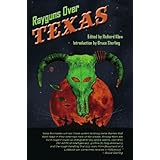
Well... maybe?  My short story Jump the Black appeared in Rayguns Over Texas, an anthology of sci-fi short stories all from Texas authors.  It's a very cool anthology, and I highly recommend it.

Texas, huh?

Yes.  Born and raised in Syracuse, New York, a city known for its rainfall and winters where daily snow can occasionally be measure in feet.  All right, admittedly, that's during freak blizzards, but it still happens.  So after finishing a film degree at Penn State, I moved to Austin, Texas.  A place where snow is so uncommon, a wisp of it shuts the whole city down.  It is bliss.
http://www.austinchronicle.com/issues/vol16/issue47/arts.exhibitionism.3.gifFilm degree, playwright?  Why are you writing novels?

I actually spent quite a bit of time doing theatre in Austin, as a playwright, director, producer, and even a bit of time as an actor.  As an actor, I mostly specialized in characters who got beat up, smacked around or killed.  I even played a character who was killed twice: first time, getting my neck broken, and then having my brain stolen.  Said brain was installed into a virtual reality system, and then my virtual self was killed.

It was a weird show.

But over time I began to realize that writing novels was what I really wanted to do, and I but all my focus into that.  I still write short plays on occasion, mostly because it helps keep those dialogue writing muscles sharp.  (More on that in a bit)

So, ahem... novels, you were saying?
http://blog.bookcountry.com/wp-content/uploads/2014/08/THE-THORN-OF-DENTONHILL-cover.jpg

Right.  I've got two fantasy novels coming out in 2015 from DAW Books.  First is The Thorn of Dentonhill coming out on February 3rd.  The next one, A Murder of Mages, will be coming out later in the year.  Both books are in the same fantasy setting, in the same city, but they are each, individually, the first of a series. 

So you're launching two different series essentially at the same time?

Yes. I'm crazy.

All right, man, it's your life.

Is that all?

Hey, I'm asking the questions!

Actually, you're not any more.

Oh, yeah.  So, aren't your posts for WordWhores supposed to be on a topic-of-the-week?

Yes, they are!  Which I'm quite grateful for, so now I won't spend Wednesday nights thinking, "What the heck am I supposed to be writing about for tomorrow?"

What's this week?

This week is about dialogue in non-action scenes, which is a right-in-my-wheelhouse place to start.  Dialogue and I are good friends.  This comes from cutting my writing teeth on plays.  I can throw two characters in a room and have them banter and bounce until days end. 

Which means sometimes, in writing prose, I fall into the trap of thinking like a playwright.  I mean, I just give them the words to say.  Action, emotion, intention?  The actors will bring that in their performance.  What's that?  No actors?  Just words on the page?  Ah.  Have to go back and revise.

So, yeah, for me, it's always an active process of remembering the action of the non-action scene, what the people are doing, how they physically react to the conversation, how the POV character feels and their observations of other people's emotions.  But part of that being an active process means I have to be aware that it isn't becoming inorganic.  It's one thing to make sure the characters are active while they're talking.  It's another to make sure I'm not just marking minutia for no reason other than to give them bits of business to do while talking.

That's overdirecting your actors.

So, on some level, you do have to trust in the effectiveness of the words of dialogue themselves.  Like you trust your actors to find the meaning and action that goes with it, you can trust your readers to do the same.

And with that, it's time to head back into the word mines.  See you down there.

Monday, August 25, 2014

Worldbuilding and the Challenges of the Cosmopolitan City

So, I've finally begun the work on The Little East (aka the sequel to A Murder of Mages) in earnest.  Without delving too deep into spoilers, it deals with investigations in the sub-neighborhood generally referred to as The Little East, which is kind of Maradaine's equivalent to Chinatown, Koreatown, Little Italy and Little Ukraine all rolled together.

Except not exactly, because none of the foreign cultures that are enclaved the Little East are really equivalent to Earth cultures.  Not exactly.

And that's the big challenge I've given myself with this book.  I need to depict these cultures as their own thing, unique to my world.  If readers start going through and going, "Oh, these people are just Japan with the serial numbers filed off" or something like that... then I've done something wrong.

So, how do I accomplish that, exactly?  One way is by trying to avoid any cultural buzzwords that will immediately but a specific culture in mind, especially in combinations.  You might be able to get away with "silk" or "paper lanterns" without evoking China, but put both together, and that's where your readers will go.

The other thing I try to do is give each culture some unique element or feel that doesn't directly evoke any real world culture.  For one culture, for example, there's a caste system that involves dying the hair specific colors. 

How do you evoke new cultures in your worldbuilding without making it feel like a copy-and-paste job?

Monday, August 4, 2014

How I Learned To Stop Worrying And Love the Editing

During ArmadilloCon I had the pleasure of talking with a woman who was in the enviable-but-frustrating position of having an agent, but her manuscripts were still being reviewed by publishers.  (Enviable because YOU HAVE AN AGENT, and that's awesome. Frustrating, especially at cons, because while you are on the path to success, you don't have that tangible commodity to show for it.  Talking up your agent-having alone just sounds strange.)  She was already worried about what might happen when an editor got a hold of it. What sort of crazy changes might be demanded?

Fortunately, I had just been through two editing processes, and I could reassure her that it wasn't likely to be as radical as the horror stories she had heard. 

In fact, I even wrote an article for Book Country on how my process was. 

Everyone's writing process and editing process are different, of course.  For example, I hear from a lot of writers that editing involves throwing a lot of words away and re-doing it.  I, personally, could never work that way... but at the same time, in my writing process, I cannot do the "just get it on the page and fix it later" method.  Not to say it's perfect when I first write it... not at all.  But if you were to compare the first draft of the first chapter of Murder of Mages to the one I submitted as a final version a few weeks ago, the fundamentals are more or less the same.  And almost all of my "major surgery" edits have been a matter of adding more to the manuscript, rather than throwing stuff away. 

Anyhow, being edited wasn't a scary process at all, thanks to having a fabulous, Hugo-nominated editor (fingers crossed for this year!)  Go and check out the article, and you can see the true finalized-cover of Thorn, including the DAW logo which identifies it as the 1681st book in their 30+ year history. 


Monday, July 28, 2014

ArmadilloCon Survival Report

So now ArmadilloCon is done, and it was a lovely time.

Friday was the Writers' Workshop, where we had plenty of good discussion in the morning sessions, and my critique students were an excellent group of people who are all on the verge of breaking through to the next level.  There were some administrative snafus (i.e., mistakes on my end of things), but our astounding volunteers Rebecca, Melissa and Beth helped keep things from flying off track. 

Plus I made sure Stina got a round of applause for all her years running the workshop.  Apparently next year, I'll be in charge.  Still contemplating that.

After the workshop, I swung home briefly* for dinner, and came back for my evening panels.  First was Protecting the Indigenous Tribes, which I had been a bit nervous about, but it went nicely, mostly because my panel-mates had interesting things to say, and we had a small-but-engaged audience.  Next was the raucous 40 Years of D&D, in which we mostly talked about our personal history with playing, favorite characters we played, and how it influenced our writing.  And we had to roll for initiative to talk.  Lots of fun, especially talking about how my love of playing thieves and mages influences the central character of Thorn, and the fun you can have role-playing a character with a terrible stat. (Namely, a Constitution of 5**)  After that, I ended up talking to Mark Finn and Mark Carroll more about gaming.  (Or, more correctly, listening to them, since I was starting to fade out.)

Saturday, I returned for another of my nervous-about-this panel on Aztec mythology in genre fiction.  Again, it went better than I had feared it would.  I didn't make too much of a fool of myself, though we had one audience member who consistently had a light shake of her head and an expression of No, wrong, wrong.  I found out after the fact that she was a PhD in Anthropology specializing in Mezoamerican cultures, so she probably had good reason.  If you're reading this: Sorry.  If I had known, I would have dragged you up with us.

Alcoholic Drinks in Fiction became Alcoholic Drinks in Writers, since a wonderful member of the audience bough drinks for the panel.  I may have prompted that a little.  But it was a very fun panel.   I hung around and did the BarCon thing for a while, mostly talking with Amanda Downum about each others work and alcohol, with Alex Renwick about the Olde Days of South Congress***, and becoming new Best Con Friends with Kat Richardson.  Who is awesome.  Plus many, many, many other people.

My reading went well, where I read the first chapters of both Thorn and Murder of Mages, and I was quite pleased.  And I can fill up an hour, apparently.  Good to know.  After a bit more BarConning, my wife arrived at midnight to sweep me off to her event in a different hotel.

Sunday's panels were early, which was a bit painful (see: swept off at midnight to a different event), but went well.  Best Cons in Genre Fiction was loose and free-form, but Don Webb and Jayme Blaschke are very smart guys to be sitting in a panel with, so it worked quite well.  The coffee had kicked in by the time I did Overhauling a Character, so I got to end my official con duties on a high note, as that was a good, vibrant discussion.

After some more Sunday-Afternoon-Decompression BarCon stuff, I stumbled home and fell down.  But now I'm feeling ready and vital, on the whole a successful con, in as much as one can measure "success".  Plenty of people seemed to be quite excited about Thorn and Murder, and one even said I had already earned a "fan for life".  I'll take that, thank you.   I'm ready to get moving on the rough draft of Murder of Mages II, editing Thorn II and projects beyond.**** 

Looking forward to next year.

---

*- Personally, I loved having the hotel relatively close to the house this time around.
**- For those unversed in game-speak, that's essentially being quite out-of-shape or otherwise unhealthy.
***- By which I mean the 90s.
****- I actually got an offer for a small Project Beyond, so I need to think about what I might do for that.

Monday, July 21, 2014

My Final ArmadilloCon Schedule

 ArmadilloCon is this weekend, which means I'm in crunch mode.  I've actually tackled quite a bit of my to-do list for this month, but I still have a few big things to do before the conference.  Here's my schedule, and some more cohesive thoughts about each one.  This is all, of course, in addition to the Writers' Workshop, which is all day on Friday.

Protecting the Indigenous Tribes 
Fri 8:00 PM-9:00 PM Room E 
Maresca*, Compton, Wright 
Indigenous peoples confront a diverse range of concerns. What should be done to ensure their existence? 


I have to admit, this one gives me a lot of pause, if for no other reason than the very title is fraught with landmines.  This is an easy conversation to go south with, and I'll confess I do not have any sort of first-hand experience on topic.  I know one point I'd like to hit is how to apply this to SF/F fiction, since, you know, it's an SF/F Lit conference, not an anthropological one.

40 Years of D&D 
Fri 9:00 PM-10:00 PM Room F 
Benjamin*, Finn, Maresca, Marmell, Sarath, Wright 
How did D&D inspire authors? 
I haven't been playing D&D for 40 years, but I started within its first decade (and my own).  I know that my own experience with fantasy as a genre has a lot of roots in D&D.  This should be a fun one. 

Quetzaxuahuitzalochtlicueotl 
Sat 1:00 PM-2:00 PM Room E 
Richerson*, Maresca, Oliver
Discussion of Aztec mythology and why it isn't used in more genre stories. 
This is the other one that gives me some pause, though I'm a little more comfortable with the subject matter.  Nothing which would qualify me as an "expert" in any sense, but certainly bringing Mesoamerican and, in a more modern context, Mexican sensibilities to genre fiction is a topic I'm interested in.
Alcoholic Drinks in Fiction 
Sat 5:00 PM-6:00 PM Room F 
Maresca*, Acks, Allen, Downum, Renwick
Discussing the drinks mentioned in stories, movies and tv. 
I've long been a big proponent of using food in fiction as a means of showing worldbuilding and character, and alcoholic drinks are a key subset of that.  An entertaining subset at that.  So I'll do my best not to be dry and academic about the history of beer or something.
Reading 
Sat 8:00 PM-9:00 PM Southpark A 
Marshall Ryan Maresca
An hour all about ME.  So come to Southpark A and hear me read, probably from both Thorn of Dentonhill and A Murder of Mages.  And, depending, there will be some Q&A.  By which I mean, if someone asks me questions, I will do my best to answer them.

Best Cons from Genre Books 
Sun 10:00 AM-11:00 AM Room D 
Webb*, Blaschke, Maresca 
Not many people are good at writing capers. Which books do it right? 
 I love a good caper.  To an extent, Holver Alley Crew is a caper.  This should be fun.

Overhauling a Character 
Sun 11:00 AM-Noon Room F 
Maresca*, Bracken, Carl, Chang, McKay, Rogers 
Now that you have written a book, go back and rewrite your main character.
I have specific stuff to say here, about the revision process of A Murder of Mages from rough draft to sold draft.  I'm sure everyone else will as well. 


So that's it.  I hope to see some of you there.  If you come, say hello.  I know I'd greatly appreciate it.

Monday, July 14, 2014

Edits and Research and Maps, Oh my!

This blog has, unfortunately for the moment, devolved a bit into "Stuff is happening and I'm busy!"  Today is no exception to that.  In part because I'm finalizing the edits for Murder of Mages so I can turn it in tomorrow. 

On top of that, I've got a fair amount of pre-ArmadilloCon work on my plate.  Part of that is the administrative side of the Writers' Workshop, part is the actual workshopping work for my group, and part is doing additional research and reading to prepare for some of the panels I'm on.

As part of that research, I've been revisiting Jared Diamond's Guns, Germs and Steel and Collapse, two books that have strongly shaped my ideas of worldbuilding.  I've also been thinking about the Columbian Exchange, and how that could be applied to worldbuilding.  I'll be posting more on that in the near future.  And that ties into geography, first and foremost, shaping the worlds we build.

And with geography, there's maps.  I've been re-working the maps to appear in Thorn of Dentonhill and Murder of Mages so they are of publishable quality.  Which is an excellent way for me to be productive while the back of the brain churns on writing things. 

So, back to work in the word mines.


Monday, July 7, 2014

Thorn of Dentonhill Available for Pre-order on Amazon

So, I wasn't sure what I was going to write about today.  There's a lot on my plate right now, including finishing edits to Murder of Mages, as well as finalizing other details for that (street map, acknowledgements, cover notes for artist), and on top of that ArmadilloCon and the Writers Workshop is in less that three weeks.

And that's on top of the things I have to do to keep the mortgage paid and the lights on.

But then, I discovered* something pretty amazing that I had to share:

Thorn Of Dentonhill is available for pre-order on Amazon! And it also has a Goodreads page

I'll admit, I completely geeked out when I saw an ISBN number.  Again, it's the little things like that which bring it home: this is a really real thing that is happening.

So that more or less made my week.

---

*- By "discovered" I mean "ego-surfed and checked my Amazon author page".

Thursday, July 3, 2014

State of the Writer: Halfway through 2014

Is the year already half over?  It feels like it flew by.  And yet I'm also eager for it to be over, since Thorn of Dentonhill is scheduled to be released in February 2015.  Despite everything, there's still something dreamlike and unreal about all this. 

Because this year has been, in many ways, all about anticipation.  I mean, do not get me wrong, I have been working: edits for Thorn, edits for Murder of Mages, and the rough draft of Elements of Aventil, aka Thorn II

And it's rough, but as of today, it's done.  Five months and change, which is the fastest I've turned around a rough draft of a full length novel.  It took a little longer than I had hoped, as I had really wanted to get it done before the end of May.  I just missed end of June.  But still: rough draft done.  Now to let the beta readers suffer go over it.

Which means only one thing: Get started on the rough draft for Murder of Mages II

Because this year-- the year of anticipation-- is also a year of opportunity.  Strike while the iron is hot.

And right now, dear friends and readers, I'm feeling like it's scorching hot.

The rest of the year will involve more writing, and whatever the next steps that are involved between now and publication.  Galley proofs, ARCs, and... whatever else.  I'm beyond excited.

I'll also be at ArmadilloCon.  If you can come-- July 25th to 27th-- I recommend it.  Come say hello.  I don't know if I'll be doing any more cons this year, but I intend to go to several more in 2015.

Because 2015 is going to be a very big year.

Monday, June 23, 2014

Publication Transparency: Value of an Editor

Having had Thorn of Dentonhill go through the editorial process, and in the midst of working the edits for A Murder of Mages, I have nothing but praise for my fantastic editor, Sheila Gilbert*.  I really believe her influence has made Thorn a better book than it would have otherwise been, and A Murder of Mages is on a similar journey right now.

I mean, just the title A Murder of Mages came from her.

Here's the big thing she does when we talk about the books-- she doesn't so much tell me "this is what you need to change" as much as ask me questions.  Questions about the characters and the world, and most of the time, these are questions I am completely able to answer.

I have to confess, I have a certain... apprehension when it comes to the infodump.  Infodumps are, in my opinion, not good, and I try and avoid them, instead weaving information in dialogue and description in bite-sized amounts.  Except sometimes I'm-- unintentionally-- too meager with those small bites.  Sheila helps remind me that my audience will want and need that information. 

But she'll also bring up questions I hadn't necessarily thought of.  Not that I don't have the answers, but I didn't think it was an important thing to consider while I was writing. Or if I did, it was something I was holding in reserve for a sequel. 

The point is, the process is one of inquiry, not dictation.  And one of strengthening and building, not removal.

And, of course, I'm quite proud of the results.


---
*-And clearly I am not the only one, since she's been nominated for a Hugo for the second year in a row. 

Thursday, June 19, 2014

Perils of the Writer: Losing Your "Strong" Female Character to Trinity Syndrome

This article by Tasha Robinson should be required reading to all writers (especially male writers, like myself) who like to think they are writing strong female characters.  Perhaps you are, but Ms. Robinson gives a good checklist to contemplate.

A big thing she talks about is the "Trinity Syndrome"-- where a female character is given the impression of being strong and important-- like Trinity in The Matrix-- but after her strong and important introduction, she actually contributes very little to the actual plot, other than propping up the hero.  Or, as Ms. Robinson so eloquently puts it, "A sexy lamp with information for the hero written on it."

This is not something I get right all the time, myself.  Thorn of Dentonhill, I'll admit, has only one significant female character in it, but she is pretty crucial to the plot, and it involves being Veranix's friend and confidante, but not a romantic partner.  I may not have done a perfect job, but I strove to make sure that Kaiana was not a sexy lamp.  Is she a Trinity?  I don't think so.  I can tell you, if she veers in that direction in Thorn, I'm fairly sure I turned out of the skid in Thorn II.

A Murder of Mages has many significant female characters, including and especially Satrine, who is very much the co-protagonist.  No one there is a sexy lamp, and Satrine is definitely not a Trinity.

That said, this gave me good things to think about, and places where I can see room for improvement in my own work.  Which is always the goal, right?

Monday, June 16, 2014

Worldbuilding: The Cosmopolitan Fantasy City

As I'm working my final edits for A Murder of Mages, I'm of course thinking about its sequel, which currently has the provisional title The Little East.   And with my plans for that, I'm getting to go deeper into an idea I had already been presenting for the city of Maradaine.

Fantasy, by its nature, tends to find Old World influences.  Western European being one of the biggest.*   The rest of the world, of course, gets a share of the representation, and even on occasion we see New World-- the Americas-- have an influence on fantasy worldbuilding.  But, of course, I'm talking about the pre-Columbian Americas there, up until 1491.

You don't see too much fantasy that draws influence from a more modern America-- and I'm talking secondary world fantasy, not urban fantasy.

Specifically, I'm talking about melting-pot cities, or at least cities where influences and enclaves from many places congregate and affect the primary culture.  The Little East works directly with that idea, as Maradaine is a highly cosmopolitan city, including sub-neighborhoods that are entirely peopled by foreigners and recent transplants.  Places where the culture is very different, and my main characters are essentially foreigners in their own city.  It also widens the amount of diversity I can have in Maradaine, instead of having it be just, in essence, all western-European types.

In addition, it gives me the opportunity to do the opposite of a travelogue-fantasy story. Instead of having characters go different places to see the different cultures... those cultures have come to the characters.  Plus, it lets me have those cultures interact with each other, and with the city, all on a micro scale.  Of course, to do that, a city must be well-defined.  You have to know the various neighborhoods, and who lives there, to include these foreign enclaves. 


---

*- Maradaine is no exception.  You'll see plenty of British and French in there.  That's not ALL you'll see, but it's clear where the primary cultural influences come from.

Thursday, May 29, 2014

Worldbuidling: Mage Circles and the Professional Mage

So, as I'm currently hip-deep in editing A Murder of Mages, one aspect I'm weaving in there is further explanation of Mage Circles, which is a crucial part of how magic works in Druth culture.  Well, not in how magic itself works, but how the culture deals with magic.

Druthal is a civilized and enlightened culture that's always had a troubling relationship with magic.  Up until the beginning of 11th Century*, most of the people were openly hostile to mages.  A tolerant attitude about a mage at the time would have been, "Let's only throw just enough rocks at him to chase him out of town." 

But over time, society advances: laws are codified, law enforcement is formalized, and justice is no longer enacted at one man's whim.  With that, attitudes about magic are dragged by the scruff of the neck, kicking and screaming the whole way. 

So you have a society where some people loathe and fear magic, but others would happily employ the services of a professional mage, as much they would a doctor or lawyer.  Just as doctors or lawyers have professional organizations and formalized accreditation, mages need the same, and in Druthal that takes the form of Mage Circles.

A Circle, in simplest terms, is an organization of mages that certifies that its members are trained, and assumes liability for its members actions.  They could be a tightly knit handful of mages, with similar goals and intentions, bound together like family.  Or it could be a sprawling guild of hundreds, with only loose interaction, functioning mostly as an institute of insurance. 

The main function of a Circle is, in theory, to ensure that a mage amongst their ranks knows how to handle their power, and that there is a system in place to bring them to heel should they get out of control.  In actual practice, a Circle often serves as a buffer between an individual mage and a potentially spurious legal system.  They will protect their own-- fiercely-- from police action if they feel its unwarranted, and often still provide counsel and support when it is justified.

What this also means that most mages, when encountering an Uncircled mage, will react the same as a doctor would in meeting a back-alley surgeon whose only training was watching reruns of Marcus Welby. 

However, since there are scores of Circles in the city of Maradaine alone (most with less than ten members), mages in general are hardly a unified political or legal body.  There are plenty of professional rivalries, simmering enmities and simple open hostilities.  Most of them don't get along with each other, and they certainly don't get along with law enforcement or other government agencies.

Which means when a mage is killed in a horrific, ritualistic murder, and one of the Inspectors investigated it is also an Uncircled mage, then you're going to get... well, you'll get A Murder of Mages

---
*- Thorn, Murder of Mages and other Druthal-based projects I've been working on are set in the 13th Century, specifically in 1215.


Monday, May 26, 2014

Current Projects and Writing Process Baton Pass

So, there's a blog-hop thing going on about current projects and writing process, which I was tagged on by Glynn Stewart, fellow client of Onyxhawke Agency and author of Starship's Mage.   And I always relish having blog topics handed to me.

1. What am I working on?


Currently I've got two key things on my plate: Editing A Murder of Mages to hand the final manuscript in to the publisher in the near future, and the rough draft of the sequel to Thorn of Dentonhill.  I'm coming close to the end of Thorn II, which currently has a working title of Elements of Aventil

Once those two things are done-- and I suspect neither one will take me past the end of June, I'll move on to working on the sequel to Murder of Mages.  And at some point this year I'll go back to Banshee, since I wrote about half of it before selling Thorn and Murder, and it'd be good to get that done before the year is out.

2. How does my work differ from other works in the same genre?


The main way, I think, is I strive to write fantasy that isn't easy to pin down.  It's city-based, but it isn't "urban fantasy" (which means something different than I think it ought to...).  It isn't set in a period that can easily be pegged as common for fantasy: not medieval or Renaissance or Victorian.  It isn't steampunk, but it does tweak on different technology paths. 

3. Why do I write what I write?

Mostly because these are books I would want to read, but since they didn't exist, I had to write them. 

4. How does my writing process work?

It starts with outlining and character development.  I get a sense of who the character is, and from that, what their story should be starts to coalesce.  Once I have that together, in a rough sense (very rough-- the origins of Thorn of Dentonhill can be found in some hand-scrawled sentence fragments in a notebook kept next to my bed), I then actually construct an outline using my twelve-part story structure as the scaffolding. 

Once I have that in place, including a partial Dramatis Personae, I can actually start writing.  I tend to write relatively linearly, but once in a while I'll get stuck, and jump ahead to one of the "red meat" scenes, and then go back and fill in the parts in between.  That can be quite helpful, actually.  It's one thing to know, "Hey, there's a place where I'm going to need to get to so I can have this stuff happen."  It's quite another to actually have Point A and Point B written, and then see from there the path you have to take, what you need to put in place to get there. 

--

With that done, I'll pass the baton on to Audrey Lockwood, who recently signed with Stringer Literary Agency, and will probably have more awesome things to announce in the coming year.


d


Monday, May 12, 2014

Perils of the Writer: Sequel Grinding

Some more experienced writers have told me that writing the second book is much harder than the first.

So far, with Thorn of Dentonhill II (new working title: Elements of Aventil), that hasn't been the case.

Not to say I haven't had my challenges.  It's gone steady, but around the 2/3 point, my writing output has slowed down.  Not stopped, but gone from 5-6K a week to 3-4K.  But that's not uncommon.  Every book I've written has had some sort of mid-point quagmire, and frankly, this has been the least troubling one to date.  I mean, Way of the Shield spent months in around 30,000 words where I just couldn't figure it out.  So spending a week longer to hit 70K on Elements is hardly cause for alarm. 

But why do writers have trouble with second books?  Mostly this comes from the fact that first books usually have years of midwifing, where writers work at their own pace.  Polishing and perfecting.  So once that finally sells, the pair of questions "Great, what's next?  And can you have it done in six months?" can certainly seem daunting. 

Now, perhaps why it's less daunting for me is because I kept working on rough drafts of new material while shopping Thorn-- a tactic which paid off, since I sold Thorn and Murder of Mages at the same time-- so the process of "Now how do I write another novel?" was demystified.  I worked out a process of outlining.  I've been coming at Elements with this solid outline-- which has, for the most part, survived intact, though there are plenty of aspects finding their way in that had nothing to do with the outline.

Of course, part of this has been to address the question, mostly imposed on myself: now that I'm "a professional", can I grind out the work at the pace I need to?  Part of the reason why Way of the Shield could sit and do nothing for so long is that no one was really asking for it.  In theory Elements of Aventil is going to have people asking for it, and having it done, proving I can do it as fast as I need to-- especially now, when we aren't at "quit your day job" money yet-- is an important next step.

So, in brief: yeah, writing the sequel is hard.  But, fortunately, it hasn't been as hard as I feared it could be. 


Thursday, April 17, 2014

Worldbuilding: Laws, Rights and the Wheels of Justice

Yesterday, I was summoned for jury duty.  This meant I arrived as required, along with twenty-three other people, sat around for a bit, and then had a clerk, a judge and a prosecuting attorney all tell us what a good and important service we were providing.  After a series of asking-the-whole group vague questions from the prosecutor, the jury of six was selected from the twenty-four, and the rest of us went on our way.

All this, mind you, for a speeding ticket.

Which made the whole exercise a fascinating bit of theatre of the absurd. 

Because while you have the right to a trial-by-jury even for a speeding ticket, it's a right that most people would never exercise, because-- it's a speeding ticket.  Forcing it to go to trial-by-jury is probably a massive waste of time and resources.

And yet, we do it.  We go through the whole dance for small matters to demonstrate why it's so important for larger ones. 

To bring that around to worldbuilding-- how the laws and rights your cultures enact, as well as how they are enforced and enshrined, says a lot about how that culture operates.  For example, when someone is accused of a crime, is it the burden of the state to prove their guilt, or the burden of the accused to prove their innocence?   And what will guilt or innocence mean?  In the world of Maradaine, the Kieran Empire is a true plutocracy, to the point where all crimes are punished with a fine.  If someone cannot afford their fine, they are sentenced to a slave work camp to earn it off.  So the rich can afford to do whatever they want, for all intents.

Druthal, and the city of Maradaine, has a system of more complex laws and enshrined rights.  Their justice system is very much based on the presumption of innocence and keeping law enforcement in check.  This comes as a reaction to the period in their history shortly before a total overhaul and reformation of the government, where agents of law enforcement had nearly unlimited power to arrest and incarcerate at whim.  So the "modern" Druthal defined its laws under the premise that preventing those abuses is the paramount concern for continued freedom of the populace.  Even their equivalent of the Right to Bear Arms is predicated on the notion that a person has the right to defend themselves if being arrested unjustly.

I did all this because, in part, I wanted something different from the top-down of the standard fantasy situation where the king has unchecked power, and being king makes one the absolute authority.  I also did it because I wanted A Murder of Mages to be a story in which the constabulary are bound by rules of what they can and cannot do.  Without their authority in check, the characters could take whatever action they saw fit, without limitation. That wouldn't be an interesting story.


Monday, April 7, 2014

Worldbuilding: The Broad Strokes and the Fine Details

I've made little secret of the fact that I'm a worldbuilding completist, though even I have a limit of what "completist"would actually mean.   For example, in my Banshee setting, that meant having a strong sense of what was going on within 30ly of Earth, a solid framework of 100ly from Earth, and a rough sense of 150ly from Earth. 

In the world of Thorn of Dentonhill, I at least don't have to deal with the infinite vastness of space.  One planet is a simple enough limitation, at least in terms of continents and oceans.  Draw out a world map, and you've defined the scope, and then place the cultures in them.

On this level, I've worked out the general concepts behind each nation and culture, and on a map level, the breakdown of districts/provinces and cities.  However, for a lot of the areas that aren't Druthal, that's the limit of what I've done.

For example, while the history of Druthal is a 25,000 word document*, over in the eastern areas of Xonaca or the Tyzanian continent, I have just a bullet-point outline of the history.  Can I delve into greater details there?  If I need it.  Right now, at the very least, I don't need that at all, and at a certain point that degree of worldbuilding is more distraction that purposeful. 

After all the stories I'm writing, at least right now, take place in Druthal, specifically in the city of Maradaine.  Now, I've built Maradaine as a cosmopolitan city, a place where people from all over the nation, as well as the world as a whole, might end up.  So it was important to have a sense of the whole country, and how the finer details could affect the city.  This was especially true in the case of Way of the Shield, which deals with Maradaine as a capitol city.  With Parliament members from Acora, Monim or Linjar, I need a strong sense of what being from those places mean.

But even knowing all that, the thing I really needed to know was the city of Maradaine itself.  Just as you wouldn't try to write a book about New York City without having a sense of what you were really saying when you mention Soho or the Upper West Side, I needed to know the city itself, and understand what it would mean to live in Aventil or Dentonhill or Seleth or High River.  Every neighborhood has its own sense, and to a degree, its own minute history.  I wouldn't work out other major Druth cities like Fencal, Yoleanne or Lacanja with the same level of detail, because, again, I don't need that at this point in time.  Maybe I will never need it.  So, again, even for a worldbuilding completist, it would be more a waste of time a distraction from the writing itself.

Now, of course, what I really needed to do-- what all stories need from the worldbuilding-- is how it works on a personal level.  Some of this is micro-managing the geography, which is a level I personally felt I needed to do.  I have to admit, I've got a certain pet peeve in fantasy books where cities-- sprawling metropolises-- are little more than towns with no street names, and districts that are more on-the-nose descriptions than actual names. Honestly, when I see that sort of thing, it highlights that the writer simply didn't do their worldbuilding work, which makes me feel like the work as a whole is going to be sloppy.  As I said, there are plenty of details that don't need to be done, but the ones closest to the story itself should feel full, vibrant and detailed.  That way, the story you write in it feels like it's in a living place, rather than a vague template of a generic setting. 

Because, after all, who would be interested in reading about that?


---
*- For my own sense of verisimilitude.  In no way will the reading of Thorn or Murder of Mages make you feel like there will be a quiz at the end.

Monday, March 31, 2014

That Was 40: A Pretty Good Trip Around the Sun

So, today is my 41st birthday.  And in the end, 40 was a pretty good year.  A quick recap:

  • "Jump the Black" was published in Rayguns Over Texas
  • With the sale of "Jump the Black", I'm eligible for the Campbell.  And, you know, nominations for that end today.  In case you were curious. 
  • I finished the long-suffering Way of the Shield, a book that just tasked me for the longest time before I figured out how to crack it.  
  • I attended my first WorldCon.  
  • I finally started properly writing Banshee, having now put in 70,000 words in it.  The idea of Banshee had been bouncing around in my head for YEARS, so getting real traction on it was quite a victory.
  • I SOLD TWO BOOKS TO DAW: Thorn of Dentonhill and A Murder of Mages.  Yeah, this was definitely the highlight of the year.  
  • Got underway on Thorn II so there is minimal turnaround between those two books coming out and the next ones.  And now I'm halfway done.
So, clearly, a milestone year.

It's definitely the year in which I've transitioned from how I feel about writing, from being someone who took writing seriously, devoting much of my energy and time to it, to being a professional writer.

It's been a good year for me, and I'm looking forward to the next one.  More writing, ArmadilloCon Writers' Workshop, and Thorn and Murder coming out.  And who knows what else.