Showing posts with label process of writing. Show all posts

Monday, November 17, 2014

Perils of the Writer: Composing the Symphony vs. Plot Jazz

In any long term creative endeavor, there is a limit to how much you can really plan out ahead of time.  Of course, you can always make detailed outlines, but the reaches a point of diminishing returns– where what you’re writing is more rough-draft than outline.*
And I’m a big planner, both in terms of individual novels and long-term series plans.  I’m a get-out-the-map-and-figure-out-where-I’m-going guy.  I’ve got outlines for novels I’m still going to write: specifically Books Three for both The Thorn of Dentonhill and A Murder of Mages, as well as Books Two and Three for Holver Alley Crew and Way of the Shield, books themselves that are still waiting in the wings for their time to shine.  And past that, well… let’s just say that as far as I’m concerned, none of those series are intended to end with Book Three.
But outlining is going to have its limits.  For me, a typical outline of a 100k-ish novel is somewhere between 1000 and 1500 words.  That hits the key plot points, but clearly lacks details of character interaction and transitions.  I find that there’s plenty of “Here is Point A” and “There is Point B”, but I still have plenty of chess pieces to move around to have things in place for Point B.
And that’s where the Plot Jazz comes in.
“Plot Jazz” is a term coined by some fans of Deep Space Nine and Farscape to talk about how those shows– shows which never really had a “plan” more than a few episodes ahead– had a great tendency to build off of things set up by throwaway lines or the possibilities a random idea offered up.  An excellent example is in Farscape, where John having hallucinations of Scorpius in “Crackers Don’t Matter”– an episode where everyone is going crazy for spacy-sci-fi-reasons–  triggered the idea that “Hey, maybe Scorpius put a chip in John’s head!”.  That concept ended up being a key factor that shaped the rest of the season, and the series as a whole beyond it.
Plot Jazz, where you play it where it takes you, and hope it sounds good.
Now, what Plot Jazz means to a dyed-in-the-wool outliner like me is that secondary and tertiary characters often become more than they were in the outline.  Not taking over the story, but having more consequence that the outline would have indicated.  And that’s usually because in writing the outline, I don’t necessarily know what I’ll need those characters to do in the specific.  The “what” is in the outline, but not the “why” and “how”, and there is a fair amount of discovery in working that stuff out.
There’s a fair amount of that in Thorn of Dentonhill, where while I was writing I’d realize something like, “Colin needs a friend he can talk to in this scene” or “I need a Constabulary officer to show up here”, and then the character that comes out of that expands into a life of its own.  That’s where, for example, Colin’s crew of Jutie, Hetzer and Tooser or Lt. Benvin came from in Thorn, and those roles ended up being more than could have been predicted in the outline.  Jutie and Lt. Benvin both get mention in the outline for Thorn II, but the details of the how and why with what they do ended up giving them both a crucial role in that book, including realizing I needed to give Lt. Benvin a whole group of constabulary officers under him.
So while I love my outlines and will never, ever let them go… that doesn’t mean I can’t embrace the Plot Jazz when I need it.
—
*- I do know of one writer who does write very detailed outlines for his novels, that the outline is around 40K for a 100K novel. He said the main difference between his outline and the novel is dialogue.

Thursday, November 6, 2014

Creative Outlets That Aren't Writing

One can't just pound out words for eight hours a day, five days a week.  Well, maybe some people can, but I sure can't.  So what else do I do to chum the creative waters?
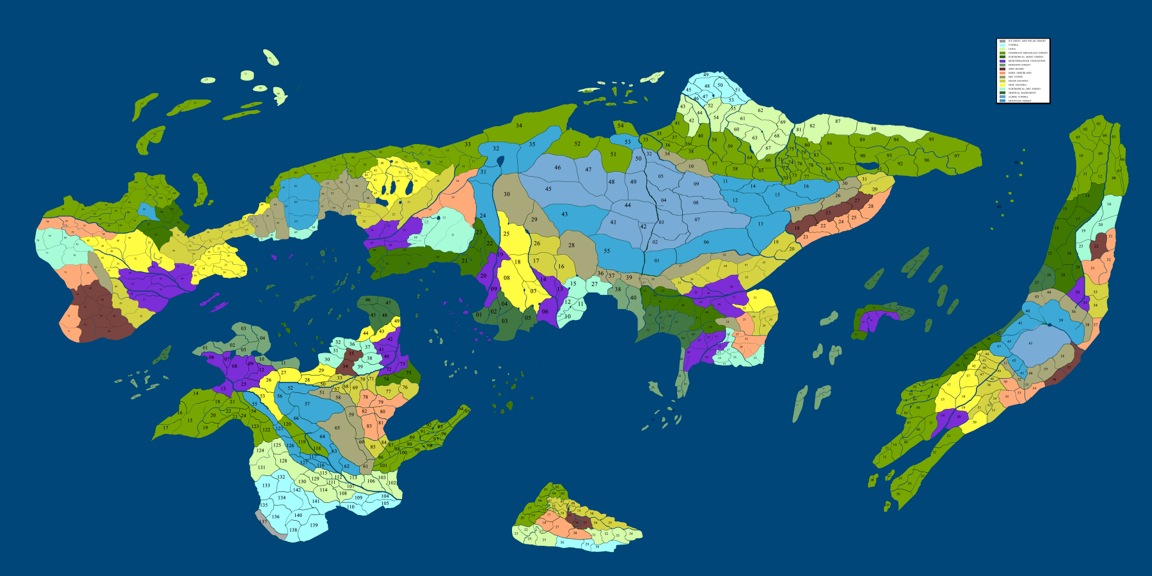
Full World Map Historical Work MapFor me, and I know this is going to be a real shocker-- it's worldbuilding work, especially maps.
Now, I'm sure a lot of writers just build the world for the stories, or craft a world around a story idea.  Which is probably the smarter thing to do.  I mean, if you're doing all that worldbuilding work, it should be for a purpose, right?
Map-Concept
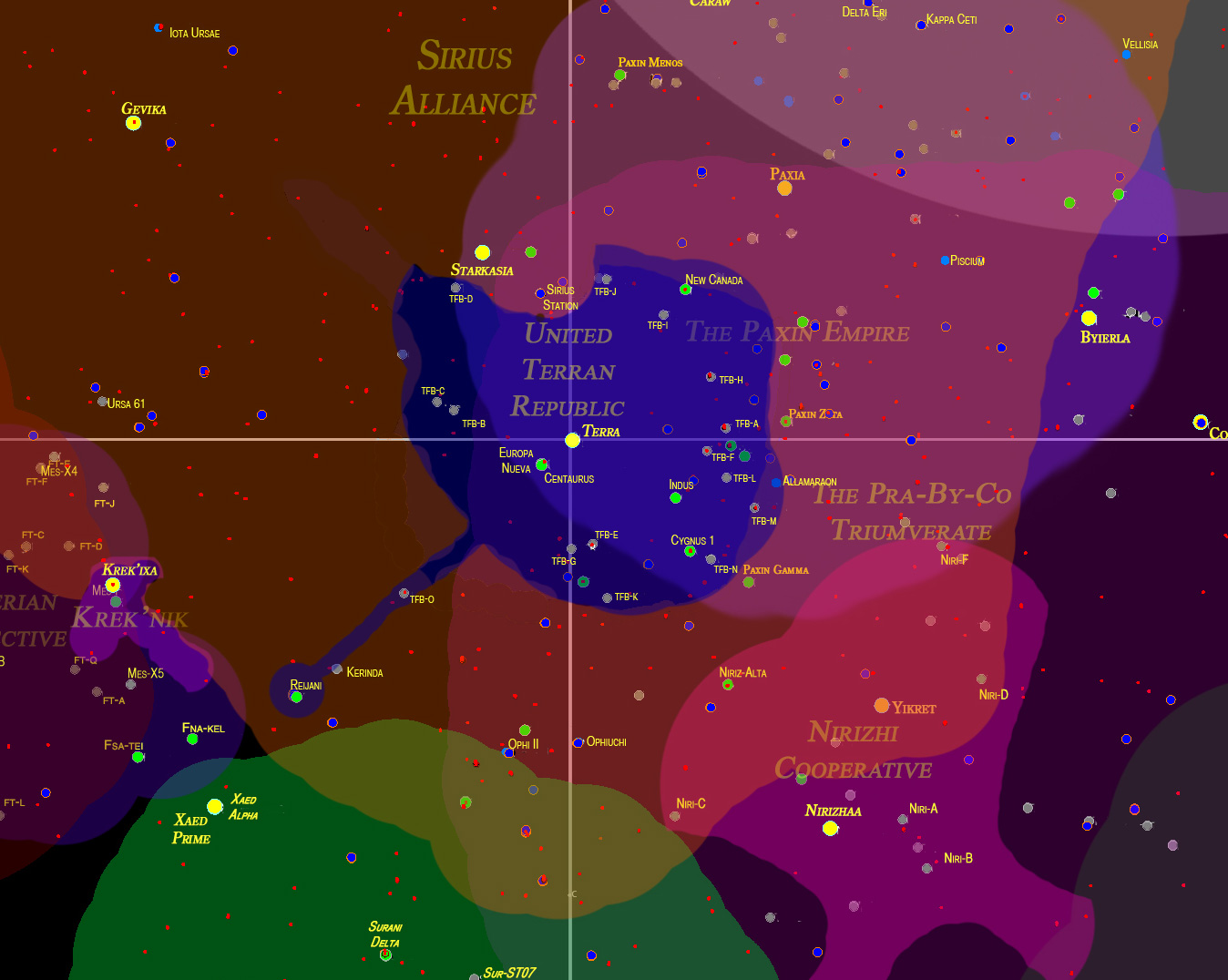
  And for each of these, maybe there will be a purpose somewhere down the line.  But when I'm-- I don't want to say stuck or blocked, because I don't think that's accurate, but let's say conceptual brewing, and my brain needs to mull on where things are going or how to do a certain bit, then doing some map-drawing or other worldbuilding activity (like figuring out biomes and then connecting rise of agriculture to said biomes, and thus determining where those Fertile Centers of Origin are going to be that civilization arises in) or micromanaging a pair of linked villages for what sort of setting might be there.  Or the rise of multiple interstellar empires. 
Space-Opera-Sample-MapThis is probably the sort of thing that other sf/fantasy writers dread.   And I get that.  But for me, it's a lot of fun.  And dorky.  I will fully admit to compiling spreadsheets filled with just raw data of animal domestication or tech development of number of planets for hundreds of stars or regions or whatever else.  That gets the processing and analytical part of my brain in gear, and lets the writing brain churn and simmer, and then, hey... a thousand words show up. 
Plus, maps are fun.  I can't draw very well, but I can do maps.
That's all for now.  I'll be at OryCon this weekend, and if you're in the area, I hope to see you there.


----

An admin note: I'm in the process of consolidating and updating my website, so everything, including this blog will be in the same place.  I'll post in both places for a while, but eventually the Blogger version will go away, and everything will be over there. 

Thursday, October 30, 2014

Perils of the Writer: The Horrors of the Trunked Novels

I like to remind people that getting to the point where I am, with two novels coming out next year with a major publisher, was a journey.  Before I even wrote the first draft of Thorn of Dentonhill, I wrote two other novels.  Two novels which should never see the light of day.

So let's talk about them.

The Fifty Year War was a very bad attempt to emulate something akin to Isaac Asimov's Foundation, where the key events of a multi-generational war is told through a series of novelette-length vignettes.  Because nine 10k-ish novelettes equals one novel, right? 

Except not so much.  Let alone that there isn't so much a "plot" as there is "stuff that happens".  There isn't anything for readers to hook into.  The closest to a "main" character is an officer named Benton who has a key role in three or four of the sections, and then a minor cameo later.  The only other bit of recurring involves the various generations of a soldier family who keep getting killed in key battles.  That was my way of highlighting the toll on the 'average' man in this war: killing off pikemen named Weaver. 

When it comes down to it, Fifty Year War is essentially a chunk of Druth history that I had already worked out, setting the stage for the "real" time I wanted to write in.  So in a lot of ways, it comes off as a prequel to something that didn't exist, filled with the obvious piece-setting that prequels have, but making zero sense to anyone but myself.

So I would fix those mistakes with Crown of Druthal.  There I had a set cast of characters, so the readers would have main people to grab onto.  And I would have them... do... plot-like things? 

Yeah, not quite.

First problem with Crown comes down to the same challenge a lot of fantasy-worldbuilders face: I've made this whole world, and now I'm going to show it ALL TO YOU.  ALL OF IT.  It was literally a travelogue with absolutely no McGuffin to chase from country to country.  The characters were the crew of a diplomatic ship more or less assigned to go on a world tour.  They were to go to each country so I could show you each country.  I totally had a whole multi-book series planned, and by "planned" that meant I knew which countries they would go to.  Which was a huge part of the problem, especially with Crown, the book I actually wrote.  I had to jam a series of events from "stuff that happens in country A" and "stuff that happens in country B" into something that looked like a plot for a single book.  But since I was far more interested in just touring both countries, the plot takes a good long while to get going.

The other problem is the story is loaded with characters who are essentially there to be set decoration.  I had a ship full of people, with different specialties and jobs, and most of them served absolutely no purpose in the story.  I did some logistical contortions to give most of them a toehold in the climax-- so a combination of telepathy, magic and celestial navigation is used to determine where my main character was being held captive, so then the guys with swords could mount a rescue. 

There are bits in Crown that I'm fond of, but it's mired in long sections where characters are more or less hanging out, taking at least half the book before the plot proper actually gets going.  And the plot itself?  Kind of a long way to drive to get a gallon of milk.

But in the process of writing these two trunked novels, I learned plenty about how to write a novel, how to structure character arcs and plots.  So: they're bad, they'll stay in the archives for all time, but they were vital to the process of eventually writing Thorn of Dentonhill and A Murder of Mages. 

Thursday, October 23, 2014

Perils of the Writer: Deadlines and Schedules

I'm a big believer in a regular writing schedule.  Find a time of day that works best for you, carve that time out, and affix yourself to a chair and get it done.  It's not always easy or fun, but that's how one gets it done. 

Now, fortunately, so far, I've not had much of a problem with deadlines.  The Thorn of Dentonhill and A Murder of Mages were essentially complete manuscripts when they sold.  Editing work was required, but the time I was given to get that done was ample.  On top of that, as soon as I signed the Thorn contract I started to put my nose to the grindstone on Thorn II. 

That doesn't mean I'm immune to things blowing up in my face.  A disruption to my life can throw everything out of sync.  A few weeks ago my wife was in a car accident.  Fortunately her injuries were relatively minor, but the car was totaled.  So the process of dealing with things like insurance, car rental, and so forth is time and energy out of my day, and that has to come from somewhere, and "somewhere" more often than not turns out to be writing. Or sleep.  Or the dishes pile up.  Those last two tend to come to a head far sooner than the writing, though. 

Since my deadlines are relatively self-imposed at this point (i.e., when I want to get something done is sooner than other people are asking for it), getting back on track is mostly a matter of readjusting my expectations and going back to the grind.  I've learned from experience that trying to do things like double my output or "catch up" usually results in things going even further off the rails.

Not to be all tortoise-and-the-hare, but slow and steady, getting back on task and doing the work each day is really the only thing you can do.  But it does help that my personal deadlines give me enough breathing room to account for things going wrong. 


Thursday, October 16, 2014

Thoughts on My Online Presence

There's something strangely meta about writing about my online presence here, as this is part of my online presence.  My blog-writing is more or less the centerpiece of it.

Managing one's online presence, especially as an author (or any other creative-type-promoting-oneself) can be a full-time job in and of itself.  No one has time for that.  I'm actually quite surprised when I see big names constantly blogging, tweeting, facebooking, etc.  But, hey, if they can make it work, good for them.  There's no way I can do that.

Here's a piece of advice I received on the subject a few years ago: Pick one aspect of on-line presence to be your center-of-gravity.  This is the primary place you'll put original content.  For me, it's my blog.  Every other bit of social media or online presence should be designed to direct back towards that central presence. 

That means that my Twitter, Facebook, Google+, etc. are all designed to be a public face, and lead you back toward the blog, which is where you'll see new and interesting things from me.

I even linked my blog to my LinkedIn and Goodreads page.  Those update automatically when I do.  And that way I can put most of my online-presence energy into writing creative and interesting content here, and still have energy to also write books. 

And that's important, because what's the value of having the online presence if it isn't in service of your books?

AND SPEAKING OF... over at Goodreads you can enter to win a free copy of Thorn of Dentonhill.  Head over there and sign up!

Thursday, October 9, 2014

Writing Is Never Working Alone

I like to use my "go down into the word mines" analogy about writing, as if it presents this image of me as this lonely old prospector, heading down into the depths with pick-axe over my shoulder. 

Of course, that's not how it really works.  You can't do this without people having your back. 

I've got a lot of people, but if I had to narrow it down to the inner circle, I'd have four names.

1. Dan Fawcett -- Dan's been my friend since seventh grade, and has been my constant sounding board for story ideas, worldbuilding concepts, and generally putting up with my ramblings.  He would probably hesitate to take any credit, but Thorn of Dentonhill and the rest of the books in Maradaine wouldn't be what they are without his influence.  Heck, I'm pretty sure he's the one who suggested "Maradaine" as the city's name. 

2. Mike Kabongo-- my agent, who has stood with this work in the time it took us to sell it, who encouraged continued projects while Thorn and others were out shopping, and who read a manuscript that wasn't ready, but saw enough potential in it that he was hooked.

3. Sheila Gilbert -- my editor at DAW.  There are plenty of other people at DAW as well, half of whom I don't even know their name, who are all doing things for me and my work.  But Sheila is front and center, making Thorn be the best it can be when it hits the shelves in February.

4. Deidre Kateri Aragon -- my wife.  Of course she's on this list, because it would have been impossible for me to achieve this without her.  She's the one who kicked my butt so I stopped being the person saying, "Yeah, I'd like to be writing books" and made me actually write books.  And just as I'm working every day on writing, she's working every day so I'm able to.  But we both work from home, so we get to sit across from each other at our big table.  So it's the best of all things; I get the space I need to work, but I have my favorite person in the world right there with me. 


Are there more people?  Yes. Tons. I could go on, but that's what acknowledgement pages in books are for, right?  And even there, I probably missed a few.

That said, it's time to make the most of their support.  Off to the word mines.

Monday, October 6, 2014

Perils of the Writer: Riddles, Puzzles and Games

There is something alluring to putting a riddle in your story, especially in fantasy.  Heck, that goes back to The Hobbit and the riddle game between Bilbo and Gollum.  But making a good riddle, that's another matter.

I recently read a book-- no need to go into specifics-- but the underlying premise involved solving riddles to get to the end goal.  And in it, people were downright stumped by said riddles. For months on end.  Thus the author was telling us that they were super hard.

Except I solved each riddle within moments of reading them.  So, at least for me, the foundation the book was built on was extraordinarily flimsy.

But on the other hand, you don't want your riddles to be so hard they're based on a logic that only a madman could get from A to B to C, and then realize that "C" means "see", and you need glasses to see, and glasses are kept in the cabinet, and therefore The Riddler is going to assassinate the President's Cabinet!*

So, having your puzzle actually make logical sense is crucial.  But the great thing about logical puzzles is they can seem like complete crazysauce, because Pure Logic rules don't really apply to the real world.  Take, for example, the "100 Green-Eyed Dragon" puzzle.  The nature of the puzzle is extremely convoluted, involving several rules and caveats to enable it to work the way it does.  I won't give you the answer, but I will say that the answer only works because it's a matter of Pure Logic, including the caveat that every dragon involved operates on pure logic, and they also know that every other dragon involved also operates on pure logic.  Take that presumption away, and the whole house of cards falls apart.**

Of course, much of the fun of putting riddles or puzzles in a story is having your characters go through the process of solving it.  If you can work it that A. your (average) reader hasn't already figured it out and B. after going through the process with the character they will think, "Yes, that makes sense now.", then you've succeeded. 

What are some of the riddles you have in your stories?

---
*- This is not an actual example of The Riddler's riddles on the old Superfriends show, but it more or less fits the train of logic to get to the actual intended answer the show had.   
**- Another example is the Prisoners and Hats puzzle.  Quick version: three prisoners are sentenced to be executed, but the jailer will let them go if they solve a puzzle. He has four hats: two blue and two red.  He lines them up and puts the hats on their heads, so no prisoner can see his own hat, and the second prisoner can see the first, and the third can see the second and first.    Now, the the solution comes from the fact that if the third prisoner sees two hats of the same color on #1 and #2, he immediately knows he's got the other color, and says so.  But if he sees #1 and #2 have different colors, then he knows nothing about his own hat.  However, #3's silence would indicate to #2 that his hat is different from #1, so he can figure it out.  That's the solution, but it's entirely based on the idea that #3 isn't an idiot, and that #2 also isn't an idiot, AND he knows that #3 isn't an idiot.  Poor prisoner #1, of course, has no information and has to rely on the both of these two, praying that they aren't idiots.


Thursday, September 25, 2014

Perils of the Writer: Putting Yourself on the Market

More than once, I've had people speak to me of "marketing" like it was something separate from "promoting".  I'm a writer, not a marketer or promoter or advertiser, so I did the most sensible thing.  I went to the dictionary.

marketing |ˈmärkitiNG|noun
the action or business of promoting and selling products or services, including market research and advertising.

Well, that's no help.  I mean, "promoting" is right there in the definition.  Pressed, I'd argue that "promoting" is about awareness, and "marketing" is about sales.

With the books coming out next year, at least at the moment the main thing I have to market is myself.  To actually sell something, I more or less have to convince people I'm someone worth noting.  So I've got to rely a lot on charm and personality, and being able to use those traits in a public venue with a suitable target audience.

Fortunately, I've got a venue for such a thing this weekend.  I'll be at FenCon!  You can check out my whole schedule right here.  If you have the opportunity, come on over.  I'll be on panels on geography, technobabble and series that go on too long, all topics I should be able to say clever and intelligent things about.  Plus I'll be reading from Thorn of Dentonhill.  Hope to see you there.

In the meantime, I've got to get down in the word mines.  Always more to do down there.

Monday, September 22, 2014

The Very Different World of Literary Fiction

Literary Fiction is not my world.  And on some level, it totally boggles me.

Case in point, this weekend I just heard about the book The Goldfinch by Donna Tarrt, which came out last year and won the Pulitzer.  Now, I haven't read it, of course, and can offer no meaningful comment on either it or Ms. Tarrt's body of work.  As evidenced by the fact that I only heard about it this week, what's going on in literary fiction (and especially with the Pulitzer) simply is not in my usual circle of information.

But here's the thing that I honestly do not understand.  The Goldfinch is Ms. Tarrt's third book.  Her other books, The Secret History and The Little Friend, came out in 1992 and 2002, respectively.  So that's three books in 21 years, with a decade between each one.  How exactly does one maintain audience, let alone the interest and patience of one's agent or publisher, with that kind of gap between each work?  It would strike me that in this day and age, one could hardly build a writing career like that.

I mean, I get the literary once-and-done, like Harper Lee with To Kill A Mockingbird.  The lack of follow-up makes it stand out all the more.  But I would think that, say, around 2010, there wouldn't be anyone sitting around saying, "Remember the person who wrote that book eight years ago, and that other one eighteen years ago?  When's the next one coming out, because I can't wait!"

Now, it could be that Ms. Tarrt is an extraordinary talent-- each book was lauded with praise, including the Pulitzer, so I can accept that she is an outlier.  Maybe each of those books stay with the readers so strongly that no amount of time would fade interest.  But it strikes me that the path of "great' literature usually follows along these lines: three or four novels written over the course of a lifetime.  That this is almost what is expected of those authors.

As counterpoint, consider the current leading Grand Poobah in SFF circles: George R R Martin.  With just Songs of Fire and Ice books He's written almost twice as much book (by word/pagecount, not number of books) as Ms. Tarrt in almost half the time, in addition to other writing projects... and yet there is an underlying narrative of George needs to write faster.* And in general, if someone in genre had their last novel in 2002, on the whole the narrative in 2013 would have been that their career was dead.  Heck, I know of one who, because she waited a few years between publishing Book Two of a series and finishing Book Three, was completely unable to sell Book Three, and ended up self-publishing it even many more years after that.

So, is this part of the nature of Literary Fiction?  Does its audience expect their writers to deliver a masterpiece, then vanish for many years while working on the next one?  In those circles, is that the pace of writing they aspire to? 

Now, I'm not saying that genre writers need to be machines, where cranking out product is more important than craft.  But it seems within genre a pace of, say, a novel per year is a lot more common than out in the lit field.

But since I do have a pace to maintain, time to get back to it.  So you in the word mines.

---
*- And, as they say in the song, in the time George has had, William Shakespeare churned out 35 fricking plays.  Because he needed to pay his bills.

Monday, September 15, 2014

Perils of the Writer: Establishing the Stakes

This past weekend I watched the five pilots that Amazon put up to gauge customer interest.  It's an interestingly democratic way to do the pilot process: bring the pilots to the people, and let them decide which should get a series order.

Pilots are, of course, like opening chapters of a novel: they have to hook, they have to engage, and most importantly, they have to establish stakes.  You have to gauge your pacing and your revelations, and make sure characters are responding in proportion to the events unfolding.  You can't just have people screaming about how serious things are and expect the audience to buy in to that.

In other words, stakes have to be real, and they have to be shown. 

On of the five pilots in particular, Hysteria, fails greatly in this regard.  We start with a doctor visiting her brother on death row, where he wants her to tell him about what she's investigating in Austin.  This is just a framing device for the real story, in which (and I'm quoting from the copy) "A young doctor is summoned back to her hometown to investigate an epidemic that may be linked to social media."

Now, we'll ignore that her hometown is Austin, and despite the fact that it was filmed here in Austin, the show frames the city like it's a place with one school, one hospital, abandoned factories and alleys that cops get beat up in if they walk down alone.  We'll ignore that stuff.

Instead we'll talk about the stakes.

See, it starts with a bunch of girls sneaking out at night to go dance with some wrong-side-of-the-highway boys in the abandoned snowglobe factory.  One of the girls is livecasting it on her phone while she gets sexually aggressive with on of the boys.  The other boy starts to get aggressive with her sister, but then her sister starts having seizures.

At the hospital, the doctor is already treating it like it's Super Serious Business-- beyond the scope of just her having seizures and being in a coma. Before even the light of day hits, he's already talking about calling in our main character from Houston, as she's a neurologist and psychiatrist.*  Because in Austin, there's none of those on hand, or something.

Now, by the time the doctor arrives, the video has been seen by a handful of people, one of whom (another girl who was there) starts having seizures.  We literally only see her hand shaking, and then we never hear directly about her again.  The other girls who were there, we are explicitly shown that they are fine.**

So, to reiterate: two cases.  Despite that, we're shown the doctors talking to the parents of ALL THE GIRLS as if they all have a stake.  Like, "hey, parents of girls who are not patients, let's have a conference involving you as well."

Meanwhile, we see a mysterious person putting together a video of the girl having a seizure mixed with other footage of her dancing.  For mysterious, possibly nefarious reasons.  After that video comes out and goes viral, then there's another person with seizures.

And the city of Austin freaks completely out.

So, let's go back: two girls with seizures-- so it may be a disease or or exposure to something, or it may be one girl with a neurological problem and a friend with some sort of sympathetic psychosomatic reaction.  Then a third-- and to everyone's knowledge, completely unrelated or connected person-- also has seizures (and that could just be epilepsy or something else entirely) in a city with a greater metro population of a million.  And people reaction like the Serious Epidemic Business is here.

Like, screaming in the hospital parking lot freak out.  Like, press conference in the high school gymnasium with the chief of police and screaming angry parents. 

Had the show even remotely earned these stakes?  No, not at all.  Not with only three cases, one of which shows no real connection to the the other two.  In fact, the third case is shown to be different because he gets violent with the people trying to help him.  There's literally no reason for them to even think the third case is connected to the other two, beyond seizures. 

Of course, our heroine figures out a connection, in that the third victim is the mysterious guy who made the video, and thus she thinks that the SEIZURES ARE BEING TRANSMITTED THROUGH YOUTUBE.  Or something.  This is despite the fact that we're shown plenty of people seeing the video (and it's hardly a clickbaity-you-have-to-see-this-video), and no one else is showing symptoms.  But before this absurd epiphany (which seems to be the underlying premise of the show), they have no reason to believe any connection. They say that his symptoms aren't the same, except for seizures, and that they don't believe he's had any contact with the girls... so why do they think it's a connected case?  They just do.

So what did they do wrong?  They didn't establish believable stakes.  If anything, they explicitly undercut their stakes, but then had characters react as if the stakes were extremely serious. 

If you want your audience to believe what you're telling them, believe that situations are serious, then stakes have to be established fairly and legitimately.  This isn't just a matter of show vs. tell-- we're shown who's sick, we're shown the town's reaction.  But what we're shown of events doesn't match what we're shown of reaction. 

Without well-established stakes with logical points connecting them, there's no way your audience is going to accept what you're giving them.

---
*- The mother latches onto "psychiatrist" part and freaks out. 
**- One is set up with tension, like her father is going to find her seizing in the shower, but no, she's fine and showering, and yells at her dad for coming in there. 

Thursday, September 4, 2014

Metrics of Success

I'm in the early stages of my writing career where the measure of "success" can be marked with easily notable milestones.  The big ones along the path still stand out.  Actually finished a novel! Full request on my query letter!  Offer of representation! Really nice rejection letter!

And, of course, those stood out because those were the things I could grasp on to in the moment.  They were little things that represent huge victories.

But they were also victories that were challenging to really talk about or celebrate, as they lacked tangible benefits.  When I talked about this to an actor friend, he likened it to getting a third callback on a major movie role.  Yeah, it shows you're getting there, that people notice your work... but it's not really anything beyond the humblebrag.

I think those are vital toeholds as you work your way up the wall.  You need those little things.  You need those few encouraging words you might get along the way. 

Even now, with the initial trappings of "making it"-- I've got the contract, the publishing deal, the gorgeous cover, the release date-- it's hard to call myself a "success".   The book hasn't come out yet, no reviews, that lingering voice of doubt whispering in my ear that no one is really going to like it. 


I don't let myself listen to that voice.

"Success" is always over the next horizon.  I mean that in the best way-- I don't think it's some ephemeral thing that can never be reached.  I mean that the act itself of progressing toward it is, in and of itself, the real success.  It's reaching a new plateau, taking a brief moment to savor that, and then looking up at the next one and saying, "Yeah, that's where I'm going to go."

All right, off to the word mines.  See you in there.

Thursday, August 28, 2014

In Which I Become A Word-Whore; Or, Who is Marshall Ryan Maresca Character Anyway?


So, as of today, I've been added to the Word Whores blog, joining Jeffe Kennedy, James Moore, K.A. Krantz, Linda Robertson, Marcella Burnard and Veronica Scott.  I'll be appearing as their Thursday blogger, though what I write over there on Thursdays will be the same thing I write here on Thursdays.  My Monday post here will be unaffected.  So here's my first post for Word Whores, in which I introduce myself (which might be news for some of you anyway), and discuss this week's topic.
---
Hello!  I'm Marshall Ryan Maresca, the latest addition to Word Whores, and I know exactly the question you're all asking.

Who?

I just told you.

No, really, who are you?

All right, fair question. 

So: Marshall Ryan Maresca, Fantasy and Science-Fiction writer.  I'm also a playwright, but in all honestly I don't focus on that as much, leaning more toward fantasy and sci-fi writing. 

Yeah, but, have I read any of your stuff?
Product Details

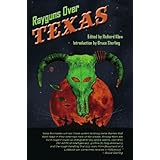
Well... maybe?  My short story Jump the Black appeared in Rayguns Over Texas, an anthology of sci-fi short stories all from Texas authors.  It's a very cool anthology, and I highly recommend it.

Texas, huh?

Yes.  Born and raised in Syracuse, New York, a city known for its rainfall and winters where daily snow can occasionally be measure in feet.  All right, admittedly, that's during freak blizzards, but it still happens.  So after finishing a film degree at Penn State, I moved to Austin, Texas.  A place where snow is so uncommon, a wisp of it shuts the whole city down.  It is bliss.

http://www.austinchronicle.com/issues/vol16/issue47/arts.exhibitionism.3.gifFilm degree, playwright?  Why are you writing novels?

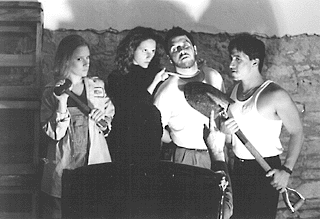
I actually spent quite a bit of time doing theatre in Austin, as a playwright, director, producer, and even a bit of time as an actor.  As an actor, I mostly specialized in characters who got beat up, smacked around or killed.  I even played a character who was killed twice: first time, getting my neck broken, and then having my brain stolen.  Said brain was installed into a virtual reality system, and then my virtual self was killed.

It was a weird show.

But over time I began to realize that writing novels was what I really wanted to do, and I but all my focus into that.  I still write short plays on occasion, mostly because it helps keep those dialogue writing muscles sharp.  (More on that in a bit)

So, ahem... novels, you were saying?
http://blog.bookcountry.com/wp-content/uploads/2014/08/THE-THORN-OF-DENTONHILL-cover.jpg

Right.  I've got two fantasy novels coming out in 2015 from DAW Books.  First is The Thorn of Dentonhill,  coming out on February 3rd.  The next one, A Murder of Mages, will be coming out later in the year.  Both books are in the same fantasy setting, in the same city, but they are each, individually, the first of a series. 

So you're launching two different series essentially at the same time?

Yes. I'm crazy.

All right, man, it's your life.

Is that all?

Hey, I'm asking the questions!

Actually, you're not any more.

Oh, yeah.  So, aren't your posts for WordWhores supposed to be on a topic-of-the-week?

Yes, they are!  Which I'm quite grateful for, so now I won't spend Wednesday nights thinking, "What the heck am I supposed to be writing about for tomorrow?"

What's this week?

This week is about dialogue in non-action scenes, which is a right-in-my-wheelhouse place to start.  Dialogue and I are good friends.  This comes from cutting my writing teeth on plays.  I can throw two characters in a room and have them banter and bounce until days end. 

Which means sometimes, in writing prose, I fall into the trap of thinking like a playwright.  I mean, I just give them the words to say.  Action, emotion, intention?  The actors will bring that in their performance.  What's that?  No actors?  Just words on the page?  Ah.  Have to go back and revise.

So, yeah, for me, it's always an active process of remembering the action of the non-action scene, what the people are doing, how they physically react to the conversation, how the POV character feels and their observations of other people's emotions.  But part of that being an active process means I have to be aware that it isn't becoming inorganic.  It's one thing to make sure the characters are active while they're talking.  It's another to make sure I'm not just marking minutia for no reason other than to give them bits of business to do while talking.

That's overdirecting your actors.

So, on some level, you do have to trust in the effectiveness of the words of dialogue themselves.  Like you trust your actors to find the meaning and action that goes with it, you can trust your readers to do the same.

And with that, it's time to head back into the word mines.  See you down there.

Thursday, August 21, 2014

Worldbuilding: Fantastic Beasts and Where To Find Them

As an old school D&D person, one of the things I loved about the old Monster Manual was that it wasn't just a listing of monsters and their combat stats.  Care was taken it A. also putting regular animals in there and B. discussing the behavior, habitats, biology and ecology of all the creatures discussed.

Earlier when I talked about Bottom-Up Worldbuilding, I touched briefly on adding the flora and fauna, and how those decisions would shape the cultures around them.  Of course, those choices also have to fit the environments around them.  You can't just, for example, stick lions or tigers or bears just anywhere because they're awesome.

Nor can you have any animals just be domesticated, just because that's what you want.  The animals domesticated over the course of human history were domesticatible for a reason.  And more to the point, those that were NOT, were not for a reason.  Zebras are the angry jerks of the equine family, and they do not want to be your friend.  Bison are skittish and can JUMP like you wouldn't believe, and thus are challenging to put into a corral.  Elephants can be tamed, but they stay pregnant for two years, just to have one calf, which makes raising them for meat or transport unideal. 

But this is fantasy worldbuilding, and you can make whatever creatures you want, right?  Right. But make sure they make ecological sense. Fast-moving apex-predators, for example, are going to need a lot of calories, so their food supply should be ample, and there's a limit to how much competition they should have for that supply.   Non-domesticatible megafauna should have a good reason for not having been hunted to extinction for their delicious meat.*

And if you want to create a from-whole-cloth domesticated animals, remember that they should include many or all of the following traits:
  1. Flexible diet (i.e., it can eat a variety of things, especially the foods that humans can either spare or not need themselves)
  2. Reasonably fast growth rate (i.e., one where it's worth the trouble to domesticate it-- if it takes several years of care before you have a useable animal, it's not worth it.)
  3. Can breed in captivity 
  4. Pleasant disposition and minimal/usable panic reflex.
  5. Social hierarchy, especially ones where humans can take over the role of pack leader.
  6. Useful resource for humans: including and not limited to meat, milk, cloth, transport or labor. 
What animals do you use in your worldbuilding, and how do humans interact with them?

--

*- Australia had quite a bit of mega-fauna**, including cow-sized marsupials and sheep-sized monotremes (platypuses), but a leading theory is that when early humans arrived in Australia, they were already accomplished hunters, while the Australian animals were not accustomed to humans or being hunted, and thus were easily hunted.  Contrast that to African megafauna, which had the advantage of evolving with humans, and thus learning how to adapt to human hunting techniques.
**- If you want some inspiration for fantastic-seeming creatures, googling "Australian Megafauna" is a wonderful way to go.

Monday, August 18, 2014

Worldbuilding: Pure Bottom-Up Worldbuilding

Since I'm in the process of editing my draft of Thorn II and working on the rough of Murder of Mages II, I clearly don't have enough on my plate. 

At least, that's what part of my brain seems to think.

Because that part of my brain has become strangely obsessed with an idea of a brand-spanking-new-from-scratch worldbuilding project.  And by "from-scratch", I mean completely.

Whenever we do worldbuilding, there is typically some form of top-down idea guiding the process.  There's some underlying idea of what we want the world to be or have, the technology leer, the way the culture is.  We start from that concept and build down, forming the infrastructure to make that idea work. 

And there's nothing wrong with that.

But it tends to create limiting ideas-- secondary fantasy worlds that still are, in essence, England or Italy or Arabia or Japan in medieval or rennaisance times, or steampunked or otherwise tweaked.  The scent of the familiar stays with it. 

And, again, there's nothing wrong with that.  It makes it easy to define when it comes to writing stories.

But I've been thinking more and more about what really, truly working from the bottom-up would bring about.  That means starting with the land itself, building the details of geography and climate.  From there, decisions about flora and fauna-- especially the key domesticatible plants and animals, and then determining where the "cradle of life" where humans or other intelligent life emerges (indeed, if it's a fantasy world, the decision to have multiple intelligent species is crucial).  Once that cradle is determined, you would determine the pre-historic diaspora, as people spread across the world as hunter-gatherers before they start settling into agriculture.  And that's dependent on if settling into agriculture is even a viable option given their terrain and available possible crops.

From that point, the slow development of civilization and cultures as states and empires rise and fall, develop and regress.

Of course, the question is, would this be a valuable exercise?  Would the deliberate bottom-up process yield results that were significantly different than the more typical top-down one?  And more to the point, would it give a world that would be an interesting and dynamic setting for stories, or would it be little more than an intellectual exercise to its own end?

And is it a process a person can realistically do on their own?

I'm honestly not sure.  But I think it's worth exploring, and I'd love to hear other thoughts on the subject.

Monday, August 4, 2014

How I Learned To Stop Worrying And Love the Editing

During ArmadilloCon I had the pleasure of talking with a woman who was in the enviable-but-frustrating position of having an agent, but her manuscripts were still being reviewed by publishers.  (Enviable because YOU HAVE AN AGENT, and that's awesome. Frustrating, especially at cons, because while you are on the path to success, you don't have that tangible commodity to show for it.  Talking up your agent-having alone just sounds strange.)  She was already worried about what might happen when an editor got a hold of it. What sort of crazy changes might be demanded?

Fortunately, I had just been through two editing processes, and I could reassure her that it wasn't likely to be as radical as the horror stories she had heard. 

In fact, I even wrote an article for Book Country on how my process was. 

Everyone's writing process and editing process are different, of course.  For example, I hear from a lot of writers that editing involves throwing a lot of words away and re-doing it.  I, personally, could never work that way... but at the same time, in my writing process, I cannot do the "just get it on the page and fix it later" method.  Not to say it's perfect when I first write it... not at all.  But if you were to compare the first draft of the first chapter of Murder of Mages to the one I submitted as a final version a few weeks ago, the fundamentals are more or less the same.  And almost all of my "major surgery" edits have been a matter of adding more to the manuscript, rather than throwing stuff away. 

Anyhow, being edited wasn't a scary process at all, thanks to having a fabulous, Hugo-nominated editor (fingers crossed for this year!)  Go and check out the article, and you can see the true finalized-cover of Thorn, including the DAW logo which identifies it as the 1681st book in their 30+ year history. 


Thursday, July 24, 2014

Perils of the Writer: The Long Upward Struggle

Tomorrow morning is the Workshop, and my whole weekend is ArmadilloCon (my schedule) so I don't have too much time to write here today.  

But I wanted to talk a bit about how getting to where I am has been a hard struggle.  It's always been hard work, and plenty of times I really questioned myself whether it was worth it. Not to mention the world is full of discouragement.  The odds of getting an agent's attention are astronomical.  Publishers aren't interested in new writers. 

It's very hard to even get to here.  But like Jimmy Dugan says, the hard is what makes it great.

But that means you've got to fight through the hard.  You've got to get up each time you're knocked down. You've got to take every scrap of encouragement and forage it together-- even some spare words of, "You've got a lot of real talent" and make that the only meal you're going to get all year. 

It. Is. Hard.

But it's very possible.

Keep fighting.  See you in the word mines.


Monday, July 14, 2014

Edits and Research and Maps, Oh my!

This blog has, unfortunately for the moment, devolved a bit into "Stuff is happening and I'm busy!"  Today is no exception to that.  In part because I'm finalizing the edits for Murder of Mages so I can turn it in tomorrow. 

On top of that, I've got a fair amount of pre-ArmadilloCon work on my plate.  Part of that is the administrative side of the Writers' Workshop, part is the actual workshopping work for my group, and part is doing additional research and reading to prepare for some of the panels I'm on.

As part of that research, I've been revisiting Jared Diamond's Guns, Germs and Steel and Collapse, two books that have strongly shaped my ideas of worldbuilding.  I've also been thinking about the Columbian Exchange, and how that could be applied to worldbuilding.  I'll be posting more on that in the near future.  And that ties into geography, first and foremost, shaping the worlds we build.

And with geography, there's maps.  I've been re-working the maps to appear in Thorn of Dentonhill and Murder of Mages so they are of publishable quality.  Which is an excellent way for me to be productive while the back of the brain churns on writing things. 

So, back to work in the word mines.


Thursday, July 10, 2014

Brevity

I was commissioned to write two one-minute plays.

That requires word economy.

Hint Fiction also required maximum value from each word.

Very different writing muscles from novels, but useful ones to build.

July is a busy month.

Thursday, June 26, 2014

Blessed are the Slushdivers

I don't want to bag on people who self-publish. There are good reasons to do it, and there are people who do it very well and have found great success doing it.  That's excellent for them.

That said,  I've got a big problem with the zealots who don't merely preach the gospel of self-publishing, but scream from the mountaintop how traditional publishing-- or "legacy" publishing, to use their attempt at a backhanded term-- is doomed to die.  That's it's already dead, and its proponents just don't realize it.

This is, of course, crap.

The big argument they like to make is that readers don't need publishers to make decisions about what's worth reading for them, they can find what they like for themselves.  That the people can be their own gatekeepers.

This is an argument made by someone who has never read through a slushpile.  Which is a shame, because it is something that every aspiring professional writer should do at least once.  To get a little perspective, if nothing else. 

So, for perspective, this is what agents and editors do:

Imagine a river of shit.  Roiling, torrential rapids of hot shit.  And careening through the eddies and currents of this river, there are diamonds.  And rocks.  Mostly rocks, but some diamonds.

And a few brave souls DIVE IN THERE and swim through that festering flow of feculence, searching for a couple diamonds.  They come out with what they find, sort out the rocks from the diamonds, and clean those off and sell them.  And by the nature of how things are, yes: some diamonds will not be found.  It's a shame, but that's a reality. 

This is a metaphor, but I'm really not exaggerating.

Really, really not.  I've read through slush submissions, and it can really be that bad.

Now, if you're game for diving in and finding your own diamonds: power to you.  Seriously. It isn't easy.  I'm pretty amazed that agents and editors are still constantly doing this to find new work. 

And I'm glad they do.  Because, on the whole, I'd MUCH rather go to the stand by the roadside with cleaned-and-polished diamonds then listen to the guy on the riverbank screaming that there's diamonds in the shit river and anyone can get.  He might be correct, but that doesn't change the fact that I appreciate the work that the divers do.  And if I resent anything-- as a reader-- its the assumption that I should want to dive in and find the diamonds myself. 

I leave that to the professionals.

Monday, June 23, 2014

Publication Transparency: Value of an Editor

Having had Thorn of Dentonhill go through the editorial process, and in the midst of working the edits for A Murder of Mages, I have nothing but praise for my fantastic editor, Sheila Gilbert*.  I really believe her influence has made Thorn a better book than it would have otherwise been, and A Murder of Mages is on a similar journey right now.

I mean, just the title A Murder of Mages came from her.

Here's the big thing she does when we talk about the books-- she doesn't so much tell me "this is what you need to change" as much as ask me questions.  Questions about the characters and the world, and most of the time, these are questions I am completely able to answer.

I have to confess, I have a certain... apprehension when it comes to the infodump.  Infodumps are, in my opinion, not good, and I try and avoid them, instead weaving information in dialogue and description in bite-sized amounts.  Except sometimes I'm-- unintentionally-- too meager with those small bites.  Sheila helps remind me that my audience will want and need that information. 

But she'll also bring up questions I hadn't necessarily thought of.  Not that I don't have the answers, but I didn't think it was an important thing to consider while I was writing. Or if I did, it was something I was holding in reserve for a sequel. 

The point is, the process is one of inquiry, not dictation.  And one of strengthening and building, not removal.

And, of course, I'm quite proud of the results.


---
*-And clearly I am not the only one, since she's been nominated for a Hugo for the second year in a row.