Showing posts with label writing. Show all posts

Thursday, November 13, 2014

My Culinary Obsessions

53327_10100389539032530_2285202_oSo, last week I talked about how drawing maps and doing worldbuilding is my non-writing artistic outlet.  But, to a large degree, that's still about writing.
Of course, it's all about writing, even this one.
 Because my other artistic outlet is cooking.  I love to cook, and I'm strangely obsessive about doing things from scratch.  And to some degree, that comes from writing and worldbuilding.  I like to think about where food comes from, what it means to the people, and how disparate flavors can help define a culture.
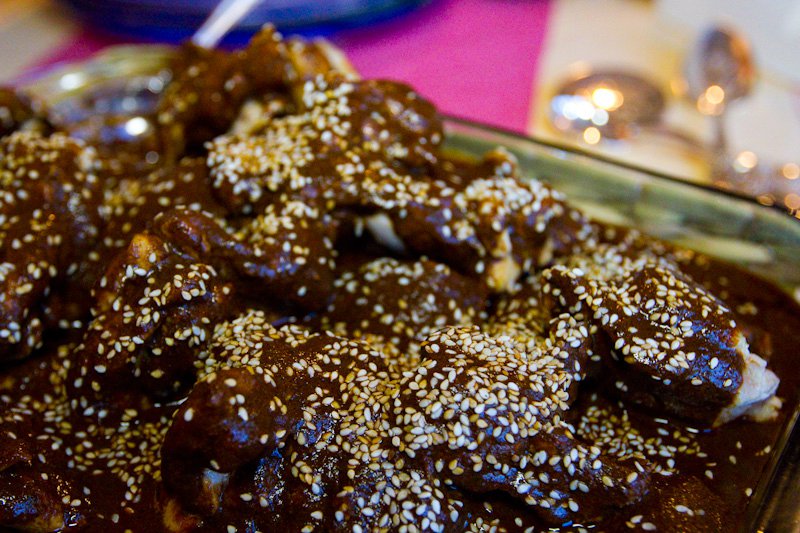
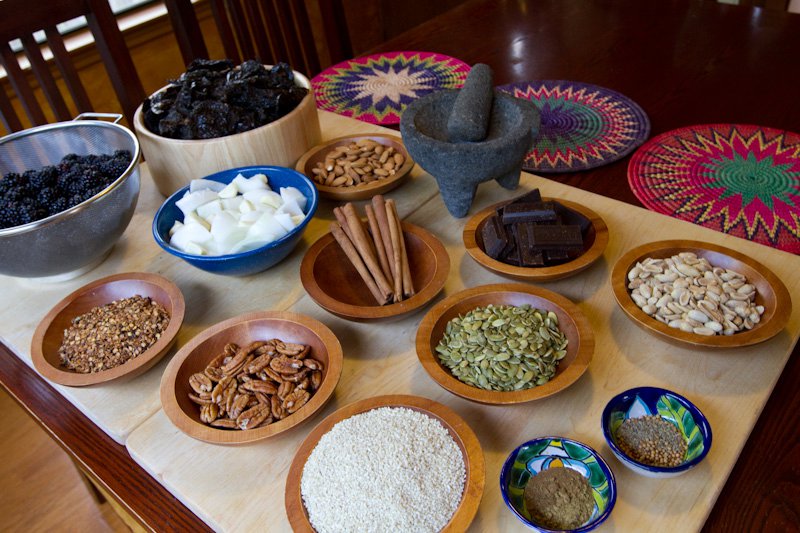
52919_10100389538982630_7188290_oAnd today I have a special project!  Today I'll be taking blackberries and a whole variety of nuts, seeds, spices and dried chiles and making a glorious molĂ© de zarzamoras.  And, of course, beyond that, I intend to get some writing in.  But as you can imagine, this is a project that's going to take up a good chunk of my day.
But once it's done, oh, it'll be something quite special. 
And then I'll go down into the word mines.  See you in there.
One more thing: as I've updated my website, I've created an Appearances page listing where I'll be in 2015.  There's only a few listed for now, but that will probably increase as the year goes on.


Monday, October 27, 2014

Worldbuilding: Building Blocks and Lists

I've talked before about the importance of understanding how agriculture and domestication of animals influences the building of societies.  Cultures don't move past hunter-gather stages without domesticating animals and mastering agriculture, and they can't do that if the proper plants or animals aren't present. 

So, what are the "proper" plants and animals? 

Well, I've done research (built off other people's research, of course), and compiled it here for easy access. 

ANIMALS

Here's a list of forty animals which form the basis for early-culture domestication.  I'll break this into three sections: large domesticatible animals, small domesticatible animals, and semi-domesticatible animals.  The semi-domesticatibles are ones where various individual factors (such as ability to breed in captivity, or demeanor) prevent full domestication from occurring.  I've also included how each animal can be useful to the culture domesticating them. 

Large
Alpaca (Vicugna pacos) USES: fibre, meat, show, pets
Domestic Bactrian camel (Camelus bactrianus) USES: milk, transportation, working, hunting, plowing, draft, mount, fighting, show, racing, meat, hair
Domestic pig (Sus scrofa domesticus) USES: meat, leather, research, show, racing, fighting, truffles, pets
Yak (Bos grunniens) USES: milk, transportation, working, plowing, mount, racing, fighting, meat, fibre
Domestic dromedary camel (Camelus dromedarius) USES: transportation, working, hunting, plowing, draft, mount, show, racing, fighting, milk, meat
Bali cattle (Bos javanicus domestica) USES: meat, milk, show, racing, working, plowing, draft
Donkey (Equus africanus asinus) USES: transportation, working, plowing, draft, mount, meat, milk, pets, racing, guarding
Domestic goat (Capra aegagrus hircus) USES: milk, meat, fibre, skin, show, racing, fighting, clearing land, pets
Horse (Equus ferus caballus) USES: transportation, meat, working, guiding, servicing, hunting, execution, plowing, draft, mount, fighting, show, racing, milk, pets
Water buffalo, including "river buffalo" (Bubalus arnee) and "swamp buffalo" (Bubalus bubalis carabenesis) USES: working, plowing, draft, mount, fighting, meat, show, racing, milk
Zebu (Bos primigenius indicus) USES: meat, milk, leather, hides, working, plowing, draft, vellum, blood, transportation, soil fertilization, fighting, show, racing
Gayal (Bos frontalis) USES: meat
Cattle (Bos primigenius taurus) USES: meat, milk, leather, hides, working, plowing, draft, vellum, blood, transportation, soil fertilization, fighting, show, pets
Llama (Lama glama) USES: transportation, working, draft, pack, meat, show, racing, pets, guarding
Sheep (Ovis aries) USES: fibre, meat, milk, leather, pelt, vellum, pets, show, racing, research, guarding, fighting, ornamental

SMALL
Domestic goose (Anser anser domesticus) USES: meat, feathers, eggs, show, guarding, pets
Domestic duck (Anas platyrhynchos domesticus) USES: meat, feathers, eggs, pets, show, racing, ornamental
Domestic pigeon (Columba livia domestica) USES: show, ornamental, messenger, meat, racing, pets
Chicken (Gallus gallus domesticus) USES: meat, eggs, feathers, leather, show, racing, ornamental, fighting, pets
Ferret (Mustela putorius furo) USES: pets, hunting, pest control, show, racing
Domestic turkey (Meleagris gallopavo) USES: meat, feathers, eggs, show, pets
Domestic silkmoth (Bombyx mori) USES: silk, animal feed, pets, meat
Guinea pig (Cavia porcellus) USES: pets, meat, show, racing, research
Domestic rabbit (Oryctolagus cuniculus) USES: meat, pelt, fibre, pets, show, racing, research
Cat (Felis silvestris catus) USES: pets, pest control, show, pelt, research
Dog (Canis lupus familiaris) USES: Pets, hunting, herding, guarding, pest control, transportation, draft, working, show, racing, sport, rescuing, guiding, servicing, meat, research
Domestic guineafowl (Numida meleagris) USES: meat, eggs, pest control, show, alarming, pets

SEMI
Mandarin duck (Aix galericulata) USES: meat, ornamental
Stingless bee (Melipona beecheii) USES: honey, pollination
Indian peafowl (Pavo cristatus) USES: show, feathers, meat, ornamental, pets
Egyptian mongoose (Herpestes ichneumon) USES: pest control, pets
Addax (Addax nasomaculatus) USES: meat, horns, leather, skin
Muscovy duck (Cairina moschata) USES: meat, feathers, eggs, show, pets
Red deer
(Cervus elaphus) USES: meat, velvet, hides, leather, antlers
Western honey bee (Apis mellifera), including subspecies Italian bee (A. mellifera ligustica), European dark bee (A. mellifera mellifera), and Carniolan honey bee (A. mellifera carnica) USES: honey, wax, pollination
Fallow deer (Dama dama) USES: meat, hides, antlers
Semi-domesticated reindeer (Rangifer tarandus) USES: meat, milk, transportation, working, draft, mount, hides, racing, leather, antlers
Asiatic honey bee (Apis cerana), including subspecies Indian honey bee (Apis cerana indica) USES: honey, pollination
Asian elephant (Elephas maximus), including subspecies Indian elephant (Elephas maximus indicus) USES: working, transportation, hunting, show, racing, fighting
Scimitar oryx (Oryx dammah) USES: meat, hides, horns

AGRICULTURE

For this list, I'm going to look less at individual plants, and more at centers of origin for plant domestication.  Roughly speaking, there were eight "centers of origin" on Earth for independent rise of agriculture (two with subcenters), so the more realistic option would be to keep these various species of plants grouped together.  So here are the centers, including where they were developed.

Center 1  (Mexico/Central America)
Grains and Legumes: maize, common bean, lima bean, tepary bean, jack bean, grain amaranth
Melon Plants: malabar gourd, winter pumpkin, chayote
Fiber Plants: upland cotton, bourbon cotton, henequen (sisal)
Miscellaneous: sweetpotato, arrowroot, pepper, papaya, guava, cashew, wild black cherry, chochenial, cherry tomato, cacao.

Center 2 (South America, northwestern region)
Root Tubers: potato, Other endemic cultivated potato species. Fourteen or more species with chromosome numbers varying from 24 to 60, edible nasturtium
Grains and Legumes: starchy maize, lima bean, common bean
Root Tubers: edible canna, potato
Vegetable Crops: pepino, tomato, ground cherry, pumpkin, pepper
Fiber Plants: cotton
Fruit and Miscellaneous: cocoa, passion flower, guava, heilborn, quinine tree, tobacco, cherimoya
2A (Chilean region)
Common potato (48 chromosomes), Chilean strawberry
2B (Brazilian region)
manioc, peanut, rubber tree, pineapple, Brazil nut, cashew, Erva-mate, purple granadilla.

Center 3 (Mediterranean Coasts)
Cereals and Legumes: durum wheat, emmer, Polish wheat, spelt, oats, sand oats, canarygrass, grass pea, pea, lupine
Forage Plants:  clover, white clover, crimson clover, serradella
Oil and Fiber Plants: flax, rape, black mustard, olive
Vegetables: garden beet, cabbage, turnip, lettuce, asparagus, celery, chicory, parsnip, rhubarb,
Ethereal Oil and Spice Plants: caraway, anise, thyme, peppermint, sage, hop.

Center 4 (Middle East)
Grains and Legumes: einkorn wheat, durum wheat, poulard wheat, common wheat, oriental wheat, Persian wheat, two-row barley, rye, Mediterranean oats, common oats, lentil, lupine
Forage Plants: alfalfa, Persian clover, fenugreek, vetch, hairy vetch
Fruits: fig, pomegranate, apple, pear, quince, cherry, hawthorn.

Center 5 (Ethiopia)
Grains and Legumes: Abyssinian hard wheat, poulard wheat, emmer, Polish wheat, barley, grain sorghum, pearl millet, African millet, cowpea, flax, teff
Miscellaneous: sesame, castor bean, garden cress, coffee, okra, myrrh, indigo.


Center 6 (Central Asia)
Grains and Legumes: common wheat, club wheat, shot wheat, peas, lentil, horse bean, chickpea, mung bean, mustard, flax, sesame
Fiber Plants: hemp, cotton
Vegetables: onion, garlic, spinach, carrot
Fruits: pistacio, pear, almond, grape, apple.


Center 7 (India)
Cereals and Legumes: rice, chickpea, pigeon pea, urd bean, mung bean, rice bean, cowpea,
Vegetables and Tubers: eggplant, cucumber, radish, taro, yam
Fruits: mango, orange, tangerine, citron, tamarind
Sugar, Oil, and Fiber Plants: sugar cane, coconut palm, sesame, safflower, tree cotton, oriental cotton, jute, crotalaria, kenaf
Spices, Stimulants, Dyes, and Miscellaneous: hemp, black pepper, gum arabic, sandalwood, indigo, cinnamon tree, croton, bamboo.
7A (Southeast Asia)
Cereals and Legumes: Job's tears, velvet bean
Fruits: pummelo, banana, breadfruit, mangosteen
Oil, Sugar, Spice, and Fiber Plants: candlenut, coconut palm, sugarcane, clove, nutmeg, black pepper, manila hemp.

Center 8 (China)
Cereals and Legumes: e.g. broomcorn millet, Italian millet, Japanese barnyard millet, Koaliang, buckwheat, hull-less barley, soybean, Adzuki bean, velvet bean
Roots, Tubers, and Vegetables: e.g. Chinese yam, radish, Chinese cabbage, onion, cucumber
Fruits and Nuts: e.g. pear, Chinese apple, peach, apricot, cherry, walnut, litchi
Sugar, Drug, and Fiber Plants: e.g.sugar cane, opium poppy, ginseng camphor, hemp.


Hopefully, you'll find these lists helpful to build some interesting things.  Good luck.

Monday, October 20, 2014

Worldbuilding: Putting the Civil in Civilization

The real test of a civilization is not just its laws, but how its laws are put into practice.  Criminal law is one aspect, of course: does the society care more about justice, or maintaining order?  Are trials designed to be fair, and truly find the guilty, or simply expedite a resolution.  Are the people protected from the state, or is the state protected from the people?

But civil law is another matter, and is often less examined in worldbuilding.  How do two citizens resolve a dispute or wrong in which, strictly speaking, no crime has occurred?  At least, in something resembling a culturally-accepted "official" way.  For some people, regardless of the level of civilization, the answer is, "Punch the other person in the face."  And at that point, quite possibly, a crime has occurred, or if nothing else, the situation will continue to escalate into more violence.

However, a society, in general, is going to want to avoid "punch person in the face" solutions in favor of non-violent, non-escalating one. 

Depending on how advanced the society is, this can take a lot of forms.  Sometimes it's just a ritual in which one party acknowledges they wronged the other, gives some form of recompense, and things return to normal.  However, the larger a society is, the more likely the two parties are complete strangers, and have little reason to trust each other to "do the right thing".  The right thing must be imposed, usually by contract or third-party arbitration.  Is this a formal or an informal process?  Is the third-party's authority universally recognized, or is simply agreed upon by the initial parties involved?

Now, in a lot of fantasy fiction, which often has its roots in an idealized version of medieval or Renaissance Europe, there is often the solution that is violent, but under strictly controlled rules and traditions.  I'm speaking, of course, of the duel.  But the duel does boil down to a formalized version of "punch the other person in the face" where it's designed to not escalate into further fighting, or even war. 

So, how does it work in your worlds, when no crime has been committed, but someone's honor must be satisfied, or a grievance must be addressed, or some other wrong righted? 

Thursday, October 9, 2014

Writing Is Never Working Alone

I like to use my "go down into the word mines" analogy about writing, as if it presents this image of me as this lonely old prospector, heading down into the depths with pick-axe over my shoulder. 

Of course, that's not how it really works.  You can't do this without people having your back. 

I've got a lot of people, but if I had to narrow it down to the inner circle, I'd have four names.

1. Dan Fawcett -- Dan's been my friend since seventh grade, and has been my constant sounding board for story ideas, worldbuilding concepts, and generally putting up with my ramblings.  He would probably hesitate to take any credit, but Thorn of Dentonhill and the rest of the books in Maradaine wouldn't be what they are without his influence.  Heck, I'm pretty sure he's the one who suggested "Maradaine" as the city's name. 

2. Mike Kabongo-- my agent, who has stood with this work in the time it took us to sell it, who encouraged continued projects while Thorn and others were out shopping, and who read a manuscript that wasn't ready, but saw enough potential in it that he was hooked.

3. Sheila Gilbert -- my editor at DAW.  There are plenty of other people at DAW as well, half of whom I don't even know their name, who are all doing things for me and my work.  But Sheila is front and center, making Thorn be the best it can be when it hits the shelves in February.

4. Deidre Kateri Aragon -- my wife.  Of course she's on this list, because it would have been impossible for me to achieve this without her.  She's the one who kicked my butt so I stopped being the person saying, "Yeah, I'd like to be writing books" and made me actually write books.  And just as I'm working every day on writing, she's working every day so I'm able to.  But we both work from home, so we get to sit across from each other at our big table.  So it's the best of all things; I get the space I need to work, but I have my favorite person in the world right there with me. 


Are there more people?  Yes. Tons. I could go on, but that's what acknowledgement pages in books are for, right?  And even there, I probably missed a few.

That said, it's time to make the most of their support.  Off to the word mines.

Monday, September 29, 2014

And that was FenCon

So, I've returned from FenCon, up in the Dallas/Fort Worth area, and it was quite an excellent time.  This is my first non-homebase con that I've attended since selling The Thorn of Dentonhill and A Murder of Mages.  However, many of the people at FenCon are also ArmadilloCon regulars, so I wasn't in unfamiliar territory.  It made it a very good environment to get my travelling-to-a-con sea legs, just the right mix of comfortable and new, and plenty of people to talk up Thorn and Murder to.  Though I've learned I do need to polish my pitch to "what's the book about" a bit.  Someone suggested I start saying "Magical fantasy adventure meets 'The Wire'.", and that's not half-bad.

I drove up first thing Saturday morning, giving me just enough time to get checked in and get the lay of the land before my first panel on "Getting the Geos Right", using geology and geography in one's sci-fi and fantasy writing and worldbuilding.  The panel was interesting, but since my main focus was how geography affects your worldbuilding, and other people on the panel were actual geologists, I mostly yielded to their expertise.

After a bit more settling in and hanging out, my next panel was on "Technobabble and Handwavium", where things like Star Trek and unobtanium and reversing the polarity of the neutron flow were all discussed.  The main point I came away with was that you can get away with those things to some degree, but only if the characters and the stakes hold true. 

The evening then moved to the Room Parties and BarCon portion of the evening, which is always fun.   Down in the bar, a large group ended up putting several tables together, and it became one of those moments where several conversations are going on at once, and you wish you could listen to and participate in all of them, but that's just impossible.

The next morning I had a reading from Thorn of Dentonhill, which was decently attended for a 10:30 in the morning panel on a Sunday.  I read the first chapter, talked a bit about craft and process with the people in the audience, and was pretty pleased with the experience. 

The final panel for me was on "When Will It End?", about series that go on too long, and why they hold on when they seem to have worn out their welcome, and strategies for writing them in general.  That panel included Guest Of Honor Eric Flint, so naturally he was the primary focus of that panel, talking about how his book 1632 started as a stand-alone novel but became a series, including anthologies of short stories with several different authors.

All in all, an excellent time, and I'm ready for the next con.  Which, for those of you keeping score at home, with be OryCon in Portland, Oregon, November 7th-9th.

Monday, September 15, 2014

Perils of the Writer: Establishing the Stakes

This past weekend I watched the five pilots that Amazon put up to gauge customer interest.  It's an interestingly democratic way to do the pilot process: bring the pilots to the people, and let them decide which should get a series order.

Pilots are, of course, like opening chapters of a novel: they have to hook, they have to engage, and most importantly, they have to establish stakes.  You have to gauge your pacing and your revelations, and make sure characters are responding in proportion to the events unfolding.  You can't just have people screaming about how serious things are and expect the audience to buy in to that.

In other words, stakes have to be real, and they have to be shown. 

On of the five pilots in particular, Hysteria, fails greatly in this regard.  We start with a doctor visiting her brother on death row, where he wants her to tell him about what she's investigating in Austin.  This is just a framing device for the real story, in which (and I'm quoting from the copy) "A young doctor is summoned back to her hometown to investigate an epidemic that may be linked to social media."

Now, we'll ignore that her hometown is Austin, and despite the fact that it was filmed here in Austin, the show frames the city like it's a place with one school, one hospital, abandoned factories and alleys that cops get beat up in if they walk down alone.  We'll ignore that stuff.

Instead we'll talk about the stakes.

See, it starts with a bunch of girls sneaking out at night to go dance with some wrong-side-of-the-highway boys in the abandoned snowglobe factory.  One of the girls is livecasting it on her phone while she gets sexually aggressive with on of the boys.  The other boy starts to get aggressive with her sister, but then her sister starts having seizures.

At the hospital, the doctor is already treating it like it's Super Serious Business-- beyond the scope of just her having seizures and being in a coma. Before even the light of day hits, he's already talking about calling in our main character from Houston, as she's a neurologist and psychiatrist.*  Because in Austin, there's none of those on hand, or something.

Now, by the time the doctor arrives, the video has been seen by a handful of people, one of whom (another girl who was there) starts having seizures.  We literally only see her hand shaking, and then we never hear directly about her again.  The other girls who were there, we are explicitly shown that they are fine.**

So, to reiterate: two cases.  Despite that, we're shown the doctors talking to the parents of ALL THE GIRLS as if they all have a stake.  Like, "hey, parents of girls who are not patients, let's have a conference involving you as well."

Meanwhile, we see a mysterious person putting together a video of the girl having a seizure mixed with other footage of her dancing.  For mysterious, possibly nefarious reasons.  After that video comes out and goes viral, then there's another person with seizures.

And the city of Austin freaks completely out.

So, let's go back: two girls with seizures-- so it may be a disease or or exposure to something, or it may be one girl with a neurological problem and a friend with some sort of sympathetic psychosomatic reaction.  Then a third-- and to everyone's knowledge, completely unrelated or connected person-- also has seizures (and that could just be epilepsy or something else entirely) in a city with a greater metro population of a million.  And people reaction like the Serious Epidemic Business is here.

Like, screaming in the hospital parking lot freak out.  Like, press conference in the high school gymnasium with the chief of police and screaming angry parents. 

Had the show even remotely earned these stakes?  No, not at all.  Not with only three cases, one of which shows no real connection to the the other two.  In fact, the third case is shown to be different because he gets violent with the people trying to help him.  There's literally no reason for them to even think the third case is connected to the other two, beyond seizures. 

Of course, our heroine figures out a connection, in that the third victim is the mysterious guy who made the video, and thus she thinks that the SEIZURES ARE BEING TRANSMITTED THROUGH YOUTUBE.  Or something.  This is despite the fact that we're shown plenty of people seeing the video (and it's hardly a clickbaity-you-have-to-see-this-video), and no one else is showing symptoms.  But before this absurd epiphany (which seems to be the underlying premise of the show), they have no reason to believe any connection. They say that his symptoms aren't the same, except for seizures, and that they don't believe he's had any contact with the girls... so why do they think it's a connected case?  They just do.

So what did they do wrong?  They didn't establish believable stakes.  If anything, they explicitly undercut their stakes, but then had characters react as if the stakes were extremely serious. 

If you want your audience to believe what you're telling them, believe that situations are serious, then stakes have to be established fairly and legitimately.  This isn't just a matter of show vs. tell-- we're shown who's sick, we're shown the town's reaction.  But what we're shown of events doesn't match what we're shown of reaction. 

Without well-established stakes with logical points connecting them, there's no way your audience is going to accept what you're giving them.

---
*- The mother latches onto "psychiatrist" part and freaks out. 
**- One is set up with tension, like her father is going to find her seizing in the shower, but no, she's fine and showering, and yells at her dad for coming in there. 
Thursday, September 11, 2014

Chasing the Numbers

So, I'm not at the point, obviously, where I'm tracking book sales.  Occasionally I'll go and look at my Amazon rank for Thorn presales and wonder what that might actually mean.  I honestly don't know.

But here's what I do know: once I can track sales numbers, I will probably be a bit obsessive about it. 

Because lord knows, I already google "Marshall Ryan Maresca" and "Thorn of Dentonhill" to a surprising degree.  Especially now, since new things are popping up on a regular basis.  That's how I discovered an article pointing to me as an example of marketing one's work using Google Plus.  (What?  Really?)  That's how I found out that Thorn has a Goodreads page now.   Which gives me another thing to check obsessively, as I can keep track of the complete strangers who have added it to their "to-read" list.  For some reason that's incredibly exciting to me.

What I'm saying is, if I have something I can track, I'm probably going to keep my eye on it.  If it's something I can quantify, perhaps even put in a spreadsheet.... oh, I'm going to be all over that.

Maybe at some point, I'll be more zen about all the how'm-I-doing data out there.  But right now, I'm making the most of it.

Speaking of things you can learn by Googling me, I'll be at FenCon in Dallas September 25-27!  Come say hello!

Saturday  12:00:00 PM  - 1:00 PM  
Getting the Geos Right  
Description: Geology and geography and how they should shape your fictional society.
Panelists:
R. Acks , L. Carl , Mi. Finn , M. Maresca , M. White , K. Murphy *
Saturday  6:00:00 PM  - 7:00 PM  
Handwavium And Technobabble  
Description: Where do writers come up with all those terms, anyway? Do they have roots in the real world, or does someone just throw a D20 and see what they come up with?
Panelists:
P. Black , S. Cupp , J. Mandala , M. Maresca , L. Antonelli *
Sunday  10:30:00 AM  - 11:00 AM  
Reading  
Sunday  1:00:00 PM  - 2:00 PM  
When Will it Ever End?  
Description: How long is too long? When should a series hang it up, or is there no limit to the number of books an author can or should write in a specific setting? Which well-known series have done an excellent job of holding our attention across multiple books, and which have jumped the proverbial shark?
E. Flint , M. Maresca , R. Rogers , S. Swendson , B. Wright , L. Donahue *

Monday, September 1, 2014

Worldbuilding: From the Neolithic to the Agricultural

Progressing from my initial ideas of bottom-up worldbuilding, once you've established your geography, your basic flora and fauna, and then had your people rise up and spread throughout the world, you've more or less finished your paleolithic phase.  Can you go into more detail here? Absolutely.  Especially if you're interested in doing stories that are paleolithic or paleo-to-neolithic-transition in nature.*

But odds are you'll be ready to move into defining those neolithic cultures, and their multi-millennia transition to agricultural cultures-- if that's something they are going to logically do.  And there are plenty of reasons why they wouldn't.

Cultures don't transition from hunter-gatherer to agricultural without good reason, mostly in terms of geographical conditions.  Climate, water source and base foods that are easily domesticated all need to be present.  Egypt had perfect conditions, for example, since you had the gentle Nile with predictable flooding patterns, allowing for easily irrigated and constantly renewed soil, as well as early native wheats to domesticate.  As a contrast, southwestern Australia had similar environmental conditions, but no native plants worth domesticating.

And without some form of agricultural revolution, your cultures won't progress toward civilization or past stone-age technology.  I'm not assigning that any sort of value judgment-- simply that the two go hand-in-hand.  You can't have a culture that remains hunter-gatherer but yet has cities with electricity and quantum computers.**

So, what foods can be the ones people eat and domesticate in this period?  You can look to the "founder crops", which were crucial in our Fertile Crescent, but that wasn't the only place where agriculture appeared.  There are other ways to go. 

Fortunately, Lynne Olver has put tons of work into The Food Timeline, a website that is an absolute treasure trove of information.  Pretty much every kind of food, she tells you when and where it came into use. 

It's important to remember this transition is a slow one, taking several thousand years, and once it get going, it tends to spread, at least along east-west lines.  But that means a lot of things can be happening in your world long before anyone figures out to write it down.

---
*- Is Stonepunk a thing?   If not, shouldn't it be?
**- Not to poke at any specific Hugo-winning novel. 

Monday, August 25, 2014

Worldbuilding and the Challenges of the Cosmopolitan City

So, I've finally begun the work on The Little East (aka the sequel to A Murder of Mages) in earnest.  Without delving too deep into spoilers, it deals with investigations in the sub-neighborhood generally referred to as The Little East, which is kind of Maradaine's equivalent to Chinatown, Koreatown, Little Italy and Little Ukraine all rolled together.

Except not exactly, because none of the foreign cultures that are enclaved the Little East are really equivalent to Earth cultures.  Not exactly.

And that's the big challenge I've given myself with this book.  I need to depict these cultures as their own thing, unique to my world.  If readers start going through and going, "Oh, these people are just Japan with the serial numbers filed off" or something like that... then I've done something wrong.

So, how do I accomplish that, exactly?  One way is by trying to avoid any cultural buzzwords that will immediately but a specific culture in mind, especially in combinations.  You might be able to get away with "silk" or "paper lanterns" without evoking China, but put both together, and that's where your readers will go.

The other thing I try to do is give each culture some unique element or feel that doesn't directly evoke any real world culture.  For one culture, for example, there's a caste system that involves dying the hair specific colors. 

How do you evoke new cultures in your worldbuilding without making it feel like a copy-and-paste job?

Monday, August 18, 2014

Worldbuilding: Pure Bottom-Up Worldbuilding

Since I'm in the process of editing my draft of Thorn II and working on the rough of Murder of Mages II, I clearly don't have enough on my plate. 

At least, that's what part of my brain seems to think.

Because that part of my brain has become strangely obsessed with an idea of a brand-spanking-new-from-scratch worldbuilding project.  And by "from-scratch", I mean completely.

Whenever we do worldbuilding, there is typically some form of top-down idea guiding the process.  There's some underlying idea of what we want the world to be or have, the technology leer, the way the culture is.  We start from that concept and build down, forming the infrastructure to make that idea work. 

And there's nothing wrong with that.

But it tends to create limiting ideas-- secondary fantasy worlds that still are, in essence, England or Italy or Arabia or Japan in medieval or rennaisance times, or steampunked or otherwise tweaked.  The scent of the familiar stays with it. 

And, again, there's nothing wrong with that.  It makes it easy to define when it comes to writing stories.

But I've been thinking more and more about what really, truly working from the bottom-up would bring about.  That means starting with the land itself, building the details of geography and climate.  From there, decisions about flora and fauna-- especially the key domesticatible plants and animals, and then determining where the "cradle of life" where humans or other intelligent life emerges (indeed, if it's a fantasy world, the decision to have multiple intelligent species is crucial).  Once that cradle is determined, you would determine the pre-historic diaspora, as people spread across the world as hunter-gatherers before they start settling into agriculture.  And that's dependent on if settling into agriculture is even a viable option given their terrain and available possible crops.

From that point, the slow development of civilization and cultures as states and empires rise and fall, develop and regress.

Of course, the question is, would this be a valuable exercise?  Would the deliberate bottom-up process yield results that were significantly different than the more typical top-down one?  And more to the point, would it give a world that would be an interesting and dynamic setting for stories, or would it be little more than an intellectual exercise to its own end?

And is it a process a person can realistically do on their own?

I'm honestly not sure.  But I think it's worth exploring, and I'd love to hear other thoughts on the subject.

Monday, August 4, 2014

How I Learned To Stop Worrying And Love the Editing

During ArmadilloCon I had the pleasure of talking with a woman who was in the enviable-but-frustrating position of having an agent, but her manuscripts were still being reviewed by publishers.  (Enviable because YOU HAVE AN AGENT, and that's awesome. Frustrating, especially at cons, because while you are on the path to success, you don't have that tangible commodity to show for it.  Talking up your agent-having alone just sounds strange.)  She was already worried about what might happen when an editor got a hold of it. What sort of crazy changes might be demanded?

Fortunately, I had just been through two editing processes, and I could reassure her that it wasn't likely to be as radical as the horror stories she had heard. 

In fact, I even wrote an article for Book Country on how my process was. 

Everyone's writing process and editing process are different, of course.  For example, I hear from a lot of writers that editing involves throwing a lot of words away and re-doing it.  I, personally, could never work that way... but at the same time, in my writing process, I cannot do the "just get it on the page and fix it later" method.  Not to say it's perfect when I first write it... not at all.  But if you were to compare the first draft of the first chapter of Murder of Mages to the one I submitted as a final version a few weeks ago, the fundamentals are more or less the same.  And almost all of my "major surgery" edits have been a matter of adding more to the manuscript, rather than throwing stuff away. 

Anyhow, being edited wasn't a scary process at all, thanks to having a fabulous, Hugo-nominated editor (fingers crossed for this year!)  Go and check out the article, and you can see the true finalized-cover of Thorn, including the DAW logo which identifies it as the 1681st book in their 30+ year history. 


Thursday, July 31, 2014

Convention Panels and Expertise

So, this was a response I got to the last blog on ArmadilloCon, specifically in response to my self-admitted lack-of-expertise in the subject of the panel I was on:

I keep pushing the idea that participation in convention panels should be open to the public, and the panels pitched SXSW-style: that is, a group of panelists puts together a panel proposal, and then members vote on the panels they want to see. All too often people in the audience (at least some of them) know more about the subject than those on stage. 

It's an interesting idea, but for a volunteer organization to implement successfully... pretty challenging.  The sausage-making of coordinating the schedule of some several dozen programming participants into a cohesive set of panels, readings and events is an undertaking, especially when done almost entirely out of love.  Adding another layer of democracy to that undertaking is not something I would wish on anyone.

That said, the underlying complain has validity.  Lord knows that at the conventions I've attended, I've seen some panels where the members really didn't have much business being on it.  Hell, I've been on panels where I didn't have much business being on it.  At least this time around, my two more problematic panels were subjects I had an interest in, and had done some research on the subject beforehand. 

Even if you line up participants-to-panels perfectly, however, any panel that isn't just one person giving a set lecture (and thus... not really a panel) is going to be an organic thing.  Unless the moderator rules it with an iron fist, it's going to go where the people on it are going to take it. 

Not to mention, any given panel usually has its title and, perhaps, a sentences or two of extra description.  The programming coordinator might have had one idea of what a panel is going to be about, while the participants might-- each individually-- have another, and members of the audience something completely different from all of that.  Sometimes you just ride the wave where it takes you.

On top of that, when the context is a SF/F/Genre/Lit Convention, I don't think anyone in the audience is expecting or demanding of academic credentials from the panel.  They know that the panel consists of spec-fic writers who are mostly doing what they know best: speculating and story-telling.  Besides, in my Alcohol In Speculative Fiction panel, I don't think anyone wanted me to drone on about the history of development of beer, wine and distilled spirits. 

All that said, there's nothing wrong with just plain bowing out of a panel in which you would truly be out of your depth.  I was assigned one originally at ArmadilloCon that I was totally at a loss about, and immediately asked to be taken off it. 

Though, to a degree, if you're up on a panel, on some level you are presenting yourself as an "expert", and it's good to do your best to show yourself as one.  Or, if nothing else, be up front about your lack of expertise.  And be entertaining.  That's the thing I most want from a panel, after all.


Monday, July 28, 2014

ArmadilloCon Survival Report

So now ArmadilloCon is done, and it was a lovely time.

Friday was the Writers' Workshop, where we had plenty of good discussion in the morning sessions, and my critique students were an excellent group of people who are all on the verge of breaking through to the next level.  There were some administrative snafus (i.e., mistakes on my end of things), but our astounding volunteers Rebecca, Melissa and Beth helped keep things from flying off track. 

Plus I made sure Stina got a round of applause for all her years running the workshop.  Apparently next year, I'll be in charge.  Still contemplating that.

After the workshop, I swung home briefly* for dinner, and came back for my evening panels.  First was Protecting the Indigenous Tribes, which I had been a bit nervous about, but it went nicely, mostly because my panel-mates had interesting things to say, and we had a small-but-engaged audience.  Next was the raucous 40 Years of D&D, in which we mostly talked about our personal history with playing, favorite characters we played, and how it influenced our writing.  And we had to roll for initiative to talk.  Lots of fun, especially talking about how my love of playing thieves and mages influences the central character of Thorn, and the fun you can have role-playing a character with a terrible stat. (Namely, a Constitution of 5**)  After that, I ended up talking to Mark Finn and Mark Carroll more about gaming.  (Or, more correctly, listening to them, since I was starting to fade out.)

Saturday, I returned for another of my nervous-about-this panel on Aztec mythology in genre fiction.  Again, it went better than I had feared it would.  I didn't make too much of a fool of myself, though we had one audience member who consistently had a light shake of her head and an expression of No, wrong, wrong.  I found out after the fact that she was a PhD in Anthropology specializing in Mezoamerican cultures, so she probably had good reason.  If you're reading this: Sorry.  If I had known, I would have dragged you up with us.

Alcoholic Drinks in Fiction became Alcoholic Drinks in Writers, since a wonderful member of the audience bough drinks for the panel.  I may have prompted that a little.  But it was a very fun panel.   I hung around and did the BarCon thing for a while, mostly talking with Amanda Downum about each others work and alcohol, with Alex Renwick about the Olde Days of South Congress***, and becoming new Best Con Friends with Kat Richardson.  Who is awesome.  Plus many, many, many other people.

My reading went well, where I read the first chapters of both Thorn and Murder of Mages, and I was quite pleased.  And I can fill up an hour, apparently.  Good to know.  After a bit more BarConning, my wife arrived at midnight to sweep me off to her event in a different hotel.

Sunday's panels were early, which was a bit painful (see: swept off at midnight to a different event), but went well.  Best Cons in Genre Fiction was loose and free-form, but Don Webb and Jayme Blaschke are very smart guys to be sitting in a panel with, so it worked quite well.  The coffee had kicked in by the time I did Overhauling a Character, so I got to end my official con duties on a high note, as that was a good, vibrant discussion.

After some more Sunday-Afternoon-Decompression BarCon stuff, I stumbled home and fell down.  But now I'm feeling ready and vital, on the whole a successful con, in as much as one can measure "success".  Plenty of people seemed to be quite excited about Thorn and Murder, and one even said I had already earned a "fan for life".  I'll take that, thank you.   I'm ready to get moving on the rough draft of Murder of Mages II, editing Thorn II and projects beyond.**** 

Looking forward to next year.

---

*- Personally, I loved having the hotel relatively close to the house this time around.
**- For those unversed in game-speak, that's essentially being quite out-of-shape or otherwise unhealthy.
***- By which I mean the 90s.
****- I actually got an offer for a small Project Beyond, so I need to think about what I might do for that.

Monday, July 21, 2014

My Final ArmadilloCon Schedule

 ArmadilloCon is this weekend, which means I'm in crunch mode.  I've actually tackled quite a bit of my to-do list for this month, but I still have a few big things to do before the conference.  Here's my schedule, and some more cohesive thoughts about each one.  This is all, of course, in addition to the Writers' Workshop, which is all day on Friday.

Protecting the Indigenous Tribes 
Fri 8:00 PM-9:00 PM Room E 
Maresca*, Compton, Wright 
Indigenous peoples confront a diverse range of concerns. What should be done to ensure their existence? 


I have to admit, this one gives me a lot of pause, if for no other reason than the very title is fraught with landmines.  This is an easy conversation to go south with, and I'll confess I do not have any sort of first-hand experience on topic.  I know one point I'd like to hit is how to apply this to SF/F fiction, since, you know, it's an SF/F Lit conference, not an anthropological one.

40 Years of D&D 
Fri 9:00 PM-10:00 PM Room F 
Benjamin*, Finn, Maresca, Marmell, Sarath, Wright 
How did D&D inspire authors? 
I haven't been playing D&D for 40 years, but I started within its first decade (and my own).  I know that my own experience with fantasy as a genre has a lot of roots in D&D.  This should be a fun one. 

Quetzaxuahuitzalochtlicueotl 
Sat 1:00 PM-2:00 PM Room E 
Richerson*, Maresca, Oliver
Discussion of Aztec mythology and why it isn't used in more genre stories. 
This is the other one that gives me some pause, though I'm a little more comfortable with the subject matter.  Nothing which would qualify me as an "expert" in any sense, but certainly bringing Mesoamerican and, in a more modern context, Mexican sensibilities to genre fiction is a topic I'm interested in.
Alcoholic Drinks in Fiction 
Sat 5:00 PM-6:00 PM Room F 
Maresca*, Acks, Allen, Downum, Renwick
Discussing the drinks mentioned in stories, movies and tv. 
I've long been a big proponent of using food in fiction as a means of showing worldbuilding and character, and alcoholic drinks are a key subset of that.  An entertaining subset at that.  So I'll do my best not to be dry and academic about the history of beer or something.
Reading 
Sat 8:00 PM-9:00 PM Southpark A 
Marshall Ryan Maresca
An hour all about ME.  So come to Southpark A and hear me read, probably from both Thorn of Dentonhill and A Murder of Mages.  And, depending, there will be some Q&A.  By which I mean, if someone asks me questions, I will do my best to answer them.

Best Cons from Genre Books 
Sun 10:00 AM-11:00 AM Room D 
Webb*, Blaschke, Maresca 
Not many people are good at writing capers. Which books do it right? 
 I love a good caper.  To an extent, Holver Alley Crew is a caper.  This should be fun.

Overhauling a Character 
Sun 11:00 AM-Noon Room F 
Maresca*, Bracken, Carl, Chang, McKay, Rogers 
Now that you have written a book, go back and rewrite your main character.
I have specific stuff to say here, about the revision process of A Murder of Mages from rough draft to sold draft.  I'm sure everyone else will as well. 


So that's it.  I hope to see some of you there.  If you come, say hello.  I know I'd greatly appreciate it.

Thursday, July 17, 2014

Worldbuilding: Columbian Exchange in Secondary Worlds

Many of the worlds you'll build will have multiple continents, and if you're doing things correctly, each of those continents will have their own biodiversity.  Each one will have its own specific native plants and animals that may or may not be domesticatible, and the nature of those species help determine the civilizations that thrive there. 

But sooner or later in the history of your world, those two cultures are going to meet, and when they do... interesting things will happen.

Some call when that happened in our world-- when Eurasian/African biodiversity met American-- the Columbian Exchange.  Now, just ignoring the political and social elements of what happened when Columbus and those that followed him came to Americas, on a pure level of biological exchange, it was incredibly uneven for the Americas.

By which I mean, the Columbian Exchange meant that the cultures of Europe, Asia and Africa got. to name a few: potatoes, beans, corn, blueberries, peppers, tomatoes, chocolate and vanilla.  Foodstuffs and flavors that were nutritiously dense and became integral parts of the diets of those cultures, and helped result in population booms throughout those continents.  And the Americas got a Disease Apocalypse.  Yes, the Americas also got horses, pigs, cattle and wheat, but those mostly came with settlers who moved into the Americas, which was relatively easy to do, what with the Disease Apocalypse, killing an estimate 80% of the population.

So, that's the big question: does your worldbuilding take into account what may (or did) happen when Culture A crosses the ocean and meets up with Culture B?  Will that exchange be relatively equal, or will it strongly weigh in favor of one or the other?  How will those cultures see each other?  Will there be unintended consequences from that meeting?  How will your world be changed?


Monday, July 14, 2014

Edits and Research and Maps, Oh my!

This blog has, unfortunately for the moment, devolved a bit into "Stuff is happening and I'm busy!"  Today is no exception to that.  In part because I'm finalizing the edits for Murder of Mages so I can turn it in tomorrow. 

On top of that, I've got a fair amount of pre-ArmadilloCon work on my plate.  Part of that is the administrative side of the Writers' Workshop, part is the actual workshopping work for my group, and part is doing additional research and reading to prepare for some of the panels I'm on.

As part of that research, I've been revisiting Jared Diamond's Guns, Germs and Steel and Collapse, two books that have strongly shaped my ideas of worldbuilding.  I've also been thinking about the Columbian Exchange, and how that could be applied to worldbuilding.  I'll be posting more on that in the near future.  And that ties into geography, first and foremost, shaping the worlds we build.

And with geography, there's maps.  I've been re-working the maps to appear in Thorn of Dentonhill and Murder of Mages so they are of publishable quality.  Which is an excellent way for me to be productive while the back of the brain churns on writing things. 

So, back to work in the word mines.


Thursday, July 10, 2014

Brevity

I was commissioned to write two one-minute plays.

That requires word economy.

Hint Fiction also required maximum value from each word.

Very different writing muscles from novels, but useful ones to build.

July is a busy month.

Monday, July 7, 2014

Thorn of Dentonhill Available for Pre-order on Amazon

So, I wasn't sure what I was going to write about today.  There's a lot on my plate right now, including finishing edits to Murder of Mages, as well as finalizing other details for that (street map, acknowledgements, cover notes for artist), and on top of that ArmadilloCon and the Writers Workshop is in less that three weeks.

And that's on top of the things I have to do to keep the mortgage paid and the lights on.

But then, I discovered* something pretty amazing that I had to share:

Thorn Of Dentonhill is available for pre-order on Amazon! And it also has a Goodreads page! 

I'll admit, I completely geeked out when I saw an ISBN number.  Again, it's the little things like that which bring it home: this is a really real thing that is happening.

So that more or less made my week.

---

*- By "discovered" I mean "ego-surfed and checked my Amazon author page".

Monday, June 30, 2014

Picking Up the Gauntlet

So because of my post last week, I received a lot of spirited defenses of self/indy publishing, many of which struck me as missing the central point I was making: that agents and editors dig through a lot of crap to find the things they publish.  Several people argued that "people aren't waiting for publishers to tell them what to read, they're listening to reviews and recommendations from friends."  What this fails to recognize is that traditional publication is, in essence, a powerful form of recommendation: someone said, "I think this book is so worth reading, I'm financially backing it." 

So powerful that many reviewers and sellers take notice.  It is on that recommendation that most reviewers will accept the book to read.  (Most will not review self/indy books.)  It is on that recommendation that the sellers-- bookstores-- agree to stock it.  (Many will not stock self/indy books.)  And the individual people who work there will give their personal opinions to the customers.

So don't tell me that no one is listening to publishers for recommendation, because that is literally what the traditional model is.

The other argument I heard boiled down to, "Thanks to indy/self publishing, so many amazing books that wouldn't have seen the light of day are now available.  Readers can decide for themselves."

This may well be true.

I'm game.  I'd like to know what some of these amazing books are.  So, I'd like to hear some recommendations.

But wait!  I've got some rules.

1. You can't recommend your own book. The main reason for this is I think recommending your own book undermines the point of "so many amazing books are now available".  If you just tell me about your own book, what you're telling me is that you don't really care about all those amazing books, other than in the abstract sense of how promoting the idea helps your own book.  You're not telling me how indy/self helps readers "decide for themselves", you're telling me how indy/self helps writers sell their books.    If the system really is for the benefit for the readers, I want to know how it benefited you as a reader. 

2. No recommendations that started indy/self and then were picked up by a traditional publisher.  Because they've already received that recommendation bump.  I can find them in the traditional market, even if their path there wasn't entirely traditional.  Recommend something that I can't find on the traditional market.

So let's hear some recommendations!  Put my money where your mouth is.

Monday, June 2, 2014

All Writers Depend on their Partners

I was going to write about something else.  Heck, I wrote it, and was about to hit "publish", and then some brilliant stupidity appeared that could not be ignored:

Female Authors Depend on their Husbands to Write Romance

How moronic is this article?  Wait, don't answer, I'm going to tell you.  It's incredibly stupid and insulting, on several levels, but I'm going to focus on two.

One: The idea that women are alone in getting writing done because their husbands support them.  Did I fall asleep and wake up in Mad Men or something? Are only men capable of having a "supporting" job?  What about all the men who also write books?  How does that work in Michael Kozlowski's theory?  Or does it not count because they don't write romance?

Two: The idea that these women are "playing" at writing.  Because they're bored housewives with nothing better to do, or something?  WHAT THE COSMIC FUCK IS THAT?  Nobody writes books because they are "playing", and certainly because there's nothing better to do.  

So let's make a few things clear about my life, all right?  I've got two books coming out with DAW next year, a thing I've mentioned a time or two, and do you know why that's possible?  Entirely, 100%, purely and absolutely because my wife has been there supporting us.  We run a business together*, but she is the front-and-center part of that business.  It could not exist without her.  We would not succeed without her.  And without her doing that, I couldn't have written the books I sold.  Pure and simple.

And playing at writing?  Oh, dear lord.  Again, I've got my wife supporting us.  I don't have to clock in anywhere form 8 to 5.  But despite that, I still have to carve out time for writing.  I have to make an active point of it.  It's not something that just "happens" because I'm bored, and to suggest that it is the case for ANYONE who is striving to make a living doing this is not only insulting, but insipid.  Especially since Mr. Kozlowski would probably never dare to do such a thing to a male writer.


---
* Live the Language, Spanish Immersion for Children and adults.