Showing posts with label food. Show all posts

Thursday, November 13, 2014

My Culinary Obsessions

53327_10100389539032530_2285202_oSo, last week I talked about how drawing maps and doing worldbuilding is my non-writing artistic outlet.  But, to a large degree, that's still about writing.
Of course, it's all about writing, even this one.
 Because my other artistic outlet is cooking.  I love to cook, and I'm strangely obsessive about doing things from scratch.  And to some degree, that comes from writing and worldbuilding.  I like to think about where food comes from, what it means to the people, and how disparate flavors can help define a culture.
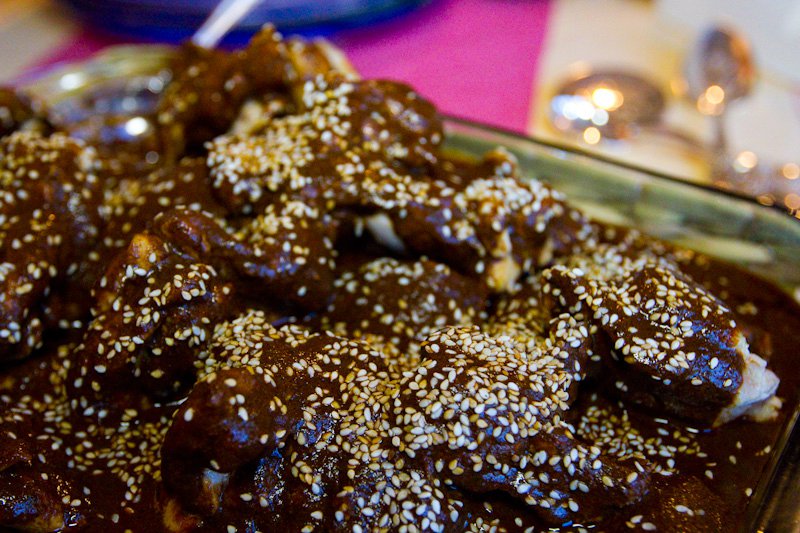
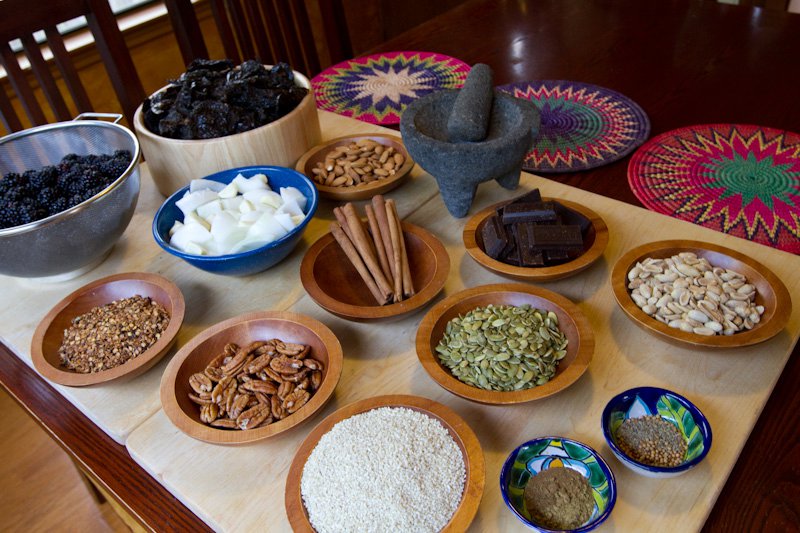
52919_10100389538982630_7188290_oAnd today I have a special project!  Today I'll be taking blackberries and a whole variety of nuts, seeds, spices and dried chiles and making a glorious molé de zarzamoras.  And, of course, beyond that, I intend to get some writing in.  But as you can imagine, this is a project that's going to take up a good chunk of my day.
But once it's done, oh, it'll be something quite special. 
And then I'll go down into the word mines.  See you in there.
One more thing: as I've updated my website, I've created an Appearances page listing where I'll be in 2015.  There's only a few listed for now, but that will probably increase as the year goes on.


Monday, September 1, 2014

Worldbuilding: From the Neolithic to the Agricultural

Progressing from my initial ideas of bottom-up worldbuilding, once you've established your geography, your basic flora and fauna, and then had your people rise up and spread throughout the world, you've more or less finished your paleolithic phase.  Can you go into more detail here? Absolutely.  Especially if you're interested in doing stories that are paleolithic or paleo-to-neolithic-transition in nature.*

But odds are you'll be ready to move into defining those neolithic cultures, and their multi-millennia transition to agricultural cultures-- if that's something they are going to logically do.  And there are plenty of reasons why they wouldn't.

Cultures don't transition from hunter-gatherer to agricultural without good reason, mostly in terms of geographical conditions.  Climate, water source and base foods that are easily domesticated all need to be present.  Egypt had perfect conditions, for example, since you had the gentle Nile with predictable flooding patterns, allowing for easily irrigated and constantly renewed soil, as well as early native wheats to domesticate.  As a contrast, southwestern Australia had similar environmental conditions, but no native plants worth domesticating.

And without some form of agricultural revolution, your cultures won't progress toward civilization or past stone-age technology.  I'm not assigning that any sort of value judgment-- simply that the two go hand-in-hand.  You can't have a culture that remains hunter-gatherer but yet has cities with electricity and quantum computers.**

So, what foods can be the ones people eat and domesticate in this period?  You can look to the "founder crops", which were crucial in our Fertile Crescent, but that wasn't the only place where agriculture appeared.  There are other ways to go. 

Fortunately, Lynne Olver has put tons of work into The Food Timeline, a website that is an absolute treasure trove of information.  Pretty much every kind of food, she tells you when and where it came into use. 

It's important to remember this transition is a slow one, taking several thousand years, and once it get going, it tends to spread, at least along east-west lines.  But that means a lot of things can be happening in your world long before anyone figures out to write it down.

---
*- Is Stonepunk a thing?   If not, shouldn't it be?
**- Not to poke at any specific Hugo-winning novel. 

Thursday, May 8, 2014

Worldbuilding: Archduchy of Maradaine

The Archduchy of Maradaine, in northwestern Druthal, lies between the Maradaine River and the Patyma river, with the Itasan Canal marking its eastern border.

The Archduchy of Maradaine has three regions: the coastal lowlands called the Sharain, the rolling hill country of Toren, and the wide plains of Itasa.  This archduchy might be considered the standard of Druthal from which the others deviate.  The terrain consists of mostly wide, rolling plains of fertile land.  The biggest use of the land is for sheep ranching, as well as farms, which are primarily devoted to wheat.  Wool from these sheep are greatly valued commodities, as it is of the highest quality.  The people of the archduchy of Maradaine are, for the most part, friendly, open and honest, and somewhat conservative in their concern for propriety.

The city of Maradaine is officially in this archduchy, although the south half of would be in Sauriya. As it is the capital of Druthal, Maradaine is a city of tremendous activity, being the last major city on the Maradaine River before it reaches the ocean.

The largest city in Sharain is Ressinar, which is also the official seat of power for the Archduke of Maradaine*.  The primary industry of Sharain is sheep ranching, with Sharain wool being a valued good throughout Druthal and the rest of the world. Sharain is also known for its vineyards, one of the few regions in all of Druthal to produce quality vintages.

Key foods in Sharain, besides lamb, are potatoes, onions and white beans, and wheat to a lesser degree.  Duck is very popular as well, as they are plentiful in the region.  The most common seasonings of the region are rosemary and mustard.  A wide variety of mustard seeds are cultivated in Sharain, and many towns have their own special blends.   

Traditional dishes include Lamb Sharain, stewed with potatoes, seasoned with wine, onions, rosemary and mustard, or Lamb Sausages and Crisp-- potatoes and onions fried in duck fat. 

To the east, in Toren, there are less sheep ranches and more farms, growing wheat, barley and other grains.  Ducks and other game birds are favored there, and bird hunting is a noted sport in the country around the city of Delikan.  Toren wines are uncommon and unremarkable, but Toren beers are spectacular. 

In Toren, neither onions or potatoes are popular, though they can grow well in the region.  Cabbages and mustards are the preferred secondary crops.  Thus any Torenite dish will typically be stewed in cabbage and beer, with lamb-and-duck sausages being one of the most common choices.

Further east in Itasa, the true "bread basket" region of the Archduchy.  Here most of the wheat the supplies the city of Maradaine is grown.  While Itasan breads are known to be hearty and yeasty, most of the rest of their cuisine is not noteworthy.  Lamb stews with barley, or roasted birds with bread (chickens or ducks, mostly) are the common traditional dishes in Itasa.


--

*- Archduke Kellen Hare, Eleventh Archduke of Maradaine.  The Hares of Ressinar claim to be one of the oldest noble lines in Druthal. 

Thursday, May 1, 2014

Worldbuilding, Food and Regionalism

Here are some choice passages from the intro of a book that most people probably wouldn't think of in terms of worldbuilding, especially fantasy/sci-fi worldbuilding:

In bald terms, terroir refers to the soil, climate and topography of a microregion, and pinpoints what makes an ingredient grown in one place taste different from the same ingredient grown in another.
But terroir isn't merely rainfall, mineral content, and angles of exposure to sunlight.  no matter where we're form, terroir is our cultural and historical link to the land, the expression of the land itself and the people who live there.
         --Country Cooking of France, Anne Willan
Defining regions, when it comes to worldbuilding, is a big part of a shift from macro-worldbuilding to micro-building.  The food people raise says a lot about who they are and the way they live.  Especially in any sort of pre-industrial setting, where a hundred miles of distance could may as well be a world away. 

The basic staples of domesticatible animals and major crops will only give you so much definition (unless you really go to town in building all new flora and fauna, in which case, I salute you)... but the minor variations of culinary regionalism can give you a wealth of details to color your world with.  Then you can even take a basic dish-- say a stewed chicken-- and then add in two or three ingredients that define the region, and you have a traditional regional dish.

Travelers in Druthal could therefore have Chicken Thalin (in the eastern region of the Archudchy of Sauriya), cooked with onions, carrots and mustard seed, and then cross the Maradaine River into the Toren region of Maradaine Archduchy, where the local dish is stewed in cabbage and beer.  (And, of course, Toren locals might give funny looks to a bunch of bulbmouths from Thalin coming over.  But that's just what those cabbage-eaters do, isn't it?)

In the upcoming weeks, I'm going to do a little "culinary tour" of the Druth Archduchies, showing some of the macro-worldbuilding in food and culture. 

Thursday, November 21, 2013

Worldbuilding: Origins of Herbs and Spices

Food is a crucial part of worldbuilding.  This is a point you can be certain that I will keep coming back to.  And all foodstuffs, while helping define a culture, has a point of origin. You shouldn't just throw in a few herbs and spices at random and say, "There!  Food as worldbuilding. Done."  You should think about where these foods have their origins, and apply that sort of thinking to your own world.

Now, that doesn't mean you need to give pure one-to-one correlation.  Vanilla has its origins in the Americas, as do peppers and potatoes... but don't feel like you need to create a psuedo-Americas where all three come from if you want all in your world.  But you should make deliberate choices, and you should be aware of the real-world origins of foods. 

And, of course, cultures can import and fully adopt herbs and spices from other areas, and that's a crucial element of worldbuilding.  Cultures do not exist in a vacuum; they bleed into each other.  By making the herb or spice originating from one region of the world a critical element of the cuisine of another region, you've already told a lot about that culture.

So, in the interest of "I'll make your research a little easier", here's a quick list-- but hardly exhaustive-- of various herbs and spices and their areas of origin.  Hope you find it helpful.

Herbs
Basil – India / Southeast Asia
Bay Laurel - Mediterranean
Chervil – Eastern Europe
Coriander/Cilantro – Southern Europe/Northern Africa
Dill – Europe
Epazote – Mexico / Central America / South America
Fennel – Meditteranean
Garlic – Central Asia
Lavender – Western Europe
Mint - Mediterranean / Western Asia
Marjoram – Cypress/ Southern Turkey
Oregano – Western Europe / Mediterranean
Parsley – Mediterranean
Rosemary – Mediterranean
Saffron - Mediterranean / Western Asia
Sage - Mediterranean
Savory – Western Europe
Sumac – North America & Africa
Tarragon – Europe & Asia
Thyme - Mediterranean / Western Asia
Wasabi – Japan
Watercress – Europe / Asia   

Spices
Achiote / Annatto  - South America
Allspice – Southern Mexico / Central America / Greater Antilles
Anise – Eastern Mediterranean / Western Asia
Cardamom – India/Nepal/Bhutan
Caraway – Western Asia / Northern Africa
Chili – Americas
Cinnamon – Southeast Asia
Clove – Indonesia
Cumin – Mediterranean / Western Asia /India
Fenugreek – Persia / India
Filé – Eastern North America
Ginger – South Asia
Horseradish – Southeastern Europe
Juniper – Mediterranean
Mace / Nutmeg – Indonesia
Mustard - Mediterranean / Western Asia
Paprika – Americas
Pepper – India
Tumeric – India
Vanilla – Mexico/Central America

Thursday, November 14, 2013

Fantasy Worldbuilding: Drinks and Weapons

All right folks, here's where I lift up the hood and show you the cheat codes...

Er, that metaphor is rather mangled.

The point is, I'm going to show you some inner-workings of worldbuilding, based on my research, to give you the simplest tools to set the technology level of your fantasy world.  With those building blocks, you can focus on more interesting elements.  That, in turn, should help you avoid "generic medieval" or "generic steampunk".

So, the course of civilizations has many, many benchmarks that you can use, but on some level, the easiest are what people drink and what they fight with.  With that, you can break down the pre-industrial era into six basic phases.

Phase One: Beer and Bronze.  Beer, of course, pre-dates bronze.  Beer is one of our oldest inventions.  The origins of beer and bread are intertwined; historians aren't even sure which came first, but both involve grains, yeast and fermentation.  But it does go hand in hand with bronze age, dawn of civilization stuff.

Phase Two: Wine and Iron. Wine comes about with the classical age, the drink of choice for thinkers of distinction.  But it also represents the point where civilization strives to be a bit more than just collective survival.  And it's good for a setting of "civilized" people who think they're above the "barbarians" around them.

Phase Three: Spirits and Steel. Transition from dark ages to Renaissance, this is what you have.  Probably the most traditional thing to use for a "fantasy" novel. 

Phase Four: Tea and Canons.  This is where you might transition to a "wider world" level of fantasy-- sea trade and expansion of thought. 

Phase Five: Coffee and Muskets.  A more civilized, controlled version of the previous version, but also more revolutionary.  Coffee was often connected with subversive thought, the drink of choice for folks who would stay up late discussing ideas away from the mainstream.  Well, that still hasn't changed.

Phase Six: Soda and Pistols.  This is simplifying things, but if you're going steampunk, don't forget that carbonated beverages were drank as early as the late 1700s. 

Now, of course, that doesn't mean that you can't cheat, cheat like CRAZY on this stuff.  Because that's how good worldbuilding surprises us: taking what we expect and subverting the hell out of it.    Don't just wedge your story somewhere between Phases Three and Four because that's what "fantasy" is supposed to be.

--
Further reading, for the drinks side of things here: A History of the World in Six Glasses by Tom Standage.  Good worldbuilding research book.  Check it out.

Monday, June 17, 2013

The Fantasy Worldbuilder's Bibliography

Over at my Book Country interview, I talk a bit about the research behind worldbuilding, and the books I recommend.  I did only give a few, I didn't want to go out of control, of course.  That's what a personal blog is for, after all. 

So, here's some of the books that have been helpful to me:

Guns, Germs & Steel by Jared Diamond. 
Collapse, also by Diamond

 These two books gives you a key primer on the core forces behind the rise and fall of civilizations and technology.  Specifically, how the natural resources available, especially large domesticatable animals and key staple crops, are prime determining force for a successful civilization.  Read these and you'll never have a city in the middle of barren wasteland on top of a mile-high mesa again.

The Omnivore’s Dilemma by Michael Pollan

This one gives you core concepts about production of food. While the chapters on industrial farming might not be as useful for the Fantasy Worldbuilder, the chapters on traditional farming and hunting/gathering definitely would be. 

A History of the World in 6 Glasses by Tom Standage 

Six drinks: beer, wine, spirits, coffee, tea and soda, and how each one represents a stage in history.  Really crucial work for understanding, on some level, what each of these drinks are, where they come from, and what they mean culturally.

Country Cooking of France by Anne Willan

OK, this is a bit of an odd one, I'll admit, as it's actually a cookbook. But one of the key elements in this cookbook is the French concept of terroir, which I think is a fundamental to breaking down a nation into smaller cultural regions.  Simply put, every culture will have its primary staples-- the main starches and proteins that form the backbone of their diet-- but then the finer details makes the dishes themselves.  But the minor crops, herbs and spices that make the details can give all the difference: the "traditional dish" of five cities in the same country can each be, at its core, the same dish, while at the same time each dish can be unique to the character and flavor of that city. 

Salt by Mark Kurlansky
Spice: A History of Temptation by Jack Turner

Both of these are similar books on the history of salt and spice, and the importance they played in culture, trade and exploration.

The Travels of Marco Polo by Marco Polo

Now, if you want some true source material on culture, trade and exploration, here is the holy grail.  Polo's account is, of course, exaggerated in parts, but that also gives some insight into the nature of legends and mystery: what we think is on the other side of that ocean says as much about a culture as what is actually there.

The Disappearing Spoon by Sam Kean

There are probably several good books about science-as-history, but this one, focusing on the periodic table of the elements, is a personal favorite.  For one, it might give you some ideas regarding the process of discovery and evolution of technology-- much of "science" up until a century ago was essentially the dabbling of the bored-- but also how basic elements are used. 

I wish I had a good book to recommend about geography and mapmaking, since I feel that's such a crucial element of fantasy worldbuilding.  Unfortunately, I don't have a key source.  I have a fundamental knowledge from high school Honors Earth Science, and my own bits of specific research.  But no general text to offer.  Any suggestions?


Thursday, January 10, 2013

Worldbuilding: Space Opera and the Future of Food

 I take the food aspect of worldbuilding pretty seriously, as you can tell.   This is just as true in Sci-fi and Space Opera as it is in Fantasy. 

On some level, I've often been disappointed by a lot of the SF I've read and watched along these lines.  Not that I necessarily want some sort of long infodump of alien farming, but food sourcing gets elided quite often.

Take, for example, the Replicators on Star Trek.  I kind of hate them.  They're a cheap answer to a major element of civilized culture.  On TNG, it even gives them the "high ground" to look down their nose at another species that still, you know, eats actual meat.  Because in their enlightened future, they don't need to deal with any messy reality of food production.  How do we feed ourselves?  We talk to a hole in the wall, and it appears like magic.

But taking magic tech out of the equation, the practical realities of how people produce, store and prepare food-- especially on long, deep space flights-- should be a worldbuilding element the writer is aware of, even if they never talk about it much. 

A fantastic resource Space Opera writers should check out is Mary Roach's Packing for Mars.  In it, Roach digs into every little practical "but what about this?" question that NASA was thought of (and they really thought about all of them), and solutions they've come up with, as well as the ones they still struggle with.  Food supplies for a manned mission to Mars is a major concern.*  The whole book is worth the time.

Alien foods are another thing to consider, specifically in terms of humans eating alien foods.  Now, biochemistry is not even remotely a strong suit of mine, but I'm given to understand that it's highly unlikely we'd be able to digest alien biomatter, let alone extract useful nutrients out of it.  Presuming no negative reactions**, it would just pass through our systems untouched.

However-- they still may be interesting to eat. Spices, for example.  We don't really get useful nutrients out of pepper or cinnamon or cumin, but they all make food more interesting. Alien spices can create unique culinary opportunities.   And that's also where xenobiodiversity can come into play, especially in terms of interspecies trade.  In the future you build, the trade of raw materials will, of course, be crucial, but there's nothing unique to, say the gold or molybdenum*** found on Earth compared to the gold or molydbenum on Starkasia or Paxica or wherever else people go in the galaxy.  But paprika?  Now that's something you can't get anywhere else.  That could be worth quite a lot out there.

----

*- As is the human waste element, which Roach gets into as well.  There were NASA scientists who suggested the possibility of having the problems solve each other: the waste material could be purified and used as a raw protein base to be repurposed as a food supply.  Scientifically possible.  But astronauts in the discussion shot this down: "We're not eat shitburgers on the ride home."
**- Which, I would imagine, would be more likely to be allergic reactions rather than toxic ones. 
***- Or whatever matters.  "Molybdenum" is just a fun name.

Monday, June 4, 2012

Adding just a hint of mustard

Seven years ago, when I first participated in the ArmadilloCon Writers' Workshop (two more weeks until the sign-up deadline!), I brought the first chapter of an early draft of the now-trunked Crown of Druthal.  I've mentioned before that I went in cocky and got properly shredded. 

But one bit of shredding stuck with me, even as I thought it was odd and out of place.

In said first chapter, my main character (Augustine) meets some friends in a restaurant for a bit of character- and world-building scenes before he gets grabbed by the King's Marshals and dragged into the plot.  It's not a terrible bit, but my writing was all over the place-- bad POV and tense use. Seriously, embarrassing.  And it got shredded.

But one bit of shredding really stayed with me, partly because I thought it was so odd.  At the restaurant, Augustine's food comes-- roasted chicken, cheese, bread, and mustard.  He particularly relishes the mustard.

And one of the critique partners of that sessions mentioned, "And you go on and on about the mustard."

I should mention that the mustard?  Is one sentence.  And not some overlong, rambling around sentence of craziness. 

So, of course, I thought, "This guy is crazy.  I shouldn't listen to him."

Later I considered it more.  And it became clear to me that the problem wasn't the mustard in and of itself.  The problem was all sorts of little details that were just condiment, not meat.  World-building and atmosphere, but no real content.  The mustard was just the breaking point for this guy.  It seemed to him to be me going on and on, and in a way I had been. 

In short, I had become a rambling storyteller than makes you want to scream, "Get to the point already!"

So this is the point: mustard has to be applied judiciously.  Just enough to give a kick.  But not so much as to overpower the real meat of what you're eating.

Time to go spread a little on.

Thursday, August 25, 2011

Scrounging around at the last minute

If you've been reading my blog with any regularity, you know that ArmadilloCon is tomorrow, so I'm handling all the various personal last-minute details-- household organization and such-- before things kick off.

One of those things involved doing a bit of work cleaning up the garden, pulling out plants that are a waste of time and water, trimming away dead leaves, etc.  And then this question-- in connection to the Food in SF/F panel I'll be on tomorrow night-- crossed my brain.

Are there any fantasy books* where people eat okra?

I can't think of any.  Plenty use a basic British/Western Europe template for their cuisine.  Some lean towards Mediterranean, Middle Eastern or Asian... but using American Deep South as inspiration?  I can't think of any.

--

*- By which I mean secondary-world fantasy.  I'm sure various urban fantasy books have it.  I haven't read the Sookie Stackhouse books but I'd be shocked if there wasn't okra in those.

Thursday, August 11, 2011

Pre-ArmadilloCon, Part One: My ArmadilloCon Schedule

So, I've now received my schedule for ArmadilloCon.  As this is my first time being on the panel side of things (as well as teaching in the Writers' Workshop), I'm really ridiculously excited.
 
Fantastical Feast: Food in SF/F
Fri 10:00 PM-11:00 PM Trinity
S. Allen, C. Rambo, L. Donahue*, K. Frost, J. Mandala, M. Maresca
I have to admit, having my first panel being right in my wheelhouse is a good way for me to start.  Talk about food, and how it's used in Sci-fi and Fantasy?  Oh, yeah, I can do that.  Plus I'll be up there with Kimberley Frost, who is one of my favorite people.
Class Issues in SF/F
Sat 3:00 PM-4:00 PM Sabine
J. Lansdale, S. Lynch, M. Maresca, C. Richerson, W. Shetterly*
This should be fun.  I certainly use class issues (and class as it relates to neighborhood) in all the various Maradaine books.  Plus I'll be up there with Scott Lynch.  Scott Lynch is cool.
How Much Interaction Should Writers Have with Their Readers?
Sat 5:00 PM-6:00 PM San Marcos
E. Burton, K. Holt*, M. Maresca, J. Nevins, R. Rose
A bit of a strange panel for me, but I can roll.  I've been online for a long time, and I've seen plenty of author/reader interactions, seen how fandom interacts, seen some of the explosions and pitfalls.  I've seen the evolution of those interactions.  So I'm intrigued.
Is the Singularity Possible?
Sat 10:00 PM-11:00 PM San Antonio
J. Gibbons*, A. Latner, M. Maresca, A. Simmons, K. Stauber
I have to admit, this is one I'm going to have to do a bit more research for.  Not exactly my specialty.  But that's good.  I like a challenge.
New Directions in Space Opera
Sun 10:00 AM-11:00 AM San Marcos
A. Allston, S. Bobo, W. Ledbetter, M. Maresca*, F. Stanton, T. Wagner
Space opera.  Ah, back to my comfort zone.  Which is good, since I'm also moderating this panel.  Plus I'm familiar enough with Aaron Allston, William Ledbetter, Thomas Wagner and Fred Stanton to know that I won't have to prod them too much to get them talking. 
 

Thursday, June 9, 2011

Worldbuilding: Food and Regionalism

Here are some choice passages from the intro of a book that most people probably wouldn't think of in terms of worldbuilding, especially fantasy/sci-fi worldbuilding:

In bald terms, terroir refers to the soil, climate and topography of a microregion, and pinpoints what makes an ingredient grown in one place taste different from the same ingredient grown in another.
But terroir isn't merely rainfall, mineral content, and angles of exposure to sunlight.  no matter where we're form, terroir is our cultural and historical link to the land, the expression of the land itself and the people who live there.
         --Country Cooking of France, Anne Willan
Defining regions, when it comes to worldbuilding, is a big part of a shift from macro-worldbuilding to micro-building.  The food people raise says a lot about who they are and the way they live.  Especially in any sort of pre-industrial setting, where a hundred miles of distance could may as well be a world away. 

The basic staples of domesticatible animals and major crops will only give you so much definition (unless you really go to town in building all new flora and fauna, in which case, I salute you)... but the minor variations of culinary regionalism can give you a wealth of details to color your world with.  Then you can even take a basic dish-- say a stewed chicken-- and then add in two or three ingredients that define the region, and you have a traditional regional dish. 

Travelers in Druthal could therefore have Chicken Thalin (in the eastern region of the Archudchy of Sauriya), cooked with onions, carrots and mustard seed, and then cross the Maradaine River into the Toren region of Maradaine Archduchy, where the local dish is stewed in cabbage and beer.  (And, of course, Toren locals might give funny looks to a bunch of bulbmouths from Thalin coming over.  But that's just what those cabbage-eaters do, isn't it?)