Continuing from the last post on the Heinlein rules writers need to follow for success, let's move on to his second rule:
RULE #2: YOU MUST FINISH WHAT YOU WRITE.
To which I say, yes. But a qualified yes.
Of course you have to finish what you're working on. An unfinished story-- especially an unfinished novel-- is nigh-useless unless you get hit with exceptional circumstances*, which are not something you can count on.
But here's the ugly truth that is sometimes hard to face: not every project is worth finishing. Sometimes you're just going down a blind alley, and continuing to work on it is the equivalent of flailing around in the dark instead of finding a light.
So here's the qualification: You must finish what you write, unless you determine that finishing it wasting your time.
HOWEVER, "wasting your time" is a LOT different from, "This is hard and I want to work on the shiny new thing I came up with". Like I said last time, write with discipline, and that means pushing through the hard work to the other side. And every one of the finished projects that I have shopping had that fallow period were the process of writing felt interminable.
There's a difference between smashing your way through the brick wall, and smashing your head against it. The really hard part is figuring out which one you're doing.
And most important, if you don't finish one thing that you write, you're not finishing that so you can finish something else. Because, yes, you must finish before you can move on to the next step.
---
*- For example, Scott Lynch sold Lies of Locke Lamora on the strength of excerpts of the unfinished novel he had posted online, mostly for the purpose of having friends give feedback. But because of a friend of a friend, that led to it getting the attention of a publisher. However, this was a lightning-strike confluence of luck and talent, and should not be one's battle plan.
Showing posts with label writers block. Show all posts
Showing posts with label writers block. Show all posts
Monday, October 7, 2013


Thursday, February 7, 2013
Everything You Wanted To Know About Worldbuilding
Some time ago, I posted links to my various Worldbuilding posts. I've written quite a lot more of them since then, so it was high time to reorganize. It occurs to me this could add up to a whole course. I might have to start teaching a class...
Food and Regionalism
Setting Limits
Fantasy and Sports
Constructed Languages
Calendars and Holidays
You Are Who Your Neighbors Make You
Language: Idioms and Slang
Cultural Perception Filters
Elves and Originality
Uncommon Questions in Worldbuilding
Organization of Worldbuilding
Adding a Hint of Mustard
Further Small Steps for Man
Unfolding the Future
Geography of the Interstellar
New Life, New Civilizations, and the Mos Eisley Cantina
My Love of Spreadsheets and Map Tools
Stellar Maps
Aliens: Form Follows Function
Good and Bad Neighbors
Mapping in 4-D
Fantasy Fiction and Democracy
Worldbuilding, Psychohistory and the Power of Numbers
Religious Texts
Alien Perspectives and Communication
Space Opera and the Future of Food
Complexity in Political Landscapes
Great Forces in History
Building the Non-Humanocentric Universe
Art and Culture in the Fantasy World
History of Druthal:
Part One
Part Two
Part Three
Part Four
Old links:
Thursday, November 29, 2012
Analyzing Flawed Arc Structure, Part 2
As I mentioned earlier, I'm analyzing a flawed structure as part of an exercise to improve my own writing, specifically using the third "Xindi Arc" season of Star Trek: Enterprise.
Now, let's look at the beginning section of the arc, the first third. This would consist of the second-season finale "The Expanse" as prologue, and the first eight episodes of the third season: "The Xindi", "Anomaly", "Extinction", "Rajiin", "Impulse", "Exile", "The Shipment" and "Twilight".
In three-act parlance, which I'm not a big fan of, this is all Act I. And, as far as I'm concerned, that's part of the flaw here: these episodes mostly serve to put the pieces on the board, and there really aren't that many pieces.
The Prologue set-up of "The Expanse" does its job relatively effectively, but it doesn't quite hold up to scrutiny. Earth is the victim of a Pearl Harbor/9-11 style surprise attack, killing seven million people. The attack comes from a single-occupant probe of unknown origin. Here's where part of the problem comes in: rather than have Starfleet actual figure out its origins, at least in part, answers are handed to Capt. Archer by an exposition fairy from the future. And said answers, as they usual are from poorly conceived exposition fairies, do little more than nudge in the right direction. In other words, the information they gain could have been gained in a less clunky way, and have been just as useful. But "The Expanse" sets the tone, puts a name to the adversary (The Xindi) and a place to find the (The Delphic Expanse). The Expanse, itself, is set up as the equivalent of the "Here Be Dragons" part of the space map: physical laws don't work right there, and it's so dangerous even Vulcans and Klingons steer clear of it.
The true "Act I" of those eight episodes serve to establish a few core elements: the dangers of the Expanse (tied to bizarre spacial anomalies), which may be connected to a mysterious sphere; the stakes for the crew of the Enterprise, personally and globally; the Xindi themselves. The problem is, only three of these episodes really effectively achieve these establishment goals: Anomaly, The Shipment and Twilight. The key points in play in this section are tied to what the crew needs and wants. They want to find the Xindi, but they really don't know where to start looking on once in The Expanse. They need to keep the ship safe from the spacial anomalies they constantly run into in The Expanse. For the latter, there is a running subplot involving Trellium-D, a substance that will protect the ship, but that solution isn't acceptable: Trellium-D is toxic to T'Pol, so they can't use it.
This ties into the only real character arc in this section: what is Capt. Archer willing to sacrifice to save the Earth?* His morality takes a bit of a pounding here, at one point torturing a captive pirate to get the information he needs. He's also willing to pimp out Ens. Sato to a mysterious alien in "Exile", though that's a sacrifice Hoshi volunteers for. He spends much of these episodes at the end of his rope, because he really doesn't see the mission as anything more than a ridiculous long shot. IF they can survive the Expanse, and IF they can even find the Xindi, then they'll still be outnumbered and outgunned. This comes to a head in The Shipment, where they find a Xindi refining facility. The materials made at this facility were used in the weapon of the initial attack, and Tucker, Reed and Hayes are all ready to start blowing things up. Archer, instead, decides to get to know one of the Xindi, and reaches an understanding with a decent man who didn't know what his materials were being used for. Two key things accomplished: The Xindi aren't All Bad, and Archer moral compass veers back towards where Trek's is supposed to be.
The final step in this part is in Twilight, a psuedo-time travel story that nails home the stakes of failure: Earth will be destroyed if the Enterprise doesn't succeed in their mission, which they don't due to Capt. Archer being incapacitated by on of the spacial anomalies. It is a classic Trek "reset button", but one with a point. It doesn't just give us craziness and then undo it.
Even still, the big problem with the arc in this part is it mostly just meanders. It takes eight episodes to do the work of three or four.** Extinction, Rajiin and Exile are largely pointless, serving only to provide us with funny make-up, cheap titillation and a poor Beauty-and-the-Beast homage, in that order.
When it comes down to it, the first section only really does the work of the first two parts of the Twelve Part Arc Structure, when it should be doing the first four. Once the situation is Established in The Expanse/The Xindi/Anomaly, we don't get back on point until The Shipment/Twilight to incite the plot to really start moving. That aimless wandering in between those points is where an audience is lost.
Next up: the mushy middle of the Xindi Arc.
---
*- The other character arcs set-up here are essentially minor bits of business. Cmdr. Tucker is assigned the personal loss from the initial attack (his sister was among the seven million), but this mostly serves as an excuse to push him romantically towards T'Pol. T'Pol's main conflict is resolved in the prologue: the Vulcan High Command don't want her on the mission, but she resigns from the High Command to stay on board. Of the minor four members of the main cast, only Lt. Reed is given anything: bristling against Maj. Hayes, of the newly added MACO forces.
**- I'll allow that "Impulse" does a fair amount of work of increasing personal stakes, and ties into what the Enterprise can do to keep themselves safe from the anomalies.
Now, let's look at the beginning section of the arc, the first third. This would consist of the second-season finale "The Expanse" as prologue, and the first eight episodes of the third season: "The Xindi", "Anomaly", "Extinction", "Rajiin", "Impulse", "Exile", "The Shipment" and "Twilight".
In three-act parlance, which I'm not a big fan of, this is all Act I. And, as far as I'm concerned, that's part of the flaw here: these episodes mostly serve to put the pieces on the board, and there really aren't that many pieces.
The Prologue set-up of "The Expanse" does its job relatively effectively, but it doesn't quite hold up to scrutiny. Earth is the victim of a Pearl Harbor/9-11 style surprise attack, killing seven million people. The attack comes from a single-occupant probe of unknown origin. Here's where part of the problem comes in: rather than have Starfleet actual figure out its origins, at least in part, answers are handed to Capt. Archer by an exposition fairy from the future. And said answers, as they usual are from poorly conceived exposition fairies, do little more than nudge in the right direction. In other words, the information they gain could have been gained in a less clunky way, and have been just as useful. But "The Expanse" sets the tone, puts a name to the adversary (The Xindi) and a place to find the (The Delphic Expanse). The Expanse, itself, is set up as the equivalent of the "Here Be Dragons" part of the space map: physical laws don't work right there, and it's so dangerous even Vulcans and Klingons steer clear of it.
The true "Act I" of those eight episodes serve to establish a few core elements: the dangers of the Expanse (tied to bizarre spacial anomalies), which may be connected to a mysterious sphere; the stakes for the crew of the Enterprise, personally and globally; the Xindi themselves. The problem is, only three of these episodes really effectively achieve these establishment goals: Anomaly, The Shipment and Twilight. The key points in play in this section are tied to what the crew needs and wants. They want to find the Xindi, but they really don't know where to start looking on once in The Expanse. They need to keep the ship safe from the spacial anomalies they constantly run into in The Expanse. For the latter, there is a running subplot involving Trellium-D, a substance that will protect the ship, but that solution isn't acceptable: Trellium-D is toxic to T'Pol, so they can't use it.
This ties into the only real character arc in this section: what is Capt. Archer willing to sacrifice to save the Earth?* His morality takes a bit of a pounding here, at one point torturing a captive pirate to get the information he needs. He's also willing to pimp out Ens. Sato to a mysterious alien in "Exile", though that's a sacrifice Hoshi volunteers for. He spends much of these episodes at the end of his rope, because he really doesn't see the mission as anything more than a ridiculous long shot. IF they can survive the Expanse, and IF they can even find the Xindi, then they'll still be outnumbered and outgunned. This comes to a head in The Shipment, where they find a Xindi refining facility. The materials made at this facility were used in the weapon of the initial attack, and Tucker, Reed and Hayes are all ready to start blowing things up. Archer, instead, decides to get to know one of the Xindi, and reaches an understanding with a decent man who didn't know what his materials were being used for. Two key things accomplished: The Xindi aren't All Bad, and Archer moral compass veers back towards where Trek's is supposed to be.
The final step in this part is in Twilight, a psuedo-time travel story that nails home the stakes of failure: Earth will be destroyed if the Enterprise doesn't succeed in their mission, which they don't due to Capt. Archer being incapacitated by on of the spacial anomalies. It is a classic Trek "reset button", but one with a point. It doesn't just give us craziness and then undo it.
Even still, the big problem with the arc in this part is it mostly just meanders. It takes eight episodes to do the work of three or four.** Extinction, Rajiin and Exile are largely pointless, serving only to provide us with funny make-up, cheap titillation and a poor Beauty-and-the-Beast homage, in that order.
When it comes down to it, the first section only really does the work of the first two parts of the Twelve Part Arc Structure, when it should be doing the first four. Once the situation is Established in The Expanse/The Xindi/Anomaly, we don't get back on point until The Shipment/Twilight to incite the plot to really start moving. That aimless wandering in between those points is where an audience is lost.
Next up: the mushy middle of the Xindi Arc.
---
*- The other character arcs set-up here are essentially minor bits of business. Cmdr. Tucker is assigned the personal loss from the initial attack (his sister was among the seven million), but this mostly serves as an excuse to push him romantically towards T'Pol. T'Pol's main conflict is resolved in the prologue: the Vulcan High Command don't want her on the mission, but she resigns from the High Command to stay on board. Of the minor four members of the main cast, only Lt. Reed is given anything: bristling against Maj. Hayes, of the newly added MACO forces.
**- I'll allow that "Impulse" does a fair amount of work of increasing personal stakes, and ties into what the Enterprise can do to keep themselves safe from the anomalies.
Thursday, October 25, 2012
Perils of the Writer: The Uphill Slog
Earlier this week, John Scalzi wrote about finishing his latest project, The Human Division. The part that interested me the most in this post was this bit on the process of writing it:
Part of it is the fact that it took him ten months to write it. It makes me feel like my timetables aren't so terrible. But the more comforting aspect is how back-end heavy the writing is, because I've found my experience is the same way.
OK, for the way I write, a typical Novel Rough Draft clocks in around 80,000 words*, and that takes about eight-to-ten months to write. I would like it to go faster, but, you know, LIFE.
But this is how it goes:
First 10,000 words (or so): Sprint of awesome excitement. Cranks out like gangbusters. Yeah, I totally can DO THIS. Writing sessions of 1000-1500 words.
10,000-20,000: Whoa. OK. This is actually a bit of work now. Losing that pace. Need to figure out some stuff that I thought was perfectly clear. Writing sessions of 500-1000 words.
20,000-50,000: The Long Uphill Marathon of Pure Pain. Nothing is working. I can't do this. WHY DID I THINK THIS WAS A GOOD IDEA? My outline for this part is woefully inadequate. I HAVE NO CLUE HOW TO GET FROM POINTS A TO B TO C HERE. I'm a moron. I hate this book and my characters are stupid. A 500-word writing session would be a PARTY. This part takes MONTHS to get through.
50,000-60,000: The uphill evens out. Pieces click together. The path is becoming clear. 500-1000 word writing sessions.
60,000-end: Downhill sprint. The end is in sight, it's just a matter of getting it all out through my fingers. 2,000-3,000 word sessions.
Right now, Way of the Shield? Still in the uphill. I'm getting through it by reminding myself that when I was writing Thorn, Holver Alley and Maradaine Constabulary it went exactly the same way.
----
*- For me, the Rough Draft tends to be underwritten, and the final draft comes in somewhere between 90-100K. I find it suits me better to step back and figure out what needs more depth, rather than overwrite and figure out what fat needs to be cut.
For process fans, the first words of The Human Division (which eventually found themselves incorporated into Episode Three) were written on January 11, 2012, at 2:37pm. The final words were written on October 23, 2012, at 12:02am. Most of the words were written in September and October; there were a fair number of words written before then but a lot of that got chucked.This makes me feel better, personally.
Part of it is the fact that it took him ten months to write it. It makes me feel like my timetables aren't so terrible. But the more comforting aspect is how back-end heavy the writing is, because I've found my experience is the same way.
OK, for the way I write, a typical Novel Rough Draft clocks in around 80,000 words*, and that takes about eight-to-ten months to write. I would like it to go faster, but, you know, LIFE.
But this is how it goes:
First 10,000 words (or so): Sprint of awesome excitement. Cranks out like gangbusters. Yeah, I totally can DO THIS. Writing sessions of 1000-1500 words.
10,000-20,000: Whoa. OK. This is actually a bit of work now. Losing that pace. Need to figure out some stuff that I thought was perfectly clear. Writing sessions of 500-1000 words.
20,000-50,000: The Long Uphill Marathon of Pure Pain. Nothing is working. I can't do this. WHY DID I THINK THIS WAS A GOOD IDEA? My outline for this part is woefully inadequate. I HAVE NO CLUE HOW TO GET FROM POINTS A TO B TO C HERE. I'm a moron. I hate this book and my characters are stupid. A 500-word writing session would be a PARTY. This part takes MONTHS to get through.
50,000-60,000: The uphill evens out. Pieces click together. The path is becoming clear. 500-1000 word writing sessions.
60,000-end: Downhill sprint. The end is in sight, it's just a matter of getting it all out through my fingers. 2,000-3,000 word sessions.
Right now, Way of the Shield? Still in the uphill. I'm getting through it by reminding myself that when I was writing Thorn, Holver Alley and Maradaine Constabulary it went exactly the same way.
----
*- For me, the Rough Draft tends to be underwritten, and the final draft comes in somewhere between 90-100K. I find it suits me better to step back and figure out what needs more depth, rather than overwrite and figure out what fat needs to be cut.
Monday, October 1, 2012
In which I channel my madness
So I had reached the point where the floodwaters of my creative process couldn't take further damming, and the levees were going to break. This would have probably resulted in full-on madness. It would not have been productive.
So I channeled it, knowing that I should go with that urge to make a Wall of Crazy to help figure out Way of the Shield, in a way I can visualize, get my hands on it in a tactile way. If I actually went true WALL of crazy, my wife would probably not approve. So I dug through the garage and found a large board.
 And now it all makes perfect sense.
OK, not really, but it makes more sense to me, and that's what matters. It also helped me see why I was having such challenges making things work.
Every project, of course, has a different process to midwife it, and this one has been especially trying. Sometimes it's about figuring out the flaw in the center of the second act. Sometimes it's just about finding the right music to work to.
I once wrote a short story once that would not come out until I was listening to a mix of Madonna, Britney, Pink and Lady Gaga. This is not what I normally listen to, but it was what made that story come together. I honestly do not understand it. I just accepted it.
And, hey, you can read that story, if you're so inclined, since it's in the anthology The Protectors, now available on Amazon and Barnes & Noble.
So I channeled it, knowing that I should go with that urge to make a Wall of Crazy to help figure out Way of the Shield, in a way I can visualize, get my hands on it in a tactile way. If I actually went true WALL of crazy, my wife would probably not approve. So I dug through the garage and found a large board.

OK, not really, but it makes more sense to me, and that's what matters. It also helped me see why I was having such challenges making things work.
Every project, of course, has a different process to midwife it, and this one has been especially trying. Sometimes it's about figuring out the flaw in the center of the second act. Sometimes it's just about finding the right music to work to.
I once wrote a short story once that would not come out until I was listening to a mix of Madonna, Britney, Pink and Lady Gaga. This is not what I normally listen to, but it was what made that story come together. I honestly do not understand it. I just accepted it.
And, hey, you can read that story, if you're so inclined, since it's in the anthology The Protectors, now available on Amazon and Barnes & Noble.
Monday, September 17, 2012
Perils of the Writer: The Creative Freedom of Deleted Scenes
Of late, I've been a bit blocked, creatively. Not exactly writers' block-- but more a sense that the flow isn't what it should be. Even writing this is taking more effort than it ought to.
I know what part of the problem is. Space Opera has been crawling through my brain like a fungus, absorbing my focus away from the things I'm trying to finish. But it's still all setting, very little character or plot. Also, it's not what I'm "supposed" to be working on, in as much as I'm required to write any specific thing at this juncture.*
But more of the problem is just a general creative malaise. The juices are just stagnant, or at best only oozing when they should be bursting at the seams.
So, how to get past this? Part of what I do in times like this is more work on worldbuilding, and in a pinch, mapwork or other goofing around on photoshop**. This helps do a degree, changing the creative channels in my brain and shaking things up.
But this time, I think I need something else. Something to really blow the doors off my brain. I have almost a perverse urge to cover the walls in giant sheets of paper and start scrawling, in an explosion of brainstorming and long term planning. I like the pure visceral feeling of doing this, physically writing these things down. As much as I love working on my laptop and with Scrivener, there is something cathartic in actually writing things out.
I probably won't do that-- at least, not in a giant, take-over-the-walls way. I don't think my wife would approve.
But the other thing I can do is get a better grasp on these elements that are causing me trouble, especially with the space opera stuff. Character and plot are still eluding me, so some writing exercises to play around with these things might be in order. Not stories, not anything that have to have structure or beginnings or endings. Just vignettes, sequences, with no purpose beyond getting my head together. Deleted scenes that no one is going to read.
There's a lot of freedom in this. If you know you have no intentions of sale or audience, it's just for your own growth, you can be indulgent. Infodump like crazy. Have characters just chat, without the conversation having to mean something or drive the plot forward.
I think this can be a very helpful exercise, and might be just what I need to break through these blocks.
---
*- I would prefer to have at least a rough draft of Way of the Shield, so I have all four of my intended Heroes of Maradaine series started before I move into Space Opera proper. But a big part of this blockage is Dayne is not being a cooperative protagonist.
**- Frankly, this mostly serves to remind myself that I am not an artist.
I know what part of the problem is. Space Opera has been crawling through my brain like a fungus, absorbing my focus away from the things I'm trying to finish. But it's still all setting, very little character or plot. Also, it's not what I'm "supposed" to be working on, in as much as I'm required to write any specific thing at this juncture.*
But more of the problem is just a general creative malaise. The juices are just stagnant, or at best only oozing when they should be bursting at the seams.
So, how to get past this? Part of what I do in times like this is more work on worldbuilding, and in a pinch, mapwork or other goofing around on photoshop**. This helps do a degree, changing the creative channels in my brain and shaking things up.
But this time, I think I need something else. Something to really blow the doors off my brain. I have almost a perverse urge to cover the walls in giant sheets of paper and start scrawling, in an explosion of brainstorming and long term planning. I like the pure visceral feeling of doing this, physically writing these things down. As much as I love working on my laptop and with Scrivener, there is something cathartic in actually writing things out.
I probably won't do that-- at least, not in a giant, take-over-the-walls way. I don't think my wife would approve.
But the other thing I can do is get a better grasp on these elements that are causing me trouble, especially with the space opera stuff. Character and plot are still eluding me, so some writing exercises to play around with these things might be in order. Not stories, not anything that have to have structure or beginnings or endings. Just vignettes, sequences, with no purpose beyond getting my head together. Deleted scenes that no one is going to read.
There's a lot of freedom in this. If you know you have no intentions of sale or audience, it's just for your own growth, you can be indulgent. Infodump like crazy. Have characters just chat, without the conversation having to mean something or drive the plot forward.
I think this can be a very helpful exercise, and might be just what I need to break through these blocks.
---
*- I would prefer to have at least a rough draft of Way of the Shield, so I have all four of my intended Heroes of Maradaine series started before I move into Space Opera proper. But a big part of this blockage is Dayne is not being a cooperative protagonist.
**- Frankly, this mostly serves to remind myself that I am not an artist.
Thursday, September 6, 2012
Visual Influences and the Failure of Words


 Every writer has their weak points. Visual descriptions is definitely one of mine, I'll own that. I can muddle my way through describing people and clothing all right. In those cases, it's mostly a matter of feeling unnatural to me, the process of writing those descriptions. I know how do to it, I'm just not happy with the results a lot of the time.
But the one that really fails me? Architecture. Here because I lack the instinctive vocabulary. Yes, I can look things up, research, etc., but when it comes down to it, I don't know, on a gut level, how to describe buildings. skylines, etc.
Let's take the City of Maradaine, for example. I know, deep in my subconscious, what it looks like. Had I drawing skills, I could show it that way. But I don't. All I have is words, and the words fail me in this instance.
Now, I could just cheat it. A few buzzwords to give the sense of Dickensian London (or worse, Renaissance Faire town)-- but that's not really right. Closer comparison come to looking at old neighborhoods of cities like Boston, Montreal or Mexico City. Look at these, trying to see past the cars and powerlines to the bones of what's there.


There's still a certain use of keywords to get my points across: "cobblestone" is a big one. "Brick" is another.
 So that's an area that I still need to work on. Build up that vocabulary. Strengthen those writing muscles.
And then I'll be able to paint a clear picture of the city, without resorting to adding a bunch of pictures....
Monday, July 16, 2012
Recognizing our Blind Spots
Every writer has their blind spots. Weak points in their writing born from their style, their biases, their personal preferences.
For me, I know exactly what my big one is: physical description of characters.
Now, I don't have a big problem with Big Salient Details. Height, body type, skin color. If someone has an attribute that makes them stand out from the crowd, it's going to get mentioned.
But for the more mundane aspects of description, I hit a wall. I know part of it is, for me, it feels very artificial. Making note of a character's eye color or hair-- especially multiple times-- always creaks when I read it. Perhaps it's because in the Early Days of the Internet, I read plenty of Bad Fanfic*, and that stuff is LOADED with Physical Detail Minutiae. I can't even begin to tell you how many pieces I've read-- fanfic or not-- where after the first few thousand words I still wouldn't have any clue what the plot or conflict of the story was going to be... but I knew EVERYONE'S hair and eye color.
The inverse is also true when I'm reading. Frankly, if I read something and never really get a strong physical description of the protagonist or minor characters-- I really don't notice. It doesn't stand out to me as something I'm lacking.
So: I have awareness of my blind spot. The question is, can I use that awareness? Can I push past the artificial feeling the physical descriptions give me, and give a strong sense of character appearances?
That's the challenge that's on my mind right now.
---
*- And never wrote any. No, not me. If you find any, it totally was that other Marshall Ryan Maresca.
For me, I know exactly what my big one is: physical description of characters.
Now, I don't have a big problem with Big Salient Details. Height, body type, skin color. If someone has an attribute that makes them stand out from the crowd, it's going to get mentioned.
But for the more mundane aspects of description, I hit a wall. I know part of it is, for me, it feels very artificial. Making note of a character's eye color or hair-- especially multiple times-- always creaks when I read it. Perhaps it's because in the Early Days of the Internet, I read plenty of Bad Fanfic*, and that stuff is LOADED with Physical Detail Minutiae. I can't even begin to tell you how many pieces I've read-- fanfic or not-- where after the first few thousand words I still wouldn't have any clue what the plot or conflict of the story was going to be... but I knew EVERYONE'S hair and eye color.
The inverse is also true when I'm reading. Frankly, if I read something and never really get a strong physical description of the protagonist or minor characters-- I really don't notice. It doesn't stand out to me as something I'm lacking.
So: I have awareness of my blind spot. The question is, can I use that awareness? Can I push past the artificial feeling the physical descriptions give me, and give a strong sense of character appearances?
That's the challenge that's on my mind right now.
---
*- And never wrote any. No, not me. If you find any, it totally was that other Marshall Ryan Maresca.
Thursday, June 28, 2012
Fear is the Mindkiller, Fear is the Liberator
Fear has a powerful ability to cease up the creative mind. Not only in doing our work itself, but what we do with it after it's finished-- or as finished as we can make it. I've known many people who had very strong, solid work, and it was ready-- or as ready as it could be-- to make its journey into the world. Submitted, queried, what have you. Time to send it out the door.
And yet they won't. Because of a fear of rejection.
I totally get it. Showing your work to people is terrifying. But if you don't embrace that fear, jump off the ledge, nothing will happen.
But it's good to feel it, and push through it.
The other day, I saw an interview with Robert Rodriguez (director of Desperado, Spy Kids, Sin City and many, many other things) where he talked about fear. Non-quote from memory:
"When I'm afraid of what I'm doing, that's when I'm on the right path. And whenever I'm thinking, 'Bah, I know exactly what I'm doing!', that's when I fuck up."
There is something to be said for fear of screwing up. Lord knows, writing Way of the Shield*, it's kept me on my toes. There is no sense of, "Hey, I've written three** novels, I can do this like that." Because that's just not true. I'm constantly barraged by thoughts of, "What am I doing here? Can I pull this off? I'm screwing this up, aren't I?" But even with that fear, I drive through.
Because that's the only way it gets done.
___
*- I'm even afraid of the title. The only other one I have is Dayne of the Tarian Order, and I'm not crazy about that. Anything?
**- Really, five. But two are terrible and staying in the drawer FOREVER.
And yet they won't. Because of a fear of rejection.
I totally get it. Showing your work to people is terrifying. But if you don't embrace that fear, jump off the ledge, nothing will happen.
But it's good to feel it, and push through it.
The other day, I saw an interview with Robert Rodriguez (director of Desperado, Spy Kids, Sin City and many, many other things) where he talked about fear. Non-quote from memory:
"When I'm afraid of what I'm doing, that's when I'm on the right path. And whenever I'm thinking, 'Bah, I know exactly what I'm doing!', that's when I fuck up."
There is something to be said for fear of screwing up. Lord knows, writing Way of the Shield*, it's kept me on my toes. There is no sense of, "Hey, I've written three** novels, I can do this like that." Because that's just not true. I'm constantly barraged by thoughts of, "What am I doing here? Can I pull this off? I'm screwing this up, aren't I?" But even with that fear, I drive through.
Because that's the only way it gets done.
___
*- I'm even afraid of the title. The only other one I have is Dayne of the Tarian Order, and I'm not crazy about that. Anything?
**- Really, five. But two are terrible and staying in the drawer FOREVER.
Monday, May 21, 2012
Losing the Passion
Last night PBS aired the BBC Sherlock episode "The Reichenbach Fall", which is a modernized variant of the original Doyle short story "The Final Problem". The Robert Downey Jr. Sherlock Movie "A Game of Shadows" used the same story as the core of its inspiration as well. The story is, of course, the classic confrontation between Holmes and his diabolical opposite, the criminal mastermind Prof. James Moriarty, culminating in a fight between the two of them at the top of Reichenbach Falls, where they both plummet to their supposed death.
While I've read several Holmes stories, I only got around to reading "The Final Problem" this past week. And maybe it's a result of highly raised expectations, but I found the actual original story rather wanting.
Here is the problem, in my mind-- and admittedly, part of this might be a factor of the literary styles of the time-- but this story is all telling, and no showing.
Now, to some degree, that is the case with all Holmes stories, as they are first-person narratives from Watson's perspective. Watson tells the reader much of what happened, but he's telling of his own experience. In the case of "The Final Problem", Watson's own experience is largely absent. Much of what happens in "Problem" is Holmes telling us that Moriarty exists, and that he's brilliant, and Holmes totally has a plan to entrap Moriarty. Then said plan didn't work, as Moriarty slipped the noose. The hows and whats of the plan or Moriarty's near-capture are never told. Then, while Watson is called away to help a woman having a heart attack-- which turns out to be a ruse to pull Watson away-- Holmes and Moriarty have an unseen fight in which both are presumed dead.* I'll have to double check, but Watson might never see Moriarty himself-- he only has Holmes's word that the man exists at all.
What really struck me, reading this story, was what it wasn't. Namely, there's nothing in the story of Doyle setting up an epic, final confrontation between two great minds. This isn't a build up to a grand, well-earned finale. If anything, I read the thrown-together half-effort of a tired writer who was done with a character and wanted him gone. It essentially goes, "Here's an archnemesis worthy of Holmes... and rocks fall, everyone dies."
Doyle had lost the passion for the character. This is pretty well documented. And to me, the lack of passion is very clear in "Problem". But yet, something fantastic happened with this story. In declaring Moriarty a worthy villain for Holmes, he ignited the imaginations of the fans. What could such a man be like? With such little hard data, Moriarty is totally open to interpretation-- so much so that Jared Harris and Andrew Scott gave two radically different versions of the character in the same year. (While with Downey and Cumberbatch, though they gave different versions of Holmes, you could easily see the same character DNA at the core.)
I've rambled for a bit here, but there is a key question: how does one maintain the passion for a character, for a world, over a long period of time? How does a writer keep it fresh? I can think of several writers that I felt, at least, that they were churning out long-running series more on momentum and demand rather than still having a story that they were burning to tell.
Maybe that's why I'm big on the long-term planning. It's easier to maintain that passion, that energy, if there still is story planned. Once you get past the stories you want to tell... then I'm not sure where it can come from.
---
*- "Presumed" is key, since Doyle did bring back Holmes due to popular demand. He left himself a pretty easy way out, frankly. The BBC producers did not give themselves an easy out, but they also constructed it like an elaborate magic trick, so it's clear we'll see the opposite side of it next season.)
While I've read several Holmes stories, I only got around to reading "The Final Problem" this past week. And maybe it's a result of highly raised expectations, but I found the actual original story rather wanting.
Here is the problem, in my mind-- and admittedly, part of this might be a factor of the literary styles of the time-- but this story is all telling, and no showing.
Now, to some degree, that is the case with all Holmes stories, as they are first-person narratives from Watson's perspective. Watson tells the reader much of what happened, but he's telling of his own experience. In the case of "The Final Problem", Watson's own experience is largely absent. Much of what happens in "Problem" is Holmes telling us that Moriarty exists, and that he's brilliant, and Holmes totally has a plan to entrap Moriarty. Then said plan didn't work, as Moriarty slipped the noose. The hows and whats of the plan or Moriarty's near-capture are never told. Then, while Watson is called away to help a woman having a heart attack-- which turns out to be a ruse to pull Watson away-- Holmes and Moriarty have an unseen fight in which both are presumed dead.* I'll have to double check, but Watson might never see Moriarty himself-- he only has Holmes's word that the man exists at all.
What really struck me, reading this story, was what it wasn't. Namely, there's nothing in the story of Doyle setting up an epic, final confrontation between two great minds. This isn't a build up to a grand, well-earned finale. If anything, I read the thrown-together half-effort of a tired writer who was done with a character and wanted him gone. It essentially goes, "Here's an archnemesis worthy of Holmes... and rocks fall, everyone dies."
Doyle had lost the passion for the character. This is pretty well documented. And to me, the lack of passion is very clear in "Problem". But yet, something fantastic happened with this story. In declaring Moriarty a worthy villain for Holmes, he ignited the imaginations of the fans. What could such a man be like? With such little hard data, Moriarty is totally open to interpretation-- so much so that Jared Harris and Andrew Scott gave two radically different versions of the character in the same year. (While with Downey and Cumberbatch, though they gave different versions of Holmes, you could easily see the same character DNA at the core.)
I've rambled for a bit here, but there is a key question: how does one maintain the passion for a character, for a world, over a long period of time? How does a writer keep it fresh? I can think of several writers that I felt, at least, that they were churning out long-running series more on momentum and demand rather than still having a story that they were burning to tell.
Maybe that's why I'm big on the long-term planning. It's easier to maintain that passion, that energy, if there still is story planned. Once you get past the stories you want to tell... then I'm not sure where it can come from.
---
*- "Presumed" is key, since Doyle did bring back Holmes due to popular demand. He left himself a pretty easy way out, frankly. The BBC producers did not give themselves an easy out, but they also constructed it like an elaborate magic trick, so it's clear we'll see the opposite side of it next season.)
Thursday, May 17, 2012
Another Plug of ArmadilloCon Writers' Workshop
The deadline for submissions for the ArmadilloCon Writers' Workshop is a month away. High time to plug it again.
--
The ArmadilloCon Writers' Workshop has become a major event for aspiring SF/F writers. It meets on Friday morning before the convention and runs for seven hours when the convention starts. Workshop curriculum is designed for beginning and intermediate students. Workshop participants are given the opportunity to have their work critiqued by major pro editors and/or writers. The workshop will cover craft, markets, the dos and don'ts of preparing your work for professional publication, and more. Discussions range from the basics of grammar and style to plot, theme, character, and setting. Within the breakout session, students receive an in-depth critique of their work from both instructors and peers. This roundtable style critique session is invaluable for learning what works, what doesn't, and how to edit your work.
This years instructors:
Elizabeth Bear, Julie Kenner, Scott Lynch, Robert Bennett, Liz Gorinsky, Mark Finn, Martin Thomas Wagner, Martha Wells, Matthew Bey, Nicole Duson, Scott Johnson, Jessica Reisman, Cat Rambo, Joe McKinney, Marshall Ryan Maresca*, Anne Bishop, Stina Leicht, Jeremy Lassen, and Amanda Downum.
Check the website for specifics on registering.
I'm really looking forward to this year's workshop and con. If you are a writer looking towards publication-- especially in the Central Texas area-- I cannot stress enough its value. It's really an amazing experience, and compared to most other workshop/conference opportunities, it is a downright bargain.
___
*- Yeah, we totally could play the "One of these things is not like the others" game with this group, hmm?
--
The ArmadilloCon Writers' Workshop has become a major event for aspiring SF/F writers. It meets on Friday morning before the convention and runs for seven hours when the convention starts. Workshop curriculum is designed for beginning and intermediate students. Workshop participants are given the opportunity to have their work critiqued by major pro editors and/or writers. The workshop will cover craft, markets, the dos and don'ts of preparing your work for professional publication, and more. Discussions range from the basics of grammar and style to plot, theme, character, and setting. Within the breakout session, students receive an in-depth critique of their work from both instructors and peers. This roundtable style critique session is invaluable for learning what works, what doesn't, and how to edit your work.
This years instructors:
Elizabeth Bear, Julie Kenner, Scott Lynch, Robert Bennett, Liz Gorinsky, Mark Finn, Martin Thomas Wagner, Martha Wells, Matthew Bey, Nicole Duson, Scott Johnson, Jessica Reisman, Cat Rambo, Joe McKinney, Marshall Ryan Maresca*, Anne Bishop, Stina Leicht, Jeremy Lassen, and Amanda Downum.
Check the website for specifics on registering.
I'm really looking forward to this year's workshop and con. If you are a writer looking towards publication-- especially in the Central Texas area-- I cannot stress enough its value. It's really an amazing experience, and compared to most other workshop/conference opportunities, it is a downright bargain.
___
*- Yeah, we totally could play the "One of these things is not like the others" game with this group, hmm?
Monday, April 23, 2012
Nothing In, Nothing Out: I'm Not Reading Enough
Back when I did the DFW Writer's Conference last year, the keynote speaker said, in part of her keynote speech, "Stephen King reads four hours a day and writes four hours a day. That's fundamental"* The quote got posted to Twitter, and then retweeted like crazy until it reached the level of public consciousness that my wife** quoted it back to me. Of course, upon hearing this, many complained that they, unlike the esteemed Mr. King, do not have eight hours a day to devote to their craft. This misses the point: it's not the total hours, it's the ratio.
Of late, my ratio has been off. Very off, and I think that it's had an impact on writing the rough draft of Way of the Shield. It's not quite writers' block, but it is a sort of slow-as-molasses drip of words that isn't coming as easily as I would think it ought to be.
And I think the problem is I simply haven't been reading like I should. The Writer Brain is a hungry beast, and if nothing goes in, nothing comes out. I've been justifying this to myself in saying that I haven't had time to read, but I know that's really not true. The truth is I hadn't managed my time of late to make reading a priority.
That's got to change.
So I went to my bookshelf and took down all the books on my ever-growing shortlist. Here it is, in no particular order***:

So, starting with Kingdoms, which I'm about a third of the way through, I'm going to devote the next few weeks to reading all of these. I'm going to TRY to read one a week, and write about each one here.
Because, when it comes down to it, being a better reader makes one a better writer. I'm kind of amazed when I hear people say they want to write a book, but when pressed they basically will tell you they don't read at all. AT ALL. It shocks me.
If anyone has suggestions about reading order (in other words, what I tackle after Kingdoms), I'm all ears.
---
*- I cannot comment on whether the quote is accurate of Mr. King's actual habits.
**- My wife is relatively off-the-grid, and certainly not connected to the writerly blogosphere. If something viral reaches her, it mean it's gone airborne.
***- The order is pretty much "Order I grabbed them off the shelf and made into a pile".
Of late, my ratio has been off. Very off, and I think that it's had an impact on writing the rough draft of Way of the Shield. It's not quite writers' block, but it is a sort of slow-as-molasses drip of words that isn't coming as easily as I would think it ought to be.
And I think the problem is I simply haven't been reading like I should. The Writer Brain is a hungry beast, and if nothing goes in, nothing comes out. I've been justifying this to myself in saying that I haven't had time to read, but I know that's really not true. The truth is I hadn't managed my time of late to make reading a priority.
That's got to change.
So I went to my bookshelf and took down all the books on my ever-growing shortlist. Here it is, in no particular order***:

- Kingdoms of Dust by Amanda Downum
- The Wizard Hunters by Martha Wells
- Perdido Street Station by China Meiville
- Among Thieves by Douglas Hulick
- Palimpsest by Catherine M. Valente
- The Windup Girl by Paolo Bacigalupi
- And Blue Skies from Pain by Stina Leicht
- Blood of Ambrose by James Enge
- Boneshaker by Cherie Priest
- Shadow's Master by John Sprunk
- Throne of the Crescent Moon by Saladin Ahmed
- Ink and Steel by Elizabeth Bear
So, starting with Kingdoms, which I'm about a third of the way through, I'm going to devote the next few weeks to reading all of these. I'm going to TRY to read one a week, and write about each one here.
Because, when it comes down to it, being a better reader makes one a better writer. I'm kind of amazed when I hear people say they want to write a book, but when pressed they basically will tell you they don't read at all. AT ALL. It shocks me.
If anyone has suggestions about reading order (in other words, what I tackle after Kingdoms), I'm all ears.
---
*- I cannot comment on whether the quote is accurate of Mr. King's actual habits.
**- My wife is relatively off-the-grid, and certainly not connected to the writerly blogosphere. If something viral reaches her, it mean it's gone airborne.
***- The order is pretty much "Order I grabbed them off the shelf and made into a pile".
Monday, January 30, 2012
Stepping Back to look at the Big Picture
This weekend was spent, in part, organizing and purging. This tied, in part, to deciding to rename the warrior orders in Druthal. Going through documents, finding outdated info, changing the names of things, purging out needless duplicates of paperwork. (It's amazing how many times I've, frankly, thoughtlessly re-printed the same info.) But I'm working on putting together both clean working files to reference (in Scrivener format primarily, though exporting that to a text format as well, in case of disaster), as well as a single, easy hard copy to go to if I need it. It also involves digging through random handwritten notes (as I will jot down ideas just about anywhere) and making sure I've transcribed them somewhere where they'll do some good.
Part of this, of course, involved taking a good, hard look at the bigger picture of things. I've made no secret of the fact that I have four different "heroes of Maradaine" series mapped out, with Thorn of Dentonhill, Holver Alley Crew, Maradaine Constabulary and Way of the Shield each representing the first of their own respective series. Each of these four books stands alone just fine, though I've made a point of including hints and connections that pay off for readers who read everything.
Now, I have a big crazy plan for each and all of these series, which I've worked to some degree. Part of this weekend's process involved finding more detail to fill in, which then filtered back into the final bits of the Maradaine Constabulry re-write.
On some level, I know that it's completely crazy to even be contemplating the level of plan that I have. But I think in terms of epic. And hopefully, I'll be able to make that pay off.
It occurs to me that this particular blog is coming off just a hair short of a total box of crazy. Which is how stepping back and looking at my whole big-picture plan makes me feel, sometimes. The scope of what I want to do is so huge, it feels like a tidal wave that I have to hold back. It's almost the opposite of writer's block: there's so MUCH you can't get out. If I just let it go, it would be an intelligible word-salad of madness. An unsolved jigsaw puzzle, dumped out on the floor.
Thus: Plan. Organize. Focus. Build the edges of the puzzle first. I've got three sides almost done, and I'm starting to build the fourth.
This whole thing will probably make no sense to you, or it makes perfect sense, in which case you should probably be scared for your sanity. Mine's toast.
Off to the word mines.
Part of this, of course, involved taking a good, hard look at the bigger picture of things. I've made no secret of the fact that I have four different "heroes of Maradaine" series mapped out, with Thorn of Dentonhill, Holver Alley Crew, Maradaine Constabulary and Way of the Shield each representing the first of their own respective series. Each of these four books stands alone just fine, though I've made a point of including hints and connections that pay off for readers who read everything.
Now, I have a big crazy plan for each and all of these series, which I've worked to some degree. Part of this weekend's process involved finding more detail to fill in, which then filtered back into the final bits of the Maradaine Constabulry re-write.
On some level, I know that it's completely crazy to even be contemplating the level of plan that I have. But I think in terms of epic. And hopefully, I'll be able to make that pay off.
It occurs to me that this particular blog is coming off just a hair short of a total box of crazy. Which is how stepping back and looking at my whole big-picture plan makes me feel, sometimes. The scope of what I want to do is so huge, it feels like a tidal wave that I have to hold back. It's almost the opposite of writer's block: there's so MUCH you can't get out. If I just let it go, it would be an intelligible word-salad of madness. An unsolved jigsaw puzzle, dumped out on the floor.
Thus: Plan. Organize. Focus. Build the edges of the puzzle first. I've got three sides almost done, and I'm starting to build the fourth.
This whole thing will probably make no sense to you, or it makes perfect sense, in which case you should probably be scared for your sanity. Mine's toast.
Off to the word mines.
Monday, January 23, 2012
Fantasy Tropes: The Noble Warrior
Generally speaking, the classic Anglo/Francan/Germanic knight doesn't exist in Druthal or Maradaine. It's a trope that doesn't fit with the worldbuilding I've done, despite it's longstanding place in the genre. Don't get me wrong, I like a good full-plate clad knight thundering on his horse as much as the next guy. But it's not something I'm interested in putting here.
That said, I do have two elite warrior orders in Druthal, neither of which fit the traditional "knight" model. (There are also various elite orders in other cultures throughout the world-- it is a common trope for a reason.) However, on some level, I'm dissatisfied with these two orders.
Conceptually, I still like them. On a basic level, they represent two sides of the same coin. One specializes in offensive combat; the other, defensive. It's the defensive order that is the focus of Way of the Shield, with the main character a fledgling member of the order.
Also, since Druthal as of 1215 has a centralized government and a standing army, an organization of specialized warriors with no direct accountability to that government becomes problematic. The orders still stand, mostly out of tradition, but their roles in society have become obsolete. This obsolescence is a key factor in Way of the Shield as well. Dayne believes in the order, but he sees that others around him are using it more as a political stepping stone. Successfully joining the order offers a lot of social mobility. Dayne is the son of a horsegroom, and now he can rub elbows with nobles and parliamentarians.
So, what's my problem? The names of the orders.
That said, I do have two elite warrior orders in Druthal, neither of which fit the traditional "knight" model. (There are also various elite orders in other cultures throughout the world-- it is a common trope for a reason.) However, on some level, I'm dissatisfied with these two orders.
Conceptually, I still like them. On a basic level, they represent two sides of the same coin. One specializes in offensive combat; the other, defensive. It's the defensive order that is the focus of Way of the Shield, with the main character a fledgling member of the order.
Also, since Druthal as of 1215 has a centralized government and a standing army, an organization of specialized warriors with no direct accountability to that government becomes problematic. The orders still stand, mostly out of tradition, but their roles in society have become obsolete. This obsolescence is a key factor in Way of the Shield as well. Dayne believes in the order, but he sees that others around him are using it more as a political stepping stone. Successfully joining the order offers a lot of social mobility. Dayne is the son of a horsegroom, and now he can rub elbows with nobles and parliamentarians.
So, what's my problem? The names of the orders.
See, originally (the initial worldbuilding, which I did in my early 20s), I had named them the Vanguard (the defensive order) and Warlords (the offensive order). I still like the orders themselves as part of the worldbuilding, the culture. But the names? I'm less comfortable with them. "Warlord" conjures up images of despotic rulers. "Vanguard" means "the foremost division or the front part of an army; advance guard" or "the forefront in any movement, field, activity, or the like." While it could be used for a warrior who stands in front, placing himself between others and harm, I'm not crazy about it.
But what to change them to? That's my question. I'd prefer not to simply have made-up names*. Druthal does follow certain anglo-saxon models, so names that derive from the plain English would be ideal. And ones that conjure up images of "defensive warrior" and "offensive warrior". But I'm at a bit of a loss as what those would be.
Or am I overthinking this? Are "Vanguard" and "Warlord" fine?
______
*- I do have a certain fondness for Eddings's Pandion, Genidian, Alcione and Cyrinic knights in his Elenium, but I would feel a bit gross simply mimicking that kind of name.
Thursday, October 6, 2011
Breaking the blocks
One of my usual stopping spots for news on all things sci-fi and fantasy is io9, and pretty much every day there's multiple things worth checking out. Today there's a rather nice one on the Ten Types of Writers' Block.
I have to admit, #2 (Plenty of ideas, but nothing sticks) and #4 (stuck in the middle with nowhere to go) were frequent problems I had. Those two comprise a key reason why I have a handful of started novels buried away in my files. I would have a concept for a book, and jump in a start writing... and then find it doesn't go anywhere. A few of those was what helped me accept that I'm an outliner at heart.
Now that I am an outliner, of course, I do hit bumps with #3 (stuck between points in the outline). I've often had those moments where the path from A to B to C just isn't as clear as it seems it out to be. Often what I've done is just go ahead and write C and leave a notation for B to write later. Usually what I've found is that the problem was I had to do a lot more things than I expected to get from A to C.
My main paralyzers at this stage are numbers 7, 8 and 9-- all of which boil down to that inner voice of self-criticism. I'm often staring at the screen thinking, "This doesn't work, this CAN'T work, I'm a hack and everyone will think this is stupid." Then I get over it, best I can, and plow on through.
What else am I going to do? Not write? Yeah, that doesn't work either.
I have to admit, #2 (Plenty of ideas, but nothing sticks) and #4 (stuck in the middle with nowhere to go) were frequent problems I had. Those two comprise a key reason why I have a handful of started novels buried away in my files. I would have a concept for a book, and jump in a start writing... and then find it doesn't go anywhere. A few of those was what helped me accept that I'm an outliner at heart.
Now that I am an outliner, of course, I do hit bumps with #3 (stuck between points in the outline). I've often had those moments where the path from A to B to C just isn't as clear as it seems it out to be. Often what I've done is just go ahead and write C and leave a notation for B to write later. Usually what I've found is that the problem was I had to do a lot more things than I expected to get from A to C.
My main paralyzers at this stage are numbers 7, 8 and 9-- all of which boil down to that inner voice of self-criticism. I'm often staring at the screen thinking, "This doesn't work, this CAN'T work, I'm a hack and everyone will think this is stupid." Then I get over it, best I can, and plow on through.
What else am I going to do? Not write? Yeah, that doesn't work either.
Thursday, July 21, 2011
That crazy muse
I have mentioned that the personification of my muse is something of a wild-eyed chain-smoking conspiracy nut that whispers crazy things in my ear. The thing is, like most muses, he's less than reliable when it comes to giving me what I need when I need it. More often, he gives me what I don't need when I don't want it.
Take a couple weeks ago. My plan was to go deep into the word mines and come out with a more polished draft of Maradaine Constabulary. Plan went awry, since I started hearing whispers of a grand empire that once spanned half a continent. Then there was a cataclysm, massive magicks shattering civilization. The only thing spared were a handful of outposts on a barbarian-populated island several hundred miles off the coast. (Massive magicks don't cross the ocean, you see.) Then, these whispers tell me about centuries passing on this island, until its civilizations grew to a handful of relatively peaceful monarchies in a renaissance of discovery and exploration. So now they cross this ocean to find a land filled with dangerous and fascinating creatures, wild and uncontrolled magic, and the ruins and remnants of a lost civilization.
What do these whispers have to do with Maradaine Constabulary, or even the city of Maradaine, or the world it's on? Nothing. Not a blasted thing. But it becomes a thing that gnaws and picks and hisses in my ear until I write some notes, give it enough of my attention to mollify.
Will I end up doing anything with this? Hard to say. History tells me that as an idea, it's going to sit in the back of my brain to germinate and ferment for a while before anything useful comes out. Which is good, because I still have to get finished with the rework of Maradaine Constabulary.
Take a couple weeks ago. My plan was to go deep into the word mines and come out with a more polished draft of Maradaine Constabulary. Plan went awry, since I started hearing whispers of a grand empire that once spanned half a continent. Then there was a cataclysm, massive magicks shattering civilization. The only thing spared were a handful of outposts on a barbarian-populated island several hundred miles off the coast. (Massive magicks don't cross the ocean, you see.) Then, these whispers tell me about centuries passing on this island, until its civilizations grew to a handful of relatively peaceful monarchies in a renaissance of discovery and exploration. So now they cross this ocean to find a land filled with dangerous and fascinating creatures, wild and uncontrolled magic, and the ruins and remnants of a lost civilization.
What do these whispers have to do with Maradaine Constabulary, or even the city of Maradaine, or the world it's on? Nothing. Not a blasted thing. But it becomes a thing that gnaws and picks and hisses in my ear until I write some notes, give it enough of my attention to mollify.
Will I end up doing anything with this? Hard to say. History tells me that as an idea, it's going to sit in the back of my brain to germinate and ferment for a while before anything useful comes out. Which is good, because I still have to get finished with the rework of Maradaine Constabulary.
Monday, June 6, 2011
Summertime and the Living is Easy
Now it's officially summer, which means that my non-writing job becomes as close to a "typical" day job as things get for me. I do like the change in pace-- it usually works just about perfectly that around May I'm ready for things to change and have a more "set" schedule, and by August when the summer camp sessions are winding down, I'm ready to go back to the more free-form schedule.
So, what about writing work for the summer? I've got my plans, here laid out in order of priority:
So, what about writing work for the summer? I've got my plans, here laid out in order of priority:
- Maradaine Constabulary- Transforming the first draft to a solid second draft.
- Holver Alley Crew- Writing up full synopses of potential books 2 and 3. In case I need to have that.
- Vanguard- Writing the rough draft. You know, it's funny, but if I was asked three years ago, I would have told you I would write my four Maradaine books in this order: Thorn of Dentonhill, Vanguard, Holver Alley Crew, Maradaine Constabulary. But Vanguard kept eluding me. I think I'm getting it figured out now.
- Banshee and Starstruck- Hashing out characters and outline. Right now they're vague ideas that need fleshing out before real writing can begin. But that's a good "writers' block break" kind of project.
Friday, November 19, 2010
When I get Writer's Block, I get on Photoshop
I'm not writing a Steampunk novel.
I'm not really planning on writing a Steampunk novel.
But, if I was going to write a Steampunk novel, it might look a little like this:
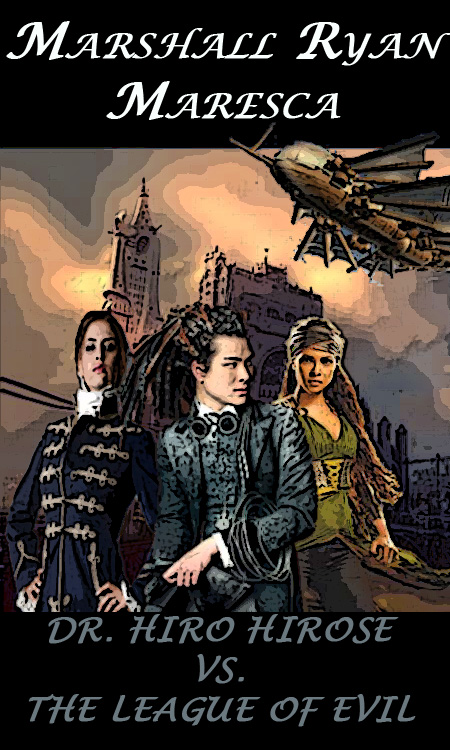
In other words, when I get stuck, I get on photoshop and make maps or other stuff. This time, I made a fake cover to a book I have no plans on writing.
I'm not really planning on writing a Steampunk novel.
But, if I was going to write a Steampunk novel, it might look a little like this:
In other words, when I get stuck, I get on photoshop and make maps or other stuff. This time, I made a fake cover to a book I have no plans on writing.
Subscribe to:
Posts (Atom)